Nepal-Tibet border flash floods kill over 600 as glacial lake risk wanes
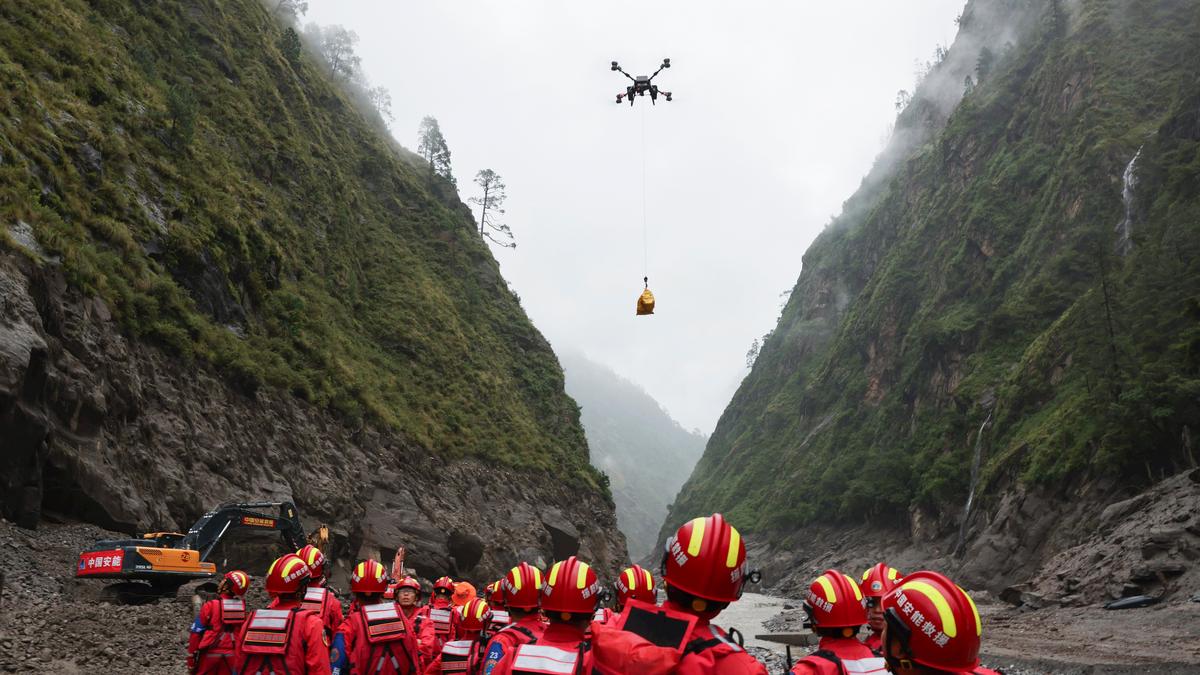
Devastating flash floods triggered by glacial collapse along the Nepal-Tibet border resulted in over 626 deaths and left thousands missing across both countries.
Rescue teams evacuated nearly 2,500 stranded people from affected mudslide zones in Gyirong County, Tibet, and severe flood-hit regions across northern Nepal.
Casualty figures exceeded 620 in Nepal with 7 confirmed dead in Tibet, while Nepal requested over $4 billion in international reconstruction and rehabilitation assistance.
Chinese satellite monitoring confirmed that the temporary lake formed by glacier collapse had begun draining gradually, mitigating catastrophic downstream outburst flood risks.
The event highlights cryosphere fragility in the High Mountain Asia region, reinforcing the urgent need for transboundary GLOF mitigation protocols and real-time hydrological cooperation.
Prelims Facts
Devastating flash floods in the Nepal-Tibet border region claimed over 620 lives, highlighting cryosphere vulnerability.
Satellite observations indicated a shrinking temporary lake formed by glacier collapse at the river confluence, easing immediate outburst fears.
Over 60 crore people in India face severe water stress due to groundwater depletion and erratic Himalayan precipitation patterns.
Mains Framework
The catastrophic flash flooding along the Nepal-Tibet border highlights the acute vulnerability of the fragile Himalayan cryosphere to climate-induced hydro-meteorological disasters.
Transboundary floods cause massive human casualties, loss of livelihoods, and destruction of critical hydropower and transportation assets.
Institutional Governance Gaps
Lack of real-time bilateral hydrological data sharing and joint emergency response mechanisms between upper and lower riparian states.
Way forward
Establish an integrated South Asian Transboundary GLOF Early Warning System, implement satellite-based real-time cryosphere monitoring, and strengthen bilateral disaster protocols under the Sendai Framework.
Key terms
Glacial Lake Outburst Flood (GLOF)Transboundary River BasinsSendai Framework for Disaster Risk ReductionEarly Warning Systems (EWS)Himalayan Cryosphere Monitoring
Acts & articles
National Disaster Management Act, 2005Sendai Framework for Disaster Risk Reduction (2015-2030)Article 21 (Right to Safe Environment)
02
GS PAPER III - INTERNAL SECURITY
Counter-Terrorism Framework and UAPA Enforcement in India
Delhi court takes cognisance of NIA chargesheet in Red Fort blast case
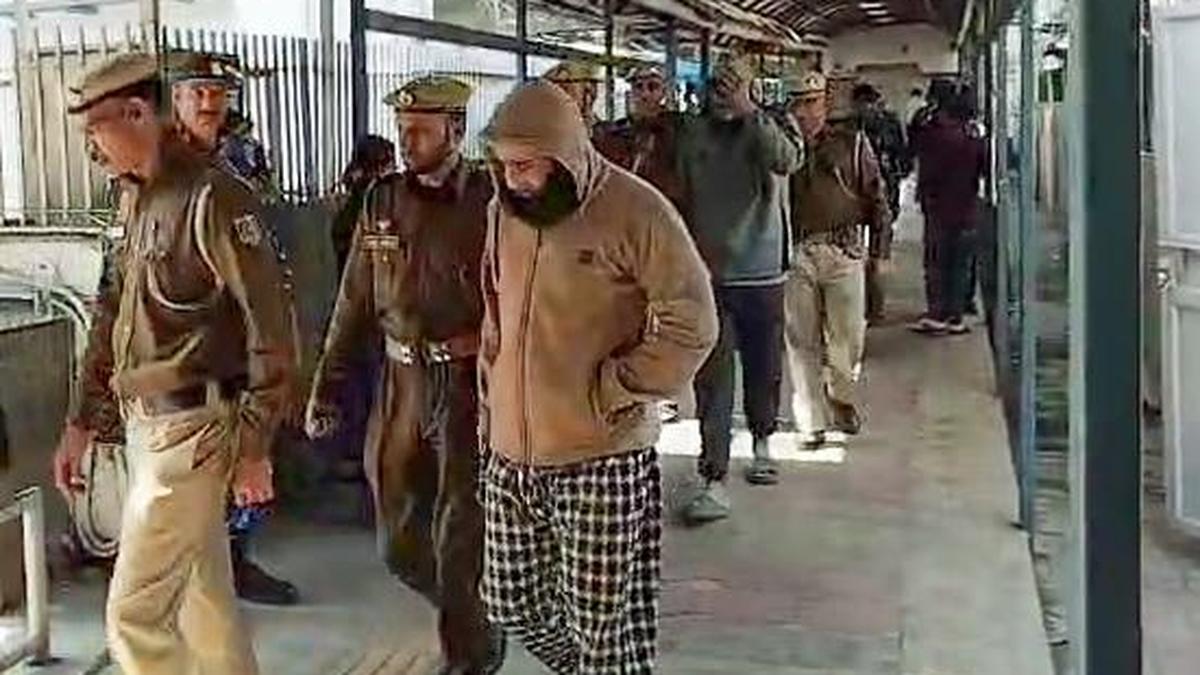
A Delhi Special Court took formal cognisance of the National Investigation Agency's comprehensive 7,500-page chargesheet filed against 13 individuals regarding a vehicle-borne blast.
Special Judge Prashant Sharma conducted the judicial review in New Delhi and scheduled detailed arguments on charge framing for September 9, 2026.
The high-intensity VBIED explosion killed 11 individuals, with investigations linking key operatives to Ansar Ghazwat-ul-Hind, an offshoot of AQIS.
The charge sheet details complex conspiracy networks, material procurement, and operational links between domestic operatives and terror handlers operating across borders.
This judicial progression underscores the central role of statutory counter-terror agencies and specialized evidentiary procedures under the UAPA legal framework.
Prelims Facts
A Delhi court formally took cognisance of a 7,500-page chargesheet filed by the NIA against 13 accused in a major blast case.
The National Investigation Agency was constituted under the NIA Act, 2008 to investigate scheduled offences affecting national security.
Ansar Ghazwat-ul-Hind operates as an affiliated offshoot of Al-Qaeda in the Indian Subcontinent (AQIS) in Jammu and Kashmir.
Mains Framework
Judicial cognisance of extensive NIA chargesheets demonstrates the institutional rigor required to dismantle sophisticated terror networks while maintaining constitutional checks.
Dimensions
Investigative Rigor and Evidence Collection
Utilization of electronic forensics and multi-agency coordination to establish links with transnational terror outfits like AQIS.
Statutory Safeguards vs National Security
Balancing stringent provisions under UAPA regarding bail restriction with constitutional protections of fundamental rights.
Institutional Capacity of NIA
Strengthening specialized prosecution units and inter-state counter-terrorism operational capabilities.
Way forward
Streamline special court trial timelines, enhance intelligence integration across state-central agencies, and ensure strict adherence to procedural safeguards to prevent arbitrary detentions.
India-US Javelin missile deal highlights critical tech transfer imperatives
India and the United States advanced negotiations for co-producing Javelin anti-tank guided missile systems, prioritizing comprehensive technology transfer to bypass regulatory bottlenecks.
Defense delegations met in New Delhi to finalize operational frameworks aimed at bolstering infantry firepower and enhancing bilateral military interoperability.
The proposed multi-million dollar defense contract involves joint manufacturing components, requiring authorization under US International Traffic in Arms Regulations.
Delays in technology transfer mechanisms remain a central challenge in executing defense industrial cooperation signed under bilateral strategic initiatives.
The agreement aligns with India's defense indigenization priorities while reinforcing Indo-Pacific security partnerships amid evolving regional security architecture.
China purges PLA General commanding forces during Doklam and Galwan standoffs
Chinese President Xi Jinping removed top General commanding the Western Theater Command, who led PLA troops during high-altitude border standoffs at Doklam and Galwan.
The military command purge in Beijing targeted senior officers across theater commands, signaling ongoing political anti-corruption campaigns within China's armed forces.
The Western Theater Command oversees China's entire 3,488-kilometer Line of Actual Control with India, making leadership changes highly strategic for regional security.
Analysts view the dismissal as part of structural realignments aimed at tightening Party authority over military operational command structures.
The leadership shakeup may impact operational decision-making along border sectors, requiring strategic vigilance and intelligence assessment from Indian defense planners.
Prelims Facts
India and the US are negotiating co-production of Javelin anti-tank guided missiles with emphasis on critical technology transfer.
General-level purges in China's PLA targeted commanders previously overseeing frontline operations along the Line of Actual Control.
Defense acquisition agreements between sovereign states require approval from the Cabinet Committee on Security in India.
Mains Framework
India's strategic alignment with global partners through high-tech defense co-production runs parallel to monitoring internal command restructuring in regional adversarial powers.
Dimensions
Defense Technology Transfer
Shifting from buyer-seller relationships to co-development and co-production under India-US defense platforms.
Regional Military Dynamics
Military purges within the PLA reflect domestic political realignments that impact border stability and command operational readiness.
Indigenization and Atmanirbharta
Ensuring technology transfer translates into long-term domestic defense industrial capacity.
Way forward
Streamline bureaucratic defense procurement processes, incentivize domestic defense R&D, and maintain active diplomatic-military channels to manage northern border stability.
Key terms
Technology Transfer (ToT)Javelin Anti-Tank Guided MissilePeople's Liberation Army (PLA)Defense Procurement ProcedureStrategic Autonomy
Acts & articles
Defense Acquisition Procedure (DAP) 2020Article 51 (Promotion of International Peace and Security)
04
GS PAPER II - INTERNATIONAL RELATIONS & GLOBAL TRADE
Global Energy Security and US Secondary Sanctions on Iran
Intensified US sanctions weigh on Iran economy amid Strait of Hormuz standoff
Iranian President acknowledged severe economic distress as foreign trade contracted by 35% following intensified United States sanctions and maritime economic embargoes.
The economic confrontation reached a six-month impasse in Tehran and Washington, marked by warnings of potential military actions across strategic maritime corridors.
Iran highlighted its strategic position along the Strait of Hormuz, through which significant portions of global sea-borne oil transit daily.
US Treasury authorities issued warnings of secondary sanctions targeting foreign enterprises, while temporarily sparing major trading partners including India and China.
The economic blockade underscores vulnerability in international energy supply chains, posing significant risks for energy-importing developing economies dependent on West Asian crude.
Prelims Facts
Iran's foreign trade shrank by 35% following intensified US sanctions and maritime blockades over six months of conflict.
The Strait of Hormuz carries approximately one-fifth of the world's total petroleum consumption, serving as a vital global transit route.
US secondary sanctions threaten non-US entities engaging in commercial trade with targeted foreign nations.
Mains Framework
Escalating sanctions against major oil exporters coupled with maritime tension in critical choke points pose severe risks to global macroeconomic stability and energy access.
Dimensions
Energy Market Volatility
Supply disruptions through the Strait of Hormuz drive up crude oil import bills and domestic inflationary pressures.
Extra-Territorial Jurisdiction
Secondary sanctions challenge the strategic autonomy of developing nations relying on energy imports from West Asia.
Diplomatic Balancing
Maintaining economic ties with regional partners while navigating compliance risks associated with global financial systems.
Way forward
Diversify oil import sources, expand domestic Strategic Petroleum Reserves (SPR), and champion multilateral compliance mechanisms under international law.
Key terms
Secondary SanctionsStrait of HormuzStrategic Petroleum ReservesMaritime Choke PointsUnilateral Economic Embargo
Acts & articles
UN Charter Article 41 (Measures Not Involving Use of Armed Force)Foreign Trade (Development and Regulation) Act, 1992
05
GS PAPER III - INDIAN ECONOMY & BANKING
Insolvency Framework and Personal Guarantor Recoveries under IBC
Low recovery rates in personal guarantor cases spark debate on IBC efficacy
Banking data revealed that financial institutions managed to recover barely 1% of total claims in personal guarantor insolvency resolution cases under IBC.
Financial analysts in Mumbai highlighted structural challenges where promoter guarantees fail to yield expected recovery due to complex corporate associate structures.
Out of total admitted claims amounting to thousands of crores, realized value remained negligible, triggering regulatory review by the IBBI.
High-profile proceedings involving promoter guarantees demonstrated systemic delays in Debt Recovery Tribunals and procedural loopholes during asset liquidation.
The findings emphasize the necessity of structural legal reforms to strengthen enforcement mechanisms against personal guarantors of defaulting corporate debtors.
Prelims Facts
Financial creditors recovered approximately 1% of total claimed amounts in personal guarantor insolvency proceedings under the IBC framework.
Part III of the Insolvency and Bankruptcy Code, 2016 governs insolvency resolution for individuals and partnership firms.
The Supreme Court of India upheld the constitutional validity of personal guarantor insolvency rules in the landmark State Bank of India v. Lalit Kumar Jain case.
Mains Framework
Abysmal recovery rates from personal guarantors under the Insolvency and Bankruptcy Code highlight operational and legal bottlenecks undermining credit recovery.
Dimensions
Legal and Procedural Delays
Protracted litigation in Debt Recovery Tribunals (DRTs) leads to significant asset value erosion.
Corporate vs Individual Guarantee Disconnect
Promoters restructuring liabilities across complex holding and associate corporate entities.
Financial Sector Health
Low recovery forces commercial banks to absorb heavy haircuts, straining capital adequacy ratios.
Way forward
Establish specialized benches at DRTs, digitize asset tracking of personal guarantors, and reform Part III of IBC to enforce stringent liability enforcement.
Key terms
Insolvency and Bankruptcy Code (IBC)Personal GuarantorsNon-Performing Assets (NPAs)Insolvency and Bankruptcy Board of India (IBBI)Haircut in Debt Resolution
Acts & articles
Insolvency and Bankruptcy Code, 2016 (Part III)Banking Regulation Act, 1949Article 300A (Right to Property)
06
GS PAPER III - SCIENCE & TECHNOLOGY (SPACE)
Space Missions and International Space Policy Governance
US issues executive order establishing space academy to expand space workforce
US Executive Order directed the establishment of the nation's first Space Academy to train specialized civil operators and military service members for lunar missions.
The announcement was made at NASA's Mission Control in Houston during an official presidential interaction with astronauts aboard the International Space Station.
A newly formed Presidential Commission chaired by NASA leadership will oversee training programs supporting Space Force expansion and commercial lunar base development.
The initiative outlines strategic goals including nuclear propulsion development, permanent lunar infrastructure, and expanded deep-space exploration capabilities.
The policy shift illustrates intensifying global focus on space workforce development, space resource utilization, and formal space defense governance structures.
Aditya-L1 captures early solar warning signs preceding solar flare activity
ISRO's solar observatory Aditya-L1 successfully detected critical precursor signals in solar atmospheric dynamics occurring immediately prior to high-energy solar flares.
Scientists at ISRO command centers analyzed telemetry data from the L1 halo orbit, marking a significant milestone in space weather prediction capability.
The payload instruments observed magnetic field destabilization hours before energy releases, providing critical operational lead-time for satellite operators.
Solar flares and accompanying coronal mass ejections pose risks to orbital communication satellites, GPS navigation systems, and high-latitude power grids on Earth.
The achievement validates Aditya-L1's primary scientific objectives and enhances India's contributions to global space weather monitoring networks.
US President acknowledges Indian-origin astronaut Anil Menon during NASA mission update
US executive leadership publicly commended Indian-origin astronaut Dr. Anil Menon and invited the commercial astronaut crew for a formal Oval Office reception.
The ceremony occurred during a high-level review of ongoing human spaceflight initiatives at NASA headquarters, highlighting international collaboration in space exploration.
Dr. Menon, a flight surgeon and active astronaut candidate, represents expanding Indian diaspora participation in advanced aerospace and space medicine programs.
The event underscored growing civil space cooperation between international space agencies and commercial spaceflight operators under modern space exploration frameworks.
Recognizing diverse astronaut cohorts highlights the global nature of human spaceflight missions targeting long-duration space exploration to the Moon and Mars.
Prelims Facts
ISRO's Aditya-L1 spacecraft captured precursor solar magnetic activity enabling early detection prior to solar flare eruptions.
Aditya-L1 is placed in a halo orbit around the Sun-Earth Lagrange Point 1 (L1), approximately 1.5 million km from Earth.
The US signed an executive order establishing a dedicated Space Academy to train military and civil operators for lunar and deep space missions.
Mains Framework
Advances in solar observation by Aditya-L1 alongside structural institutional investments in space academies reflect the expanding strategic and scientific importance of space infrastructure.
Dimensions
Solar Physics and Space Weather
Real-time detection of solar flare precursors protects satellite communication networks and terrestrial power grids.
Institutional Space Governance
Establishment of specialized space academies prepares human capital for deep space exploration and commercial space expansion.
International Cooperation
Synergies in space exploration through astronaut exchanges and multi-nation space station missions.
Way forward
Enhance global space weather forecasting collaboration, invest in domestic space technology human resource development, and update space sustainability regulations.
Key terms
Aditya-L1 MissionCoronal Mass Ejection (CME)Space Force GovernanceLangrange Point 1Solar Flare Precursors
Acts & articles
Outer Space Treaty, 1967Indian Space Policy 2023
07
GS PAPER III - ENVIRONMENT & ECOLOGY
Ecological Research, Biodiversity Mapping and Sustainable Resource Innovation
Century of species discoveries reshapes understanding of global biodiversity hotspots
A scientific study published in Ecology Letters demonstrated that 100 years of taxonomic discoveries between 1920 and 2020 significantly altered global maps of biodiversity hotspots.
Researchers evaluated global terrestrial vertebrate data over a century, observing major geographic spatial shifts for reptiles and amphibians compared to birds.
The findings indicate that environmental predictors of diversity change as formal species recognition expands, challenging historical static conservation boundary models.
Newly identified hotspot areas are emerging in previously unmapped tropical and sub-tropical regions, requiring reassessment of protected area designations worldwide.
The research underscores the necessity of continuous taxonomic research to inform national biodiversity strategies and global conservation fund allocation under international treaties.
Chandigarh University researchers secure patent for two-stage kitchen wastewater recycling device
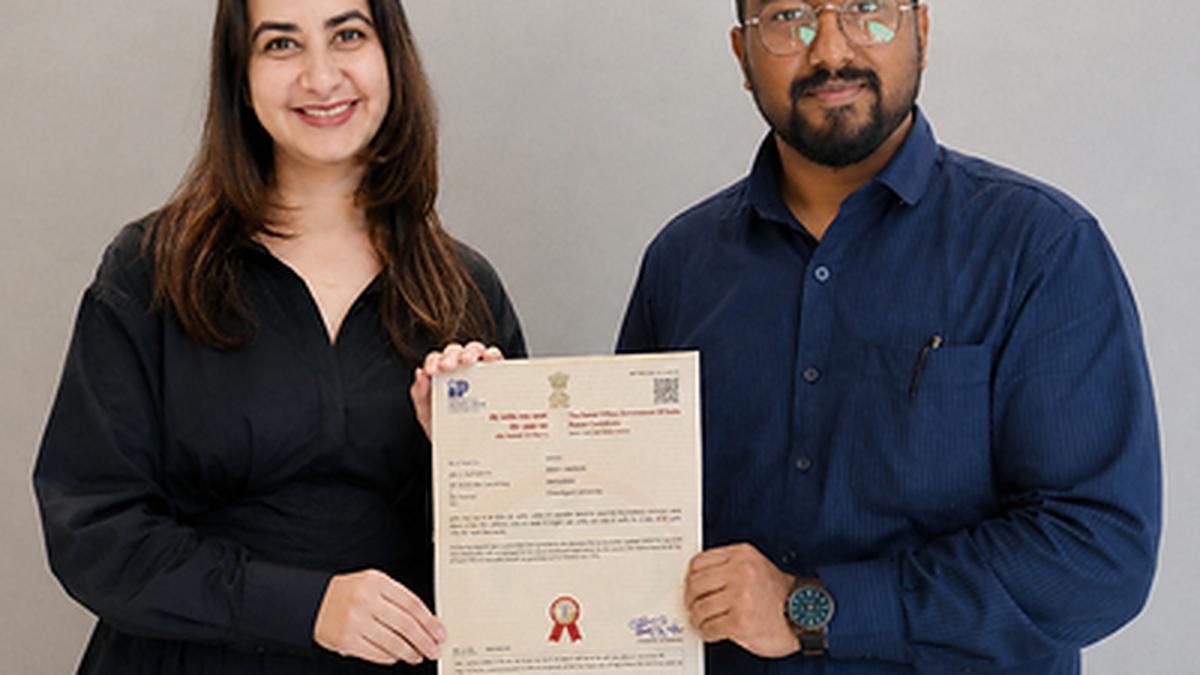
Biotechnology researchers at Chandigarh University were granted a formal patent for a novel two-stage filtration system designed to treat domestic kitchen wastewater for reuse.
The filtration innovation was developed in Punjab to collect and purify greywater prior to drainage, enabling non-potable reuse in household gardening and sanitation.
With over 80% of urban household water released as untreated wastewater and 60 crore Indians experiencing severe water stress, decentralized greywater reuse offers high utility.
The device utilizes physical and biological filtration stages to remove suspended solids, fats, and organic residues, preventing sewer blockages and reducing potable demand.
The patented innovation supports India's Jal Jeevan Mission and urban circular economy goals by promoting decentralized domestic water conservation mechanisms.
Rural Studio demonstrates sustainable housing by repurposing post-consumer carpet tiles
Architectural researchers at Rural Studio demonstrated sustainable building techniques by constructing load-bearing structural walls using 72,000 compressed post-consumer carpet tiles.
The experimental housing project built in Alabama utilized 72,000 pounds of donated waste carpet held under compression by heavy wooden ring-beams.
The structural design incorporated a 7-year storage period to prevent volatile chemical off-gassing, establishing viable thermal insulation and structural stability parameters.
Over two decades, Rural Studio executed more than 200 community-focused affordable architecture projects using upcycled industrial material streams.
The engineering concept offers valuable insights for affordable sustainable housing, circular construction materials, and low-cost carbon-neutral built environment innovations.
Prelims Facts
A 100-year study published in Ecology Letters revealed that taxonomic discoveries between 1920 and 2020 significantly shifted global reptile and amphibian diversity hotspots.
Over 80% of domestic water supplied in urban India is discharged as wastewater, prompting patent-backed two-stage filtering innovations.
Norman Myers originally defined biodiversity hotspots based on endemic species density and severe habitat loss.
Mains Framework
Dynamic shifts in global biodiversity mapping alongside localized circular technological innovations highlight the evolving scientific framework required for global and urban sustainability.
Dimensions
Biodiversity Science Reform
Updating conservation spatial planning as new species discoveries redefine high-priority ecological hotspots.
Urban Water Security
Decentralized greywater filtration technologies address domestic water scarcity and relieve municipal drainage infrastructure.
Integrate updated taxonomic data into national biodiversity action plans, incentivize domestic wastewater recycling patents, and embed circular economy criteria into building codes.
Federal judge blocks US President bid to shift hush money conviction to federal court
A Manhattan federal judge rejected a legal petition to transfer a state criminal conviction of the US President to federal jurisdiction, citing personal conduct rules.
US District Judge Alvin Hellerstein issued the ruling in New York following appellate directions to examine presidential immunity precedents established by the US Supreme Court.
The case centered on 34 felony counts of falsifying business records involving private financial payments during the 2016 presidential election campaign.
The court determined that actions taken in personal capacities do not qualify for constitutional executive immunity protections afforded to official presidential acts.
The decision reinforces constitutional boundaries regarding judicial jurisdiction and limits the application of executive immunity in personal legal proceedings.
US court invalidates visa revocations of noncitizen student activists on free speech grounds
A US Federal District Judge ruled that federal executive attempts to revoke student visas and deport noncitizen college activists based on pro-Palestinian advocacy are unconstitutional.
US District Judge Noel Wise issued the decision in San Jose, California, chastising the State Department and Department of Homeland Security for statutory misuse.
The court found that deploying federal immigration laws to suppress noncitizen political advocacy violated fundamental constitutional guarantees of free speech.
The ruling halted ongoing deportation proceedings against university students targeted for participating in peaceful campus demonstrations and expressing political criticisms.
The judicial intervention highlights constitutional protections governing international students and sets precedent limiting executive authority in immigration enforcement.
Prelims Facts
A US District Judge denied a former President's motion to transfer a criminal conviction to federal court, ruling the acts were official-capacity exempt.
US Federal Court ruled that revoking visas of noncitizen students for political speech violates constitutional free speech protections.
Article 361 of the Indian Constitution grants immunity to the President and Governors from criminal proceedings during their term of office.
Mains Framework
Recent US federal judicial rulings upholding limits on presidential immunity and invalidating speech-based visa revocations emphasize the constitutional primacy of judicial oversight over executive power.
Dimensions
Limits of Executive Immunity
Distinguishing between official acts protected under executive immunity and personal non-official conduct subject to criminal law.
Freedom of Expression Rights
Protecting noncitizen speech and political dissent from executive deportation measures.
Comparative Constitutional Standards
Contrasting Indian Article 361 immunity provisions with evolving US judicial doctrine on presidential accountability.
Way forward
Strengthen constitutional safeguards against arbitrary executive overreach and maintain clear statutory demarcations between personal conduct and official duties of constitutional functionaries.
Key terms
Presidential ImmunityJudicial ReviewFirst Amendment Free SpeechJurisdiction TransferRule of Law
Acts & articles
US Constitution (First Amendment)Article 361 (Protection of President and Governors)Article 14 (Equality Before Law)
09
GS PAPER I - ART, CULTURE & HISTORY
Prehistoric Archaeology and Material Culture Discoveries
Unique 11,000-year-old human riding leopard sculpture unearthed at Karahantepe in Turkey
Archaeologists at the Neolithic site of Karahantepe in southeastern Türkiye unearthed a 70-centimeter stone sculpture showing a human figure seated atop a leopard.
The discovery was officially announced by the Turkish Ministry of Culture as part of the ongoing Heritage for the Future archaeological excavation program.
The artifact was uncovered in situ on a stone bench inside a 3-meter circular stone structure, introducing a novel artistic motif to Neolithic archaeology.
Unlike earlier Karahantepe finds depicting predatory animals mounted on human backs, this sculpture establishes animals positioned beneath human figures.
The discovery offers new insights into symbolic iconography, animal domestication concepts, and ritualistic practices during the Pre-Pottery Neolithic period.
Bronze Age Greek elites wore meteoritic iron jewellery before iron smelting era
A five-year archaeometric study confirmed that 3,000-year-old Bronze Age Greek elite rings were manufactured using iron extracted from meteorites prior to terrestrial smelting.
Researchers from France and Greece examined 105 ancient artifacts across 33 archaeological sites using non-destructive portable X-ray fluorescence technology.
Analytical results revealed high nickel concentrations in 13 iron rings, conclusively identifying meteoritic iron source material for at least nine specimens.
The findings prove that pre-Iron Age civilizations possessed technological competence to cold-hammer extraterrestrial meteoritic iron into ornamental prestige objects.
The study enhances historical understanding of ancient trade networks, early pyrotechnology development, and material status symbols among Mycenaean and Minoan elites.
Prelims Facts
A 11,000-year-old stone sculpture depicting a human seated on a leopard was discovered at the Neolithic site of Karahantepe in Türkiye.
Chemical analysis using portable X-ray fluorescence confirmed high nickel content in 3,000-year-old Bronze Age Greek rings, indicating meteoritic iron origin.
Karahantepe forms part of the Taş Tepeler project in southeastern Anatolia, contemporary with the Göbeklitepe archaeological complex.
Mains Framework
Discoveries of Neolithic composite sculptures and Bronze Age meteoritic metalwork refine current understanding of early human artistic symbolism and pre-industrial material technology.
Dimensions
Neolithic Iconography and Religion
Human-animal seated sculptures at Karahantepe represent complex ritualistic power structures prior to settled agriculture.
Pre-Smelting Metallurgical Innovation
Utilization of meteoritic iron prior to terrestrial iron smelting demonstrates sophisticated metal procurement among Bronze Age elites.
Archaeological Methodologies
Application of non-destructive analytical tools like portable X-ray fluorescence in cataloging ancient artifacts.
Way forward
Promote interdisciplinary archaeometric research, enhance global protection of Neolithic UNESCO-aspiring heritage sites, and integrate material science into historical analysis.
Key terms
Karahantepe Neolithic SiteMeteoritic Iron MetallurgyPortable X-ray Fluorescence (pXRF)Pre-Pottery NeolithicBronze Age Metallurgy
Acts & articles
AMASR Act (Ancient Monuments and Archaeological Sites and Remains Act), 1958UNESCO World Heritage Convention, 1972Article 49 (Protection of Monuments and Places of National Importance)
Practice MCQs — Test Your Understanding
6 questions · UPSC Prelims pattern · Tap an option to check your answer
GS PAPER III - DISASTER MANAGEMENTTransboundary Disaster Risks and Himalayan Glacial Lake Outbursts
Nepal-Tibet border flash floods kill over 600 as glacial lake risk wanes
Q1Which of the following statements regarding Glacial Lake Outburst Floods (GLOFs) in the Himalayan region is/are correct?
1. GLOFs occur when moraine or ice dams holding glacial meltwater breach suddenly.
2. High Mountain Asia has experienced a decline in glacial lake formations due to reduced monsoon intensity.
3. The Sendai Framework for Disaster Risk Reduction explicitly emphasizes enhancing disaster preparedness for effective response.
Answer: Option B
Statement 1 is correct as GLOFs are caused by the sudden failure of natural dams (moraine or ice) containing glacial lakes. Statement 2 is incorrect because climate warming is accelerating glacial retreat, expanding the number and volume of glacial lakes across High Mountain Asia. Statement 3 is correct as Priority 4 of the Sendai Framework emphasizes enhancing disaster preparedness and building back better.
GS PAPER III - INDIAN ECONOMYInsolvency Framework and Personal Guarantor Recoveries under IBC
Low recovery rates in personal guarantor cases spark debate on IBC efficacy
Q2With reference to the Insolvency and Bankruptcy Code (IBC), 2016, consider the following statements:
1. Part III of the Insolvency and Bankruptcy Code governs insolvency resolution for individuals and personal guarantors.
2. The National Company Law Tribunal (NCLT) is the designated adjudicating authority for personal guarantors associated with corporate debtors.
3. Proceedings against a personal guarantor automatically stay all insolvency proceedings against the main corporate debtor.
Answer: Option A
Statements 1 and 2 are correct. Part III of IBC deals with insolvency of individuals and personal guarantors, and NCLT handles personal guarantors related to corporate debtors (while Debt Recovery Tribunals handle other individuals). Statement 3 is incorrect because proceedings against personal guarantors run independently and do not automatically stay proceedings against the corporate debtor.
GS PAPER III - SCIENCE & TECHNOLOGYSpace Missions and International Space Policy Governance
Aditya-L1 captures early solar warning signs preceding solar flare activity
Q3Consider the following statements regarding India's Aditya-L1 mission:
1. It is placed in a halo orbit around the Sun-Earth Lagrange Point 1 (L1).
2. A satellite placed in the L1 orbit experiences continuous viewing of the Sun without any occultation or eclipses.
3. L1 point is located approximately 15 million kilometers away from the Earth.
Answer: Option A
Statements 1 and 2 are correct. Aditya-L1 is positioned at Lagrange Point 1 (L1), providing an unobstructed, continuous view of the Sun without eclipses. Statement 3 is incorrect because L1 is located approximately 1.5 million kilometers from Earth (about 1% of the total Earth-Sun distance), not 15 million kilometers.
GS PAPER III - ENVIRONMENT & ECOLOGYEcological Research, Biodiversity Mapping and Sustainable Resource Innovation
Century of species discoveries reshapes understanding of global biodiversity hotspots
Q4Which of the following criteria must a region meet to qualify as a Biodiversity Hotspot according to Conservation International?
1. It must contain at least 1,500 species of vascular plants as endemics.
2. It must have lost at least 70% of its original primary vegetation.
3. It must contain at least 50 endangered mammal species.
Answer: Option B
Statements 1 and 2 are correct. To qualify as a biodiversity hotspot, a region must meet two strict criteria: contain at least 1,500 endemic species of vascular plants (>0.5% of the world's total) and have lost at least 70% of its original primary habitat. Mammal headcount (Statement 3) is not a mandatory criterion.
GS PAPER I - ART & CULTUREPrehistoric Archaeology and Material Culture Discoveries
Bronze Age Greek elites wore meteoritic iron jewellery before iron smelting era
Q5With reference to ancient metallurgy, how can meteoritic iron be scientifically distinguished from terrestrially smelted iron?
Answer: Option A
Option a is correct. Meteoritic iron naturally contains significant amounts of nickel (usually 5% to 30%) and often exhibits Widmanstätten crystalline structures when etched, whereas early terrestrially smelted bloomery iron contains very low nickel concentrations.
GS PAPER II - POLITYComparative Constitutional Law and Judicial Oversight of Executive Action
Federal judge blocks US President bid to shift hush money conviction to federal court
Q6Consider the following statements regarding immunity granted to constitutional functionaries in India under Article 361:
1. The President or Governor is not answerable to any court for the exercise and performance of the powers and duties of their office.
2. No criminal proceedings whatsoever can be instituted or continued against the President or a Governor in any court during their term of office.
3. Civil proceedings against the President or Governor for personal acts require a two-month advance written notice.
Answer: Option D
All three statements are correct under Article 361 of the Indian Constitution. Clause (1) protects official acts from court answerability, Clause (2) places an absolute bar on instituting or continuing criminal proceedings during the term of office, and Clause (4) requires a 2-month prior written notice before instituting civil proceedings for personal acts.