Daily Current Affairs — 30 August 2026

Sun · 12 topics · 14 stories · 6 Prelims MCQs

01
INTERNATIONAL RELATIONS & DISASTER MANAGEMENT

Transboundary Disaster Management and Relief Diplomacy in South Asia
Story 1The Hindu ↗

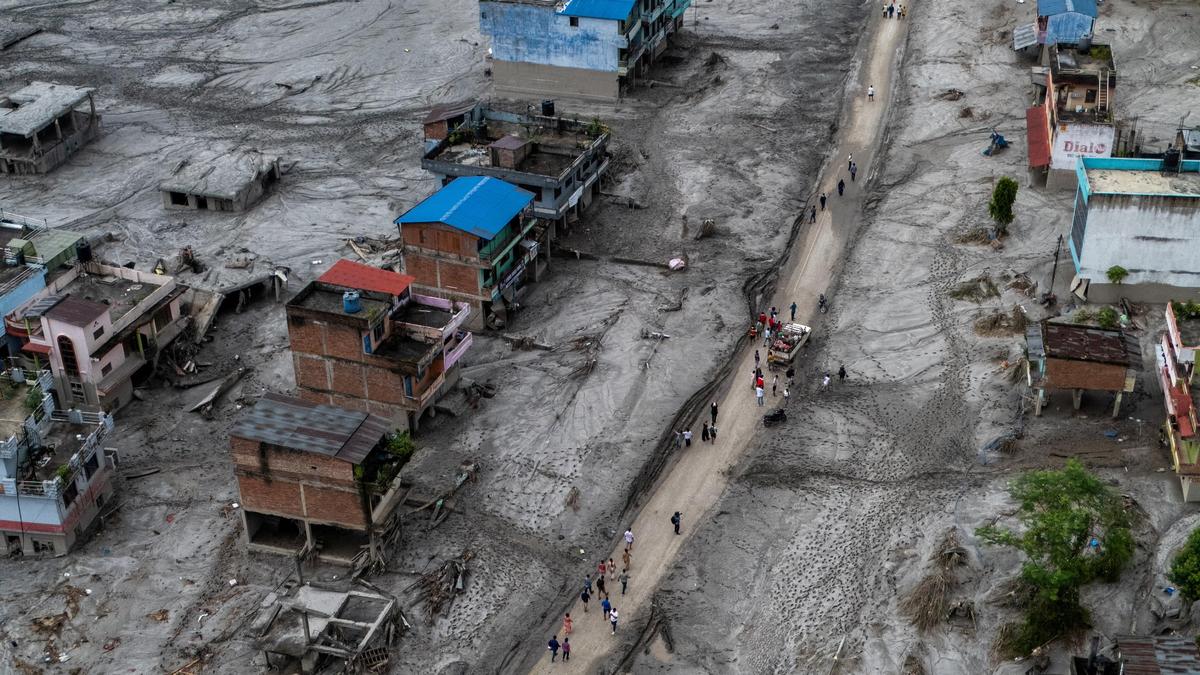
Glacial Collapse Triggers Devastating Flash Floods Across Nepal-Tibet Border

  • A catastrophic flash flood triggered by a high-altitude glacial collapse along the Nepal-Tibet border devastated the Bhotekoshi and Trishuli river corridors, causing widespread loss of human lives.
  • Disaster authorities in Nepal confirmed 734 deaths while Chinese state media reported 16 fatalities in Tibet, raising the total combined death toll to 750 with over 3,000 people declared missing.
  • Official statistics indicate that 2,498 individuals remain missing in Nepal alone, including 589 foreign nationals and 933 workers who were trapped inside damaged hydroelectric power project tunnels.
  • The disaster heavily impacted Nuwakot district and Bidur Municipality, destroying infrastructure, tearing through settlements, and creating severe challenges for search and rescue personnel across the river basin.
  • This event highlights the acute vulnerability of Himalayan river basins to sudden climate-induced glacial hazards and underscores the necessity of continuous high-altitude satellite surveillance and early warnings.
Story 2The Hindu ↗

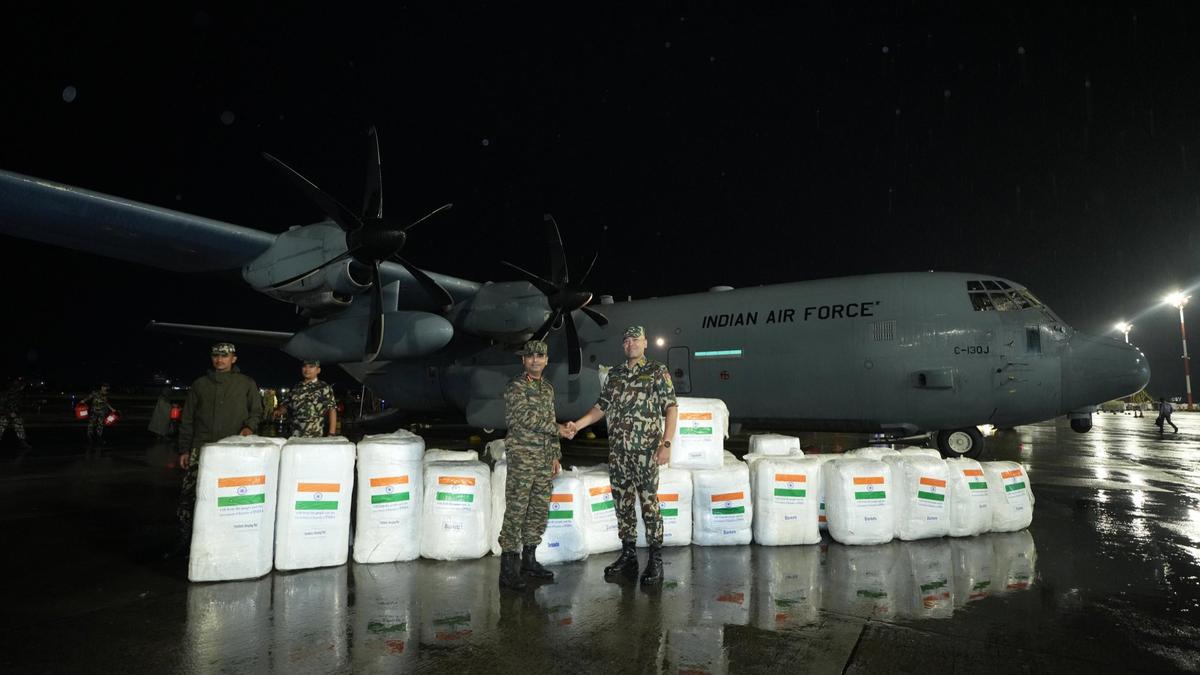
India Dispatches Relief Material and Specialized Rescue Experts to Flood-Hit Nepal

  • India extended comprehensive emergency assistance to flood-ravaged Nepal by deploying military transport aircraft loaded with vital relief supplies, bridge structures, and technical search teams.
  • The Ministry of External Affairs dispatched 68.5 tonnes of relief materials alongside specialized tunnel rescue experts, forensic teams, and equipment to locate trapped workers inside submerged power plants.
  • A fourth flight delivered 11 tonnes of emergency relief goods directly to Kathmandu, while Indian engineers prepared to construct temporary Bailey bridges across severed road networks.
  • The rapid Indian relief effort demonstrates operational readiness in regional disaster assistance and reinforces India's diplomatic role as a primary security and humanitarian responder in South Asia.
  • Such bilateral disaster interventions align with India's SAGAR vision and Neighborhood First policy, emphasizing collaborative regional resilience against extreme natural disasters.
Story 3The Hindu ↗

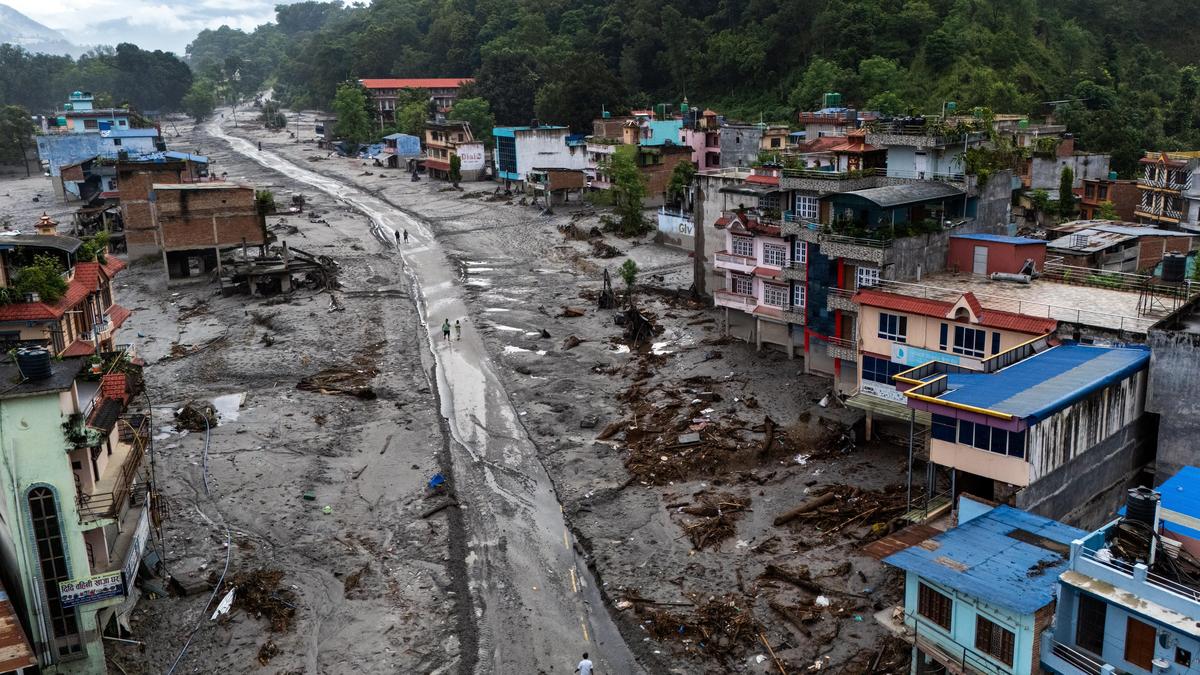
Fresh Flood Alerts Issued Along Bhotekoshi Basin Amid Upstream Water Surges

  • Authorities in Nepal issued fresh flood warnings for riparian communities following official notifications from Chinese authorities regarding sudden water accumulation and surges in upstream river channels.
  • Emergency alerts were broadcast to mobile phones across central Nepalese districts including Dhading and Nuwakot, urging residents along the swollen Bhotekoshi River to evacuate to elevated grounds.
  • In Galchhi town, displaced residents assembled on bridges to monitor rising river levels while emergency teams worked continuously to clear landslide debris blocking the strategic Kathmandu highway.
  • The evacuation orders underscore the necessity of bilateral hydrometeorological communication channels between China and Nepal to manage secondary surge risks following mountain slope collapses.
  • For disaster management planning, this highlights how transboundary cooperation and automated SMS alerts serve as vital mechanisms for reducing casualty rates during active flash floods.

Prelims Facts

The Trishuli and Bhotekoshi river basins originate in Tibet (China) and flow southward into Nepal as major Himalayan tributaries.
Operation Disaster Relief in transboundary zones involves specialized technical contingents such as army engineers and forensic rescue teams.
Satellite monitoring by water resource authorities helps detect artificial lake shrinkages along remote mountain river valleys.

Mains Framework

Catastrophic high-altitude glacial collapses across the Nepal-Tibet border highlight the growing vulnerability of the fragile Himalayan eco-system to transboundary climate disasters.

Dimensions

Ecological & Hydrological Risk

Increased frequency of GLOFs and high-altitude mudslides threatening downstream river corridors.

Strategic & Diplomatic Engagement

Rapid HADR intervention reinforcing India's 'Neighborhood First' policy and humanitarian footprint.

Transboundary Information Sharing

Critical need for real-time hydrological data exchange between China, Nepal, and India to prevent cascading disasters.

Way forward

Establish a institutionalized South Asian regional early warning system for GLOFs and integrate joint disaster management protocols across Himalayan borders.


Key terms
Glacial Lake Outburst Flood (GLOF)Disaster Risk ReductionNeighborhood First PolicyHumanitarian Assistance and Disaster Relief (HADR)Transboundary River Management
Acts & articles
Disaster Management Act, 2005Sendai Framework for Disaster Risk Reduction (2015-2030)Article 51(c) of the Constitution of India
02
INTERNATIONAL RELATIONS & ECONOMY

Geopolitics and Energy Security: India-Russia Petroleum Trade Dynamics

Story 1The Hindu ↗

India Emerges as Major Gasoline Supplier to Russia Following Refinery Disruptions

  • India has become a principal supplier of refined gasoline to Russia following widespread disruptions at Russian domestic refineries caused by targeted long-range Ukrainian drone strikes.
  • Data from energy analytics firm Vortexa revealed that Russia's seaborne gasoline imports surged to an unprecedented 125,000 barrels per day, totaling approximately 470,000 tonnes within a single month.
  • Trade shipments show Indian private refiners exported roughly 1 million barrels of gasoline over two months, largely sourced from the Vadinar refinery operated by Rosneft-backed Nayara Energy.
  • This reversal in fuel flow underscores how India's massive domestic refining infrastructure acts as a critical swing capacity in global energy markets during severe supply shocks.
  • For Indian foreign policy, this trade highlight the complex balancing act between utilizing cheap imported Russian crude and navigating international regulatory and tariff scrutiny.

Prelims Facts

Nayara Energy operates a major private oil refinery at Vadinar in Gujarat, which is 49% owned by Russia's Rosneft.
Russia's share in India's crude oil imports reached a record high of nearly 48% following discounted purchases post-2022.
Vortexa is a global energy analytics firm tracking real-time seaborne trade movements of crude oil and refined petroleum products.

Mains Framework

The emergence of Indian refiners as key petrol exporters to Russia illustrates the dynamic reorientation of global energy supply chains during geopolitical crises.

Dimensions

Economic Interdependence

Utilization of Russian crude by Indian refiners to process finished gasoline for export back into supply-starved markets.

Geopolitical Balancing

Navigating Western tariff threats while protecting national commercial interests and refining sector margins.

Energy Security Vulnerability

Exposure of major oil-producing nations to asymmetric drone warfare targeted at domestic refining infrastructure.

Way forward

Diversify energy import sources while expanding domestic strategic petroleum reserves and maintaining strategic autonomy in international trade choices.

Key terms
Seaborne Gasoline TradeRefining CapacityStrategic AutonomyWestern SanctionsSecondary Refining
Acts & articles
Foreign Trade (Development and Regulation) Act, 1992Article 73 of the Constitution of India (Executive power over international trade)
03
INTERNATIONAL RELATIONS & GEOPOLITICS

Global Energy Geopolitics: US Control of Venezuelan Petroleum Resources

Story 1Times of India ↗

United States Secures Majority Control Over Venezuelan Oil Reserves

  • The United States announced a landmark commercial agreement granting American firms controlling stakes in Venezuela's vast petroleum reserves, restructuring the country's energy governance framework.
  • The partnership involves acquiring 55% effective control over production from joint ventures covering over 65 billion barrels of proven crude oil reserves at cost-based pricing structures.
  • This intervention aims to form one of the world's largest private oil ventures, securing long-term petroleum supplies while asserting dominance over Latin American energy resources.
  • The policy explicitly aligns with a revived Monroe Doctrine strategy designed to counter growing financial and industrial influence by foreign powers across South America.
  • This initiative presents major implications for global energy supply stability, OPEC dynamic power shifts, and foreign investment jurisprudence in sovereign nations.

Prelims Facts

Venezuela holds the world's largest proven crude oil reserves, concentrated significantly in the Orinoco Belt.
The Monroe Doctrine, articulated in 1823, opposed European colonialism in the Americas and established the Western Hemisphere as a US sphere of interest.
State-owned oil companies commonly enter joint venture agreements with foreign firms to grant concession rights for petroleum extraction.

Mains Framework

The strategic agreement granting American entities majority control over Venezuelan petroleum production marks a significant shift in Western Hemisphere power politics.

Dimensions

Geopolitical Strategy

Re-assertion of hemispheric influence to counter strategic economic investments by non-Western powers like China.

Legal & Economic Norms

Unprecedented commercial arrangements overriding national sovereignty over major natural energy reserves.

Global Market Impact

Long-term restructuring of heavy crude oil flows and global petroleum pricing mechanisms.

Way forward

Promote multilateral energy governance institutions that uphold international law and national sovereignty over domestic natural resources.

Key terms
Monroe DoctrineResource NationalismJoint VentureProven Oil ReservesGeoeconomics
Acts & articles
UN General Assembly Resolution 1803 (Permanent Sovereignty over Natural Resources)UN Charter Article 2(4)
04
POLITY & GOVERNANCE

Criminal Jurisprudence and Fundamental Rights: Accused Rights to FIR Copies

Story 1The Hindu ↗

Supreme Court Directs Police to Provide FIR Copy and CCTV Footage to Accused

  • The Supreme Court issued directions to Ghaziabad Police to immediately furnish a complete copy of an FIR and relevant CCTV footage to a journalist facing criminal prosecution.
  • The petitioner alleged that law enforcement officials refused to share details of the registered offences, providing incomplete documentation while threatening arrest in a road-rage matter.
  • Legal experts highlighted widespread non-compliance by state police departments regarding the Supreme Court's precedent mandating the digital publication of FIRs within 24 hours.
  • Denying an accused access to formal charges severely undermines their constitutional right to seek legal remedies, such as anticipatory bail under statutory criminal procedure.
  • This case reiterates the judicial principle that procedural fairness and transparency in police procedures are mandatory safeguards under Article 21 of the Constitution.

Prelims Facts

Under the Supreme Court's 2016 ruling in Youth Bar Association of India v. Union of India, FIR copies must be uploaded online within 24 hours of registration.
Section 207 of CrPC (and corresponding provisions in BNSS) mandates supplying the accused with copies of the police report and documents.
Exemptions from mandatory online publication of FIRs exist only for sensitive offences like sexual assault, insurgency, and child abuse.

Mains Framework

Judicial intervention enforcing the supply of FIR copies to accused persons reaffirms procedural transparency as an indispensable component of the right to personal liberty.

Dimensions

Constitutional Mandate

Protection of personal liberty under Article 21 through timely disclosure of allegations to enable legal defense.

Institutional Compliance

Persistent gaps in police adherence to Supreme Court directives regarding 24-hour online uploading of FIRs.

Preventing Abuse of Power

Judicial oversight as a check against malicious prosecution and arbitrary concealment of penal charges.

Way forward

Implement mandatory digital audit trails in police portals and mandate strict administrative accountability for non-compliance with FIR publishing directives.

Key terms
First Information Report (FIR)Article 21Youth Bar Association CaseBNSSProcedural Due Process
Acts & articles
Article 21 of the Constitution of IndiaArticle 22(1) of the Constitution of IndiaBharatiya Nagarik Suraksha Sanhita (BNSS), 2023
05
ENVIRONMENT & GEOGRAPHY

Urban Hydrology and Infrastructure Vulnerability under Flash Droughts

Story 1Times of India ↗

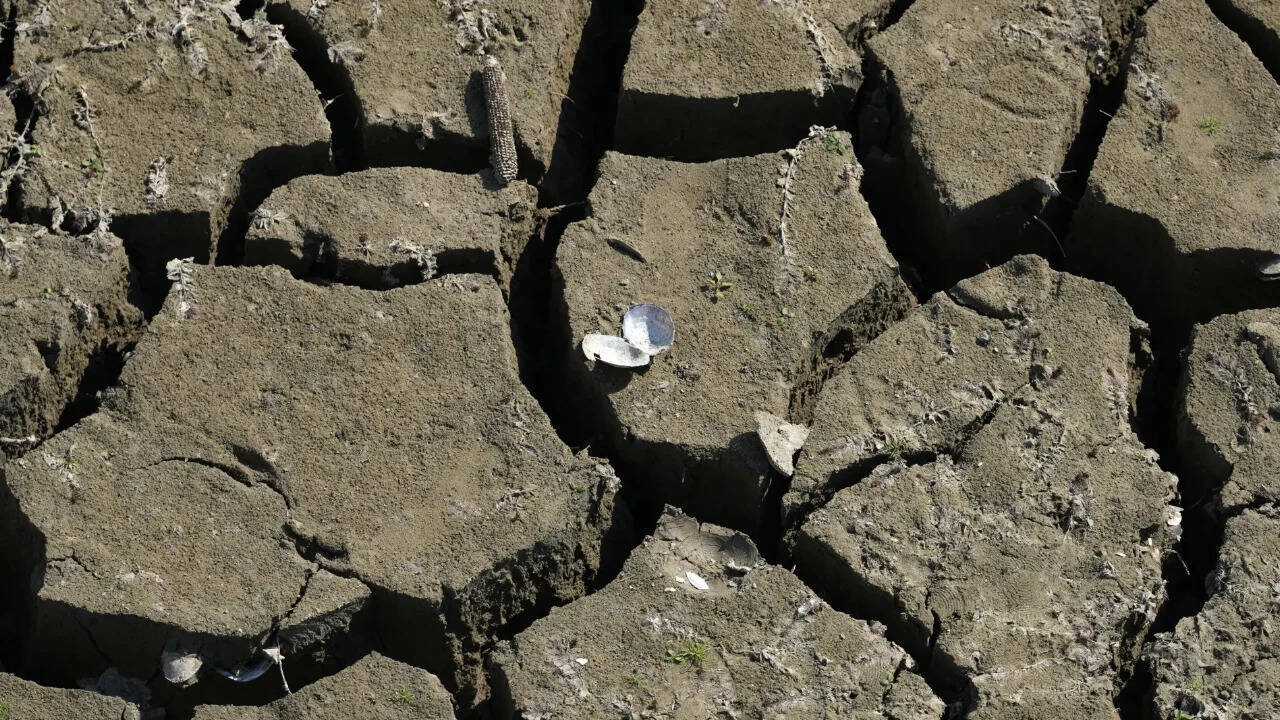
Severe Summer Flash Drought Strains Water Infrastructure Across Southeast England

  • An intense 'flash drought' across England severely strained regional public water networks, forcing utility companies to implement emergency supply restrictions and tankering operations.
  • Hydrologists noted that despite record winter rain refilling reservoirs, high summer temperatures rapidly evaporated surface water and desiccated river systems across southeast regions.
  • Over 30 million residents faced hosepipe bans while extreme drying of clay soils caused widespread ground subsidence, driving structural damage insurance claims to record levels.
  • Water utilities requested emergency permits to continue abstracting water from environmentally protected rivers to prevent catastrophic supply failures across urban centers like London.
  • The crisis highlights the growing phenomenon of rapid-onset climate anomalies that exceed historical hydrological planning parameters for municipal water supply systems.

Prelims Facts

Flash droughts are characterized by rapid onset and intensification of drought conditions driven by high temperatures and high evapotranspiration rates.
Clay-rich soils undergo rapid desiccation and shrinkage during sudden droughts, leading to structural foundation movement known as soil subsidence.
The UK Centre for Ecology & Hydrology is the national research body monitoring hydrological status and water resources across Britain.

Mains Framework

The occurrence of unprecedented flash droughts in traditionally temperate regions exposes severe vulnerabilities in existing urban water supply networks and built infrastructure.

Dimensions

Hydrological Impact

Rapid depletion of surface reservoirs and soil moisture despite preceding wet winters due to extreme heatwaves.

Infrastructure Strain

Structural damages to residential buildings caused by severe soil desiccation and ground subsidence.

Policy Response

Imposition of emergency hosepipe bans, water rationing protocols, and environmental abstraction permits.

Way forward

Modernize water distribution infrastructure to reduce leakage, mandate urban rainwater harvesting, and update structural engineering codes for soil movement.

Key terms
Flash DroughtSoil SubsidenceUrban Water ManagementAquifer DepletionClimate Adaptation
Acts & articles
Environment Protection ActNational Water Policy GuidelinesUN SDG Goal 6 (Clean Water and Sanitation)
06
ART & CULTURE

Heritage Conservation and French Colonial Architecture in Puducherry

Story 1The Hindu ↗

Restoration Commences for 18th-Century Heritage Police Building in Puducherry

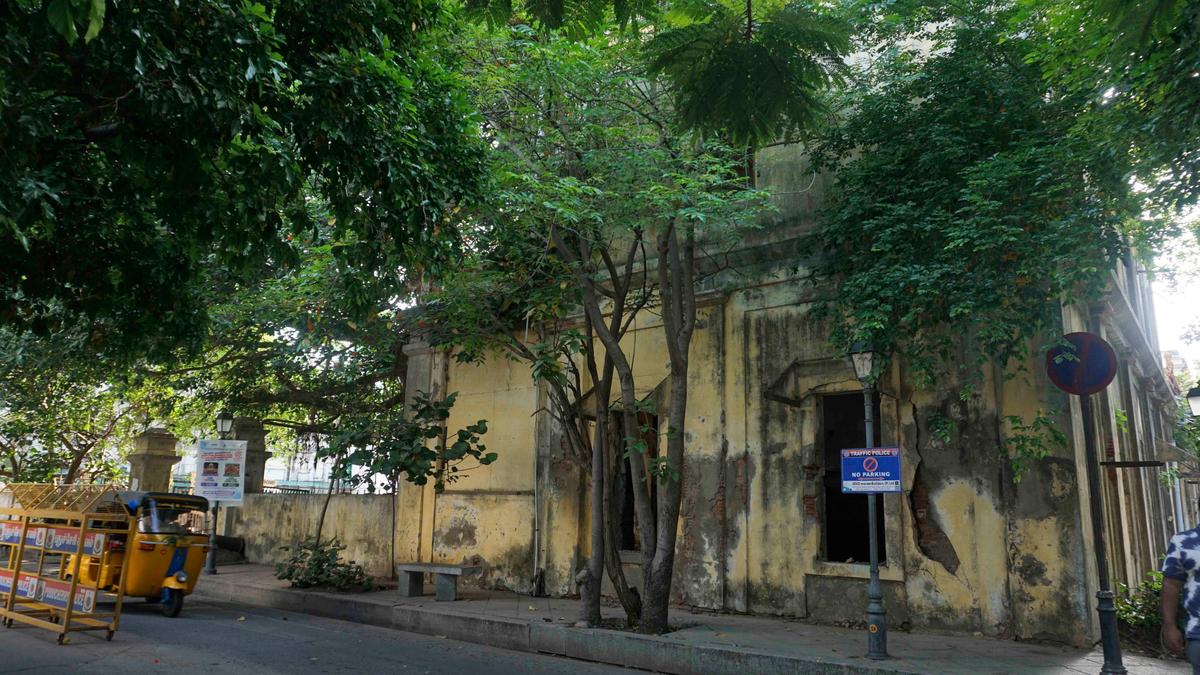
  • Restoration works commenced on the historical Puducherry Police Headquarters complex on Dumas Street, a Grade II B listed heritage site dating back to the 1790s.
  • The Public Works Department allocated ₹8.73 crore for structural repair, ensuring all works strictly adhere to notified heritage conservation regulations without altering French architectural designs.
  • The landmark structure originally served as French military barracks and represents one of the oldest surviving colonial administrative edifices in the Union Territory.
  • The Indian National Trust for Art and Cultural Heritage (INTACH) is serving as architectural consultant, collaborating with Puducherry Technological University for structural audit guidance.
  • This initiative demonstrates modern urban heritage management strategies that balance institutional utility with the preservation of historical civic architecture.

Prelims Facts

The Indian National Trust for Art and Cultural Heritage (INTACH) is a registered non-profit society founded in 1984 for heritage conservation in India.
Grade II B heritage structures permit internal adaptive reuse while strictly mandating the preservation of original exterior architectural facades.
Puducherry's White Town layout reflects 18th-century French colonial urban planning characterized by gridiron street patterns and stucco arcades.

Mains Framework

The restoration of the 18th-century Puducherry Police Headquarters underscores the structural necessity of scientific conservation in safeguarding regional colonial architectural heritage.

Dimensions

Architectural Preservation

Retaining original French military facade elements while upgrading structural safety using traditional materials.

Institutional Collaboration

Partnership between government public works departments, academic engineering institutions, and specialized conservation trusts.

Urban Governance

Implementing heritage town-planning regulations to integrate historical structures into modern civic infrastructure.

Way forward

Establish dedicated municipal heritage funds and expand community-driven adaptive reuse frameworks for non-monumental historic buildings.

Key terms
Grade II B Heritage StructureFrench Colonial ArchitectureINTACHUrban Heritage ConservationFacade Preservation
Acts & articles
Article 49 of the Constitution of India (Protection of monuments and places of national importance)Puducherry Town and Country Planning ActUNESCO World Heritage Convention 1972
07
INTERNATIONAL SECURITY & EDUCATION POLICY

Militarization of Secondary Education: Russia's Mandatory Defence Curriculum

Story 1Times of India ↗

Russia Mandates Basic Military Training in Middle and High School Curriculum

  • Russia's Education Ministry introduced mandatory curriculum changes requiring secondary school students from age 13 to undergo comprehensive basic military training.
  • The updated course, titled 'Fundamentals of Security and Defense of the Motherland', devotes half of its weekly class hours to handling armaments, medical aid, and tactics.
  • Teenagers will receive instruction on operating assault rifles, hand grenades, and anti-tank weaponry as part of a revised national civic education framework.
  • Educational analysts view the move as a long-term strategy to socialize youth toward military service and integrate national defense concepts into civilian schooling.
  • This development illustrates how prolonged geopolitical conflicts reshape state public education models toward defense preparedness and strategic mobilization.

Prelims Facts

Mandating military training in secondary school curricula was a common practice across Soviet-era educational systems under 'NVP' modules.
UN Convention on the Rights of the Child Article 29 emphasizes education directed toward the development of respect for human rights and peace.
Curriculum changes altering national security subjects generally require formal executive directives from central ministries of education.

Mains Framework

The mandate requiring extensive military training in secondary school curricula reflects a systematic shift toward long-term state militarization and defense preparedness.

Dimensions

Educational Restructuring

Converting standard civics and safety courses into mandatory tactical combat and weapons handling modules for adolescents.

Social & Ideological Shift

Cultivating state-centric martial values and defense readiness among school-age populations.

International Norms

Divergence from international educational frameworks promoting peace-oriented youth development.

Way forward

Maintain clear boundaries between civilian education standards and military recruitment, ensuring balanced civic instruction.

Key terms
School Curriculum ReformsCivic EducationBasic Military TrainingState SocializationHuman Rights Standards
Acts & articles
UN Convention on the Rights of the Child (UNCRC)Universal Declaration of Human Rights Article 26
08
GEOGRAPHY & GEOPHYSICS

Geophysics and Seismology: Intermediate-Depth Earthquake in the Hindu Kush

Story 1Times of India ↗

Earthquake of 4.9 Magnitude Strikes Hindu Kush Region Along Afghanistan Border

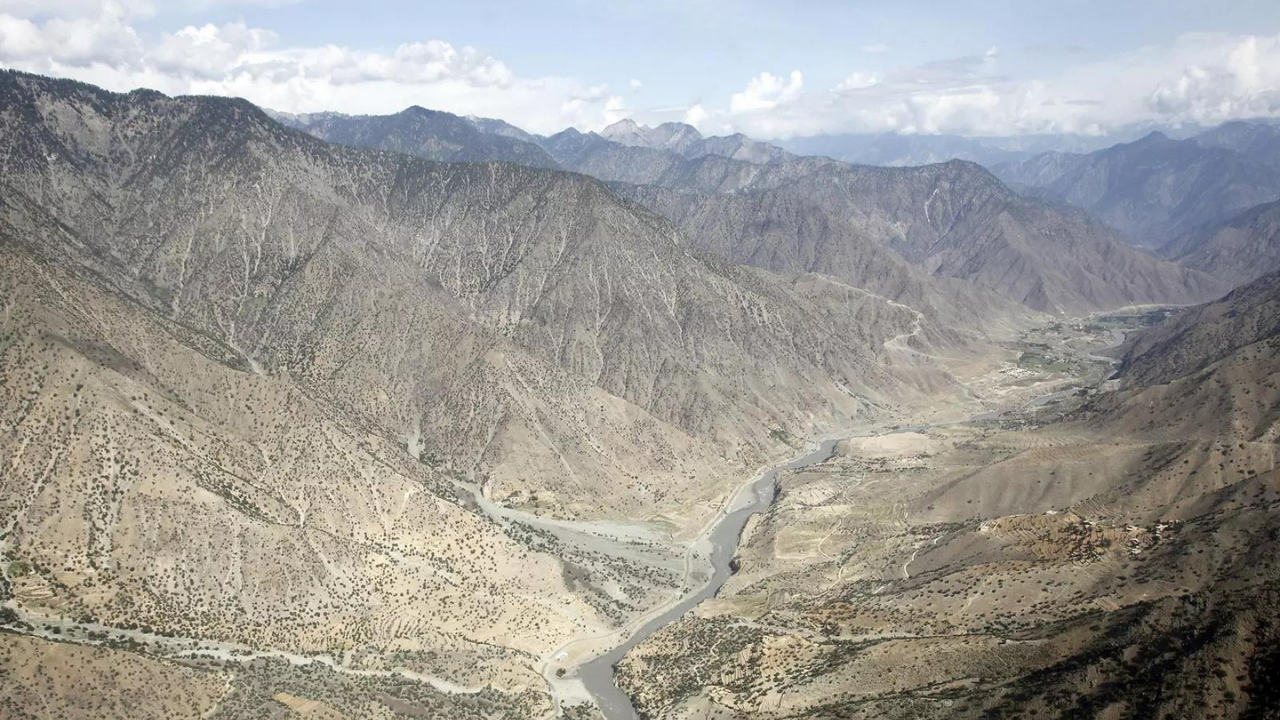
  • A 4.9-magnitude earthquake struck the Hindu Kush mountain range along the Afghanistan-Pakistan border, as recorded by India's National Centre for Seismology.
  • Seismological data confirmed the tremor occurred at a focal depth of 147 kilometers beneath the Earth's surface, classifying it as an intermediate-depth seismic event.
  • No immediate casualties or major structural damages were reported due to the deep hypocenter, which attenuated destructive surface ground shaking across nearby settlements.
  • The Hindu Kush region remains one of the world's most seismically active continental collision zones due to ongoing subduction of the Indian plate under Eurasia.
  • Understanding seismic depth profiles is vital for regional hazard mapping and structural engineering standards across high-risk Himalayan and trans-Himalayan zones.

Prelims Facts

The National Centre for Seismology (NCS) under the Ministry of Earth Sciences is the nodal agency of the Indian Government for monitoring earthquakes.
Intermediate-depth earthquakes occur at focal depths between 70 km and 300 km beneath the Earth's surface.
The Hindu Kush seismic zone is driven by the northward collision of the Indian Tectonic Plate with the Eurasian Plate.

Mains Framework

The occurrence of a 4.9 magnitude earthquake at a focal depth of 147 km in the Hindu Kush emphasizes the complex deep-seated subduction dynamics of the Indo-Eurasian collision zone.

Dimensions

Geophysical Mechanics

Intermediate-depth stress release within the subducted oceanic lithospheric slab beneath the Pamir-Hindu Kush region.

Attenuation Dynamics

Deeper focal depths typically result in broader seismic energy dispersion but reduced peak ground intensity at the epicenter.

Regional Vulnerability

Seismic risks facing mountainous settlements lacking earthquake-resistant structural engineering.

Way forward

Strengthen real-time seismic monitoring networks across South Asia and strictly enforce earthquake-resistant building codes in mountainous border zones.

Key terms
Hindu Kush Seismic ZoneIntermediate-Depth EarthquakeSubduction ZoneTectonic CollisionNational Centre for Seismology
Acts & articles
National Disaster Management Authority (NDMA) Guidelines on EarthquakesBureau of Indian Standards IS 1893 (Seismic Design Criteria)
09
INTERNATIONAL RELATIONS & SECURITY

Strategic Command and East Asian Security: North Korean Leadership Overhaul

Story 1Times of India ↗

North Korean Leadership Overhauls Top Military Brass and Replaces Defence Minister

  • North Korean leader Kim Jong Un executed a major high-level military leadership reshuffle, dismissing Defence Minister No Kwang Chol during a high-level party meeting.
  • State media confirmed Kim Song Gi, former head of the Korean People's Army General Political Bureau, was appointed as the nation's new Defence Minister.
  • Outgoing minister No Kwang Chol was demoted to first vice-director of the Munitions Industry Department, shifting his role toward direct weapons production management.
  • The structural reorganization coincided with official praise for state scientists and defense researchers advancing North Korea's strategic military tech capabilities.
  • This internal political shake-up provides insights into power dynamics and policy priorities within nuclear-armed authoritarian regimes in the Indo-Pacific region.

Prelims Facts

The Central Military Commission of the Workers' Party of Korea is North Korea's supreme organ for military policy and defense command.
The Munitions Industry Department oversees the development, production, and procurement of conventional and strategic weapon systems.
Kim Song Gi previously served as head of the General Political Bureau of the Korean People's Army before being appointed Defence Minister.

Mains Framework

The unexpected dismissal and replacement of North Korea's defense minister underscores an internal consolidation of command structures surrounding advanced military technology development.

Dimensions

Command Restructuring

Re-allocating key military figures to prioritize weapons manufacturing and defense research oversight.

Technological Focus

Alignment of political leadership shifts with recent accelerations in strategic missile and defense tech development.

Regional Geopolitics

Signals sent to neighboring East Asian states and global powers regarding military command cohesion.

Way forward

Promote diplomatic dialogue channels to reduce risk of tactical miscalculation across the Korean Peninsula.

Key terms
Central Military CommissionMunitions Industry DepartmentKorean People's ArmyStrategic ReshuffleIndo-Pacific Security
Acts & articles
UN Security Council Resolutions on Non-ProliferationTreaty on the Non-Proliferation of Nuclear Weapons (NPT)
10
GOVERNANCE & INTERNATIONAL AFFAIRS

Global Public Safety and Gun Control Legislation: Mass Shooting in Switzerland

Story 1Times of India ↗

Shooting at Swiss Techno Rave Leaves One Dead and Five Wounded in Aarau

  • A shooting incident at an annual techno rave in Aarau, Switzerland, resulted in one fatality and injured five individuals, initiating a major police manhunt.
  • Aargau cantonal police cordoned off large areas around the hippodrome venue, where approximately 3,500 attendees had gathered before shots were fired.
  • Authorities launched a large-scale operation and appealed to the public for video evidence to trace the unidentified perpetrators whose motives remain undetermined.
  • Despite maintaining one of Europe's highest rates of gun ownership due to its militia tradition, violent gun crimes remain relatively rare in Switzerland.
  • The event provides a comparative case study on public safety management, law enforcement response, and gun control legislation in developed democracies.

Prelims Facts

Switzerland maintains one of the highest civilian gun ownership rates in Europe due to its military conscription and militia system.
Swiss voters approved tighter gun control legislation in a 2019 referendum to align with European Union firearms regulations.
Cantonal police forces operate as decentralized law enforcement authorities responsible for public security across Swiss cantons.

Mains Framework

A rare fatal shooting at a mass event in Switzerland highlights ongoing debates regarding high civilian firearm density and public safety enforcement.

Dimensions

Legislative Controls

Balance between traditional civilian firearm possession traditions and modern restrictive licensing requirements.

Public Event Safety

Security protocols and police response mechanisms during large-scale public gatherings.

Comparative Governance

Lessons for internal security management from nations with high civilian weapon ratios.

Way forward

Strengthen background screening, enhance public venue security standards, and enforce strict reporting requirements for legal firearm transfers.

Key terms
Gun Ownership RateFirearms RegulationPublic Safety PolicyCantonal PoliceEU Firearms Directive
Acts & articles
Arms Act (India) 1959 vs Foreign Firearms StatutesArticle 21 of the Constitution of India (Right to Life and Personal Security)
11
INTERNATIONAL AFFAIRS & INFRASTRUCTURE SECURITY

International Road Safety & Infrastructure Resilience: Zimbabwe Bus Tragedy

Story 1Times of India ↗

Head-On Highway Collision in Central Zimbabwe Kills 27 Churchgoers

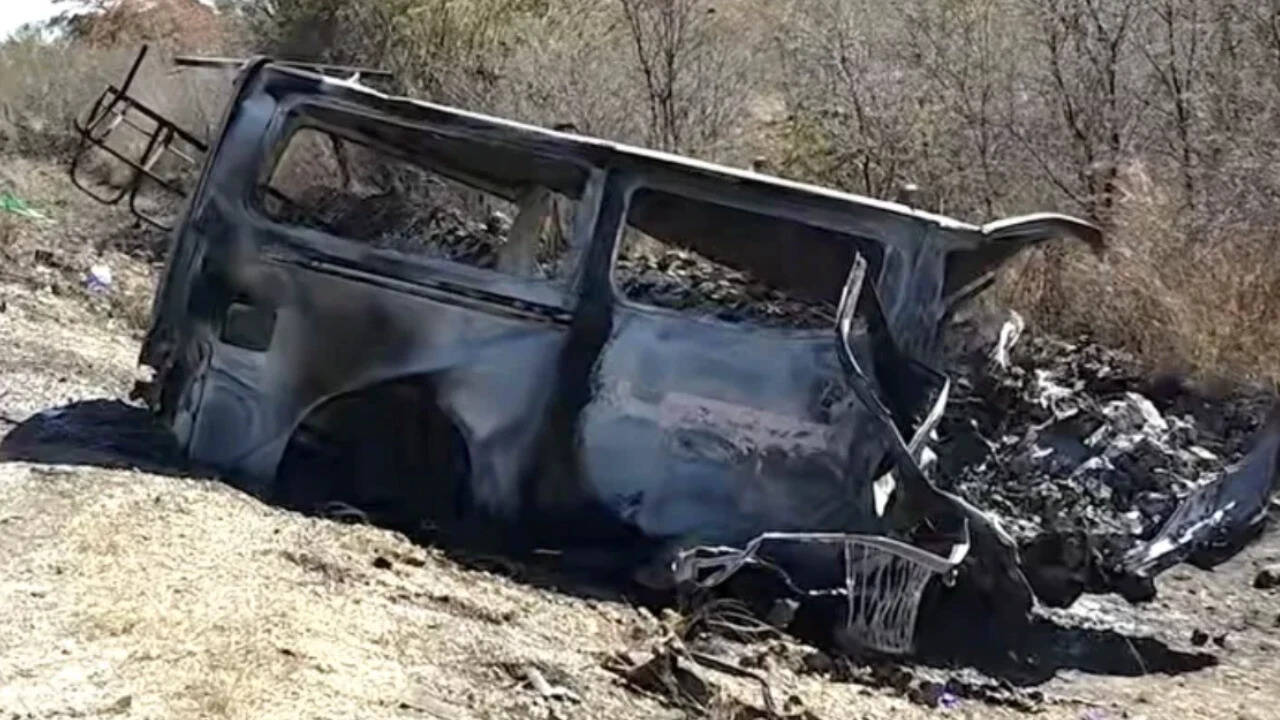
  • At least 27 people were killed when a passenger minibus carrying churchgoers collided head-on with a commercial haulage truck near Chivhu in central Zimbabwe.
  • Police reported that the foreign-registered freight truck was attempting an unsafe overtaking maneuver on a two-lane highway when it struck the oncoming passenger vehicle.
  • The collision triggered an intense fire that completely gutted the minibus, leaving seven survivors with severe injuries requiring emergency hospitalization.
  • High-fatality traffic accidents present recurring socio-economic losses across developing nations, driven by poor vehicle maintenance, driver fatigue, and inadequate road design.
  • This tragedy underscores global policy imperatives under the UN Decade of Action for Road Safety to improve public transport safety regulations and highway infrastructure.

Prelims Facts

The UN Decade of Action for Road Safety aims to reduce road traffic deaths and injuries by at least 50% by 2030.
High vehicle overloading and poor highway lighting are primary contributing factors to high-fatality commercial transit crashes in developing economies.
Head-on collisions involving heavy freight haulage trucks typically represent the highest fatality category among highway traffic incidents.

Mains Framework

A high-fatality highway collision in central Zimbabwe illustrates critical systemic challenges surrounding commercial transport regulation and road safety enforcement in developing economies.

Dimensions

Regulatory Oversight

Inadequate enforcement of speed limits, vehicle fitness certifications, and hazardous overtaking rules.

Infrastructure Design

Lack of divided carriageways and physical barriers on major interstate transport corridors.

Emergency Response Capacity

Delays in post-crash medical trauma care contributing to high mortality rates.

Way forward

Implement mandatory speed governors on public transport vehicles, widen high-density transit corridors, and strengthen emergency medical response teams along highways.

Key terms
Road Safety ProtocolsTransport InfrastructureHaulage RegulationTraffic Safety ManagementMotor Vehicle Standards
Acts & articles
Motor Vehicles Act (Comparative Transportation Law)Brasilia Declaration on Road Safety
12
ART & CULTURE & LAW

Cultural Heritage Restitution and International Art Governance

Story 1Times of India ↗

Missing 1949 Picasso Etching Recovered in Milwaukee After Eight Years

  • An original 1949 Pablo Picasso etching titled 'Torero', missing since its theft from a gallery in 2018, was successfully recovered in Milwaukee.
  • A landlord discovered the framed print left behind in a vacant apartment bedroom, subsequently having its authenticity verified by an antique specialist.
  • The artwork featured Picasso's distinct green crayon signature beneath a layer of dust, prompting law enforcement handover and provenance identification.
  • Stolen fine art often vanishes into private spaces for years, emphasizing challenges faced by international registries tracking lost cultural heritage.
  • This recovery highlights legal processes involved in authenticating, recovering, and returning stolen cultural assets under property governance laws.

Prelims Facts

Pablo Picasso's 1949 work 'Torero' is a famous master etching depicting a bullfighter created during his post-WWII artistic period.
The 1970 UNESCO Convention deals specifically with the Means of Prohibiting and Preventing the Illicit Import, Export and Transfer of Ownership of Cultural Property.
Provenance in art history refers to the documented chronology of ownership, custody, or location of a historical piece of art.

Mains Framework

The unexpected recovery of a missing Pablo Picasso etching after eight years illustrates the importance of public awareness, provenance verification, and law enforcement in art recovery.

Dimensions

Legal & Restitution Frameworks

Domestic and international law mechanisms governing stolen cultural artifacts and fine art.

Provenance & Verification

Role of art historians and databases in identifying missing cultural treasures.

Public Engagement

Impact of civic reporting in recovering long-lost historical and artistic assets.

Way forward

Establish comprehensive digital registries for listed cultural property and strengthen Interpol art crime enforcement units globally.

Key terms
Cultural Property ProtectionArt ProvenanceUNIDROIT ConventionRestitution of Stolen GoodsHeritage Governance
Acts & articles
Antiquities and Art Treasures Act, 19721995 UNIDROIT Convention on Stolen or Illegally Exported Cultural Objects

Practice MCQs — Test Your Understanding

6 questions · UPSC Prelims pattern · Tap an option to check your answer

DISASTER MANAGEMENTTransboundary Disaster Management and Relief Diplomacy in South Asia

Glacial Collapse Triggers Devastating Flash Floods Across Nepal-Tibet Border

Q1With reference to Himalayan Glacial Lake Outburst Floods (GLOFs), consider the following statements: 1. GLOFs occur when an unstable natural dam composed of glacial moraine or ice suddenly breaches. 2. The Trishuli and Bhotekoshi river basins flow directly into India without traversing Nepalese territory. 3. Satellite-based monitoring can track changes in the surface area of high-altitude impounded lakes to assess breach risks. Which of the statements given above are correct?

ECONOMYGeopolitics and Energy Security: India-Russia Petroleum Trade Dynamics

India Emerges as Major Gasoline Supplier to Russia Following Refinery Disruptions

Q2Consider the following statements regarding petroleum refining and trade dynamics: 1. Finished motor gasoline is produced through the secondary refining and cracking of crude oil. 2. India's Nayara Energy operates a major refinery located at Vadinar, Gujarat. 3. India relies entirely on state-owned public sector refineries for processing foreign crude oil. Which of the statements given above is/are correct?

POLITYCriminal Jurisprudence and Fundamental Rights: Accused Rights to FIR Copies

Supreme Court Directs Police to Provide FIR Copy and CCTV Footage to Accused

Q3Which landmark case laid down the directive that First Information Reports (FIRs) should generally be uploaded on police or government websites within 24 hours of registration?

ENVIRONMENT & GEOGRAPHYUrban Hydrology and Infrastructure Vulnerability under Flash Droughts

Severe Summer Flash Drought Strains Water Infrastructure Across Southeast England

Q4Consider the following statements regarding 'Flash Droughts': 1. They develop rapidly within a few weeks due to extreme evapotranspiration, high temperatures, and low precipitation. 2. They cannot occur in regions that received above-average rainfall during preceding winter months. 3. Desiccation of clay soils during sudden droughts can lead to ground subsidence damaging built infrastructure. Which of the statements given above is/are correct?

GEOGRAPHYGeophysics and Seismology: Intermediate-Depth Earthquake in the Hindu Kush

Earthquake of 4.9 Magnitude Strikes Hindu Kush Region Along Afghanistan Border

Q5With reference to earthquakes, consider the following statements: 1. Intermediate-depth earthquakes occur at focal depths between 70 km and 300 km beneath the Earth's surface. 2. Earthquakes with deeper focal depths generally cause more intense surface destruction than shallow-focus quakes of equal magnitude. 3. The Hindu Kush region lies along the active tectonic collision zone of the Indian and Eurasian plates. Which of the statements given above are correct?

ART & CULTUREHeritage Conservation and French Colonial Architecture in Puducherry

Restoration Commences for 18th-Century Heritage Police Building in Puducherry

Q6Consider the following statements regarding heritage preservation in India: 1. INTACH (Indian National Trust for Art and Cultural Heritage) is a statutory autonomous body created under an Act of Parliament. 2. Grade II B heritage buildings generally permit internal renovations while strictly mandating the preservation of original external facades. 3. Article 49 of the Indian Constitution instructs the State to protect monuments and places of artistic or historic interest. Which of the statements given above is/are correct?