Karnataka Special Intensive Revision draft rolls exclude over 1.07 crore voters
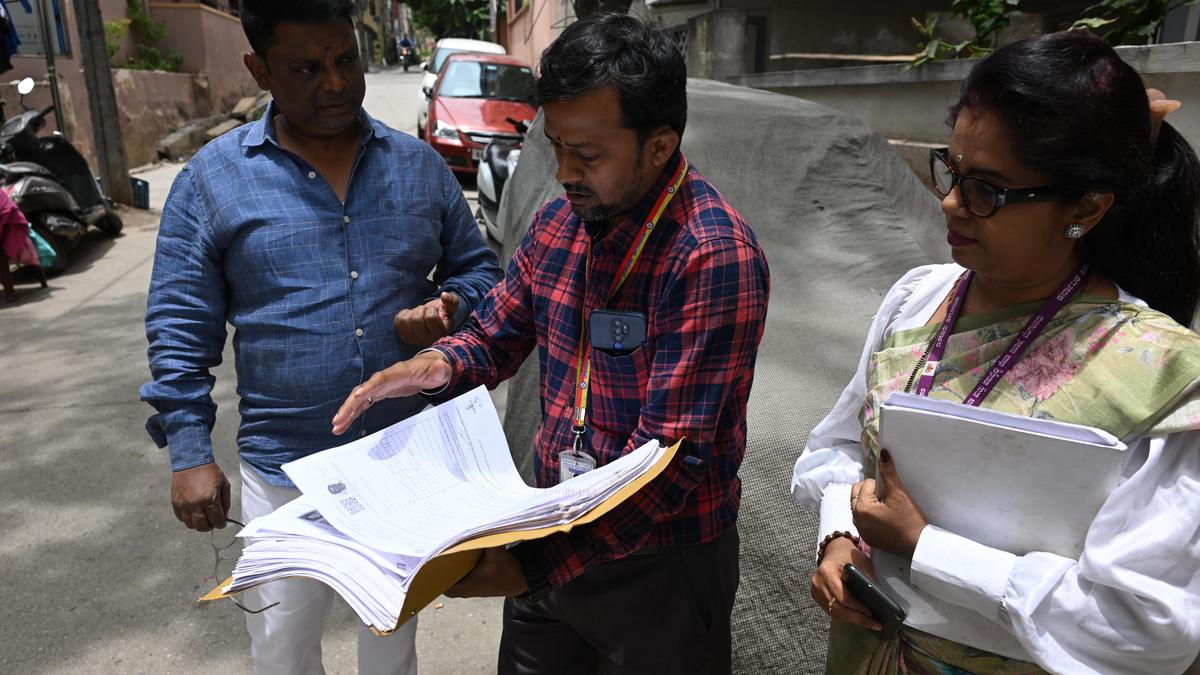
The office of the Chief Electoral Officer in Karnataka is publishing draft electoral rolls following an intensive enumeration process.
Bengaluru and across Karnataka state electoral authorities identified non-traceable voters under administrative revision procedures.
Over 1.07 crore voters, constituting 19.48 percent of the state electorate, face deletion under the ASDDO classification framework.
Bengaluru urban electorate alone shrinks from over 1.03 crore registered voters down to 56.11 lakh in draft rolls.
Highlights administrative challenges in maintaining pure voter lists while safeguarding constitutional voting rights against improper disenfranchisement.
Telangana auto drivers call off indefinite strike following welfare board assurance
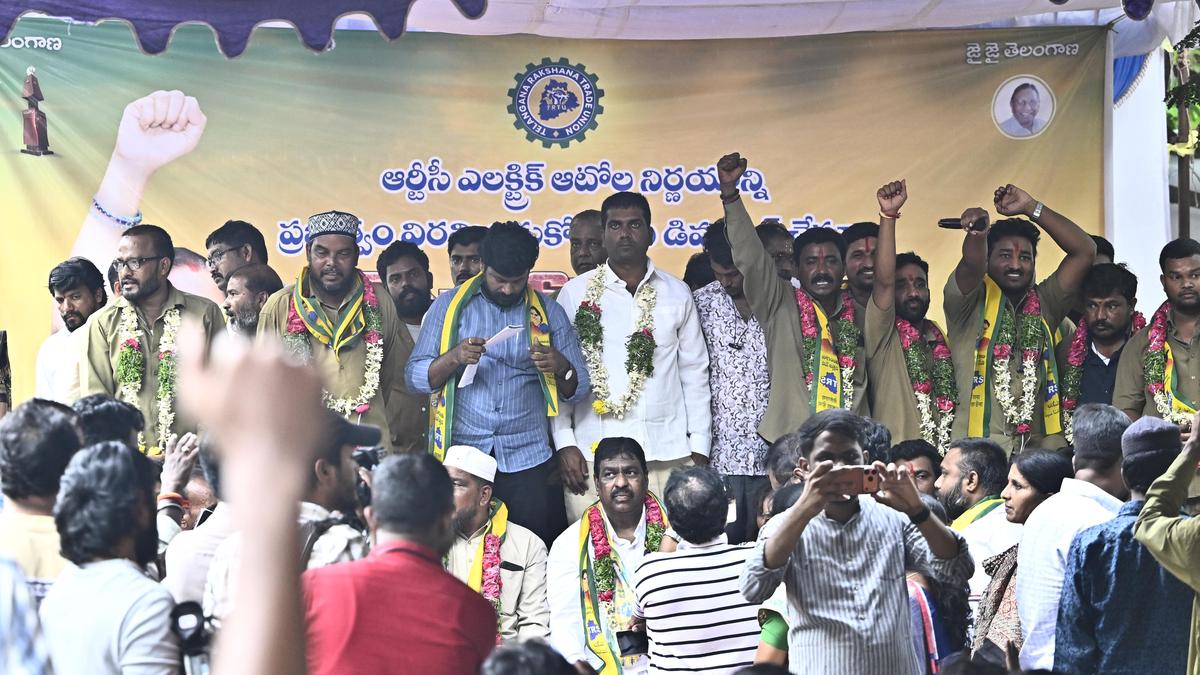
Auto driver unions in Telangana cancelled a planned statewide indefinite strike after successful government level negotiations.
Transport Minister Ponnam Prabhakar met leaders of the Joint Action Committee representing auto, cab, and van drivers in Hyderabad.
The state government agreed to constitute a dedicated welfare board and consider fare revision demands raised in a 14-point charter.
The agreement resolved immediate transit disruption threats across major urban centers following assurances on financial security.
Illustrates state intervention mechanisms to formalize social safety nets for unorganized transport sector workers under state governance.
Prelims Facts
Special Intensive Revision (SIR) categorizes non-verifiable voters under the ASDDO (Absent, Shifted, Duplicate, Dead, and Others) list.
State-level welfare boards for motor transport workers operate under statutory frameworks governing unorganized sector social security.
Draft electoral rolls published during intensive revisions allow a specific window for public claims, objections, and voter re-verification.
Mains Framework
Clean electoral rolls and social security safety nets for informal workers constitute twin pillars of robust democratic governance and social justice in modern states.
Dimensions
Electoral integrity risks arising from mass voter exclusions without adequate field verification during intensive roll purges.
Socio-economic vulnerability of gig and informal transport workers operating without formal welfare boards or regulated tariff structures.
Administrative coordination challenges between state transport authorities, election commissions, and civic worker unions.
Way forward
Implement multi-stage ground verification before voter deletion and establish sustainable fund-matching mechanisms for dedicated worker welfare boards.
Key terms
Special Intensive RevisionElectoral Roll PurityInformal Sector Welfare BoardASDDO Elector CategoryUnorganised Workers Social Security
Acts & articles
Article 324Representation of the People Act, 1950Unorganised Workers' Social Security Act, 2008Article 43
02
GS PAPER III - SCIENCE & TECHNOLOGY & CYBER SECURITY
AI-Generated Deepfakes, Cyber Security, and Post-Quantum Cryptography
Rise in AI digital undressing tools sparks calls for stricter technology regulation
Generative artificial intelligence tools are increasingly utilized to create non-consensual explicit deepfakes using photos scraped from public profiles.
Incidents reported across public transport networks in India highlight the growing misuse of mobile software against women.
Prominent authors and activists emphasize that algorithmic exploitation strips women of digital agency and fundamental bodily autonomy.
Current social media reporting mechanisms and law enforcement responses remain largely inadequate to curb rapid viral proliferation.
Underscores the urgent need for stringent legal frameworks addressing AI-assisted image manipulation and tech-facilitated gender violence.
Financial consortium launches cross-regional pilot testing post-quantum cryptographic security
Responsible Fintech Institute and tech partner Safeheron launched a cross-regional pilot to evaluate post-quantum security in financial networks.
Global banking institutions and financial regulatory stakeholders across multiple jurisdictions joined the research initiative in Singapore.
The pilot tests multi-party computation protocols utilizing the NIST-standardized ML-DSA-65 post-quantum cryptography algorithm for wallet security.
The initiative seeks to open-source quantum-resilient infrastructure for institutional digital asset transfers before commercial quantum computing arrives.
Demonstrates proactive cybersecurity modernization required to protect financial systems against future quantum decryption threats.
Prelims Facts
Post-quantum cryptography (PQC) algorithms such as ML-DSA-65 are designed to withstand attacks by future fault-tolerant quantum computers.
Multi-party computation (MPC) protocols allow distributed digital asset signatures without exposing private cryptographic keys.
Deepfake technology leverages generative adversarial networks (GANs) to alter media assets from public digital footprints.
Mains Framework
The rapid advancement of artificial intelligence and quantum computing creates severe dual challenges for technological ethics, individual privacy, and financial system resilience.
Dimensions
Infringement of bodily autonomy and dignity through AI-driven non-consensual image manipulation targeting women.
Vulnerability of current public-key encryption infrastructure to future quantum decryption capabilities in banking.
Regulatory gaps in platform accountability and digital enforcement across national and cross-border jurisdictions.
Way forward
Enact strict statutory criminal penalties for non-consensual AI manipulation and accelerate systemic adoption of post-quantum standards across critical infrastructure.
Key terms
Post-Quantum CryptographyNon-Consensual DeepfakesMulti-Party ComputationML-DSA-65 AlgorithmBodily Autonomy in Cyberspace
Acts & articles
Information Technology Act, 2000Digital Personal Data Protection Act, 2023Article 21
03
GS PAPER II & III - INTERNATIONAL RELATIONS & CYBER SECURITY
Geopolitics, Nuclear Diplomacy, and Cyber Threats to Critical Energy Infrastructure
Cyberattack linked to Iranian hackers temporarily disables British power generation facility
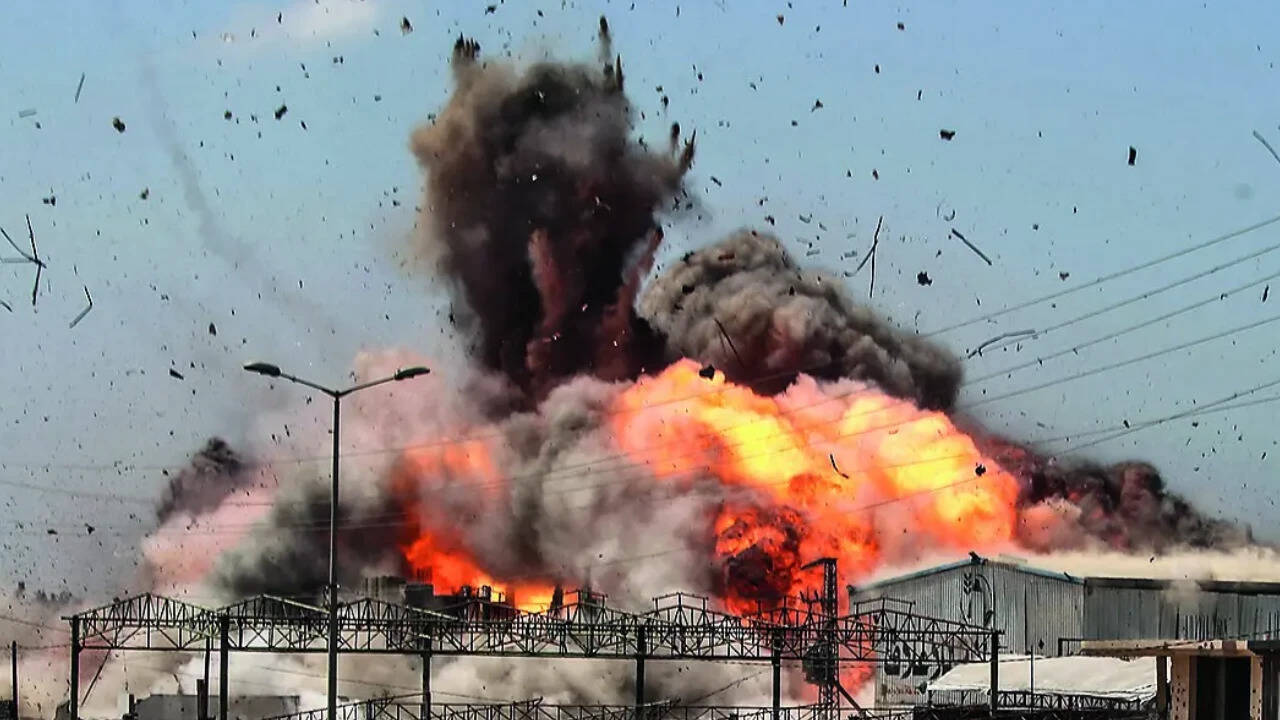
Hackers associated with state actors allegedly shut down a small British energy generation site for four days.
The cyber intrusion targeted a gas-fired auxiliary power plant in the United Kingdom without causing widespread national grid outages.
UK Energy Minister Michael Shanks confirmed the site was small, but security agencies treated the operational disruption as serious.
Security experts suspect the attack served as a proof-of-capability demonstration against distributed critical national energy infrastructure.
Underscores expanding vulnerabilities in decentralized power grids facing sophisticated foreign state-sponsored cyber threats.
Prelims Facts
Critical Information Infrastructure (CII) includes assets whose incapacitation severely impacts national security or economic stability.
Gas-fired peak load generators provide vital grid stability during sudden fluctuations in power demand.
Diplomatic Memorandums of Understanding (MoUs) serve as non-binding international frameworks to establish preliminary terms between nations.
Mains Framework
Escalating geopolitical friction in West Asia increasingly intersects with cyber warfare, posing severe risks to global economic stability and energy security.
Dimensions
Diplomatic bargaining frameworks between Western powers and regional actors to de-escalate military and economic standoff.
Vulnerability of small-scale distributed energy generation assets to targeted external state-sponsored cyber intrusions.
Collateral impacts on global maritime routes, energy supply chains, and inflation in import-dependent developing nations.
Way forward
Strengthen air-gapped protection for grid utilities while pursuing multilateral diplomacy to enforce rules against targeting civilian infrastructure.
Key terms
Critical Information InfrastructureStrait of Hormuz SecurityAsymmetric Cyber WarfareEconomic Sanctions DiplomacyIndustrial Control System Hacking
Acts & articles
Information Technology Act, 2000 (Section 70)UN Charter Article 2(4)National Cyber Security Policy
04
GS PAPER III - ENVIRONMENT & ECOLOGY
Ecological Rewilding and Invasive Species Eradication Strategies
Two-decade rewilding project in Scottish Highlands restores native pine forests and red squirrels
Conservationist Paul Lister transformed the 23,000-acre Alladale estate into a major ecological rewilding reserve over 23 years.
Located in Sutherland in the Scottish Highlands, the property was previously degraded by centuries of intense deer overgrazing.
Over one million native trees were planted across glens, enabling the successful reintroduction of native red squirrels.
The project replaced traditional hunting activities with eco-tourism revenue to fund continuous habitat regeneration and ecological monitoring.
Serves as a model for landscape-scale private land restoration and native habitat connectivity.
Prelims Facts
Hawadax Island (formerly Rat Island) in the Aleutian archipelago achieved invasive rodent eradication after two centuries of infestation.
Island ecosystems are exceptionally vulnerable to alien predators, which decimate ground-nesting seabird populations.
Rewilding emphasizes natural process recovery by reintroducing keystone fauna and native climax forest species.
Mains Framework
Invasive species and land degradation represent severe drivers of global biodiversity loss, making ecological restoration crucial for planetary resilience.
Dimensions
Rapid biodiversity bounce-back achievable on isolated island sanctuaries following complete eradication of non-native predators.
Role of private land stewardship and long-term afforestation in reversing centuries of overgrazing and soil erosion.
Socio-economic integration of eco-tourism with ecological conservation to sustain multi-decade rewilding operations.
Way forward
Combine rigorous biosecurity protocols for fragile island biomes with community-supported native ecosystem regeneration programs globally.
Alabama student campaign uses recycled Christmas trees to trap sand and restore coastal dunes
High school students in Gulf Shores, Alabama, lead an annual coastal dune restoration project using discarded holiday trees.
Around 200 student volunteers collect discarded trees annually and deploy them along public Gulf of Mexico beaches.
Volunteers anchor the trees to trap windblown sand while planting roughly 3,000 native coastal plants to bind emerging dunes.
Initiated in 2021, the community project provides a low-cost, natural barrier against storm surges and coastal erosion.
Serves as an effective model for youth-led nature-based solutions in coastal disaster risk reduction.
Prelims Facts
CoolSeal reflective pavement coatings reduce asphalt surface heat but can reflect solar radiation, raising pedestrian thermal exposure.
Artificial reef modules constructed from pH-neutral concrete support marine organism colonization without altering ocean chemistry.
Trapping windblown sand around biodegradable organic structures accelerates sand dune formation and coastal stabilization.
Mains Framework
Innovative urban engineering and nature-based coastal interventions are essential to safeguard human populations and biomes against accelerating climate impacts.
Dimensions
Trade-offs in reflective pavement technology between asphalt cooling and increased radiant heat load on urban pedestrians.
Deployment of environmentally neutral artificial structures to accelerate coral recruitment and marine ecosystem recovery.
Community-driven coastal engineering utilizing recycled natural materials to prevent coastal erosion and storm surge damage.
Way forward
Integrate shade canopy planning with reflective coatings in cities while scaling up community-led marine and coastal habitat restoration.
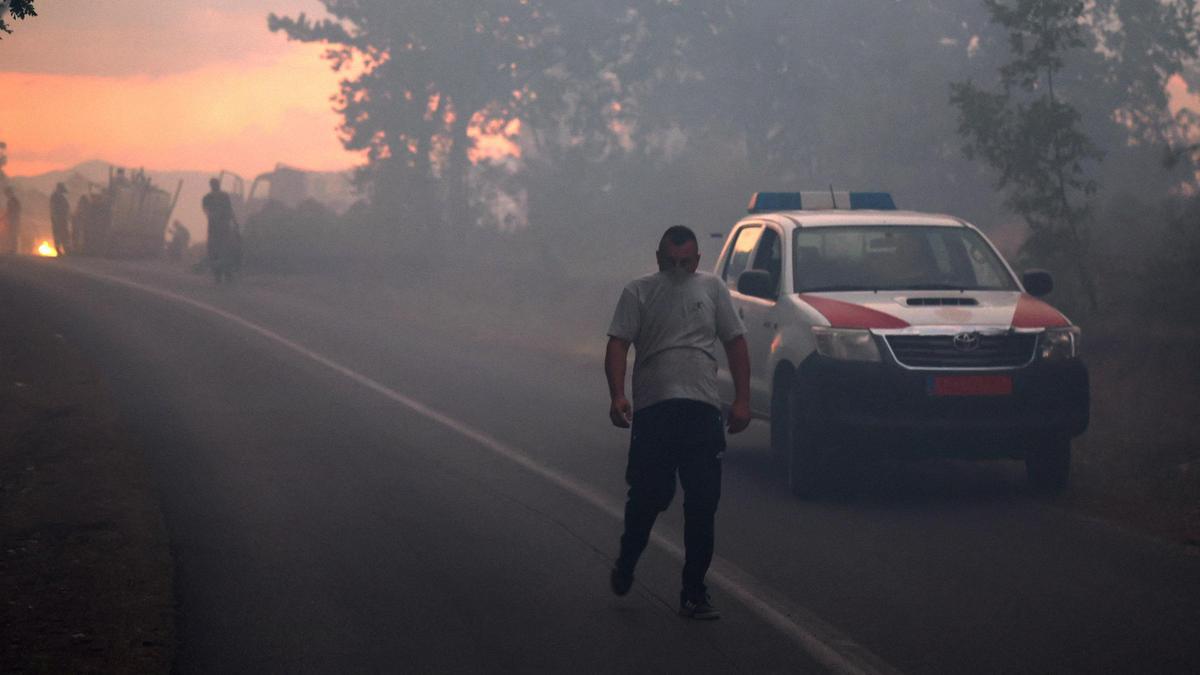
Fast-moving Hawk Fire forces state of emergency and mass evacuations in Reno Nevada
A rapid human-caused wildfire spread across Peavine Peak in Humboldt-Toiyabe National Forest near Reno, Nevada.
Emergency management officials declared a state of emergency as shifting winds drove flames across more than 60 square kilometers.
Authorities issued GO NOW emergency evacuation orders affecting approximately 90,000 residents in residential and commercial zones.
The blaze destroyed multiple structures, jumped over fire apparatus, and injured six people including three first responders.
Underlines rising disaster management challenges posed by urban-wildland interface fires driven by shifting wind conditions.
Prelims Facts
ICMR confirmed circulating Indian H1N1 influenza belongs to the A/Missouri/11/2025 (H1N1) pdm09-like strain.
Existing seasonal influenza vaccines retain cross-protective efficacy against currently identified circulating H1N1 variants.
Fast-moving wildfires require early GO NOW evacuation orders due to rapid wind-driven flame propagation.
Mains Framework
Robust epidemiological surveillance networks and agile disaster emergency frameworks are critical to protect public health and safety during compound crises.
Dimensions
Continuous genomic tracking to confirm strain stability and ensure existing vaccine stockpiles remain effective.
Operational challenges in executing mass emergency evacuations amid erratic, wind-driven wildfire threats in urban-wildland interfaces.
Inter-agency coordination between health research institutes, disaster management authorities, and local first responders.
Way forward
Strengthen national laboratory genomic networks while modernizing wildland fire prediction models and community evacuation protocols.
6 questions · UPSC Prelims pattern · Tap an option to check your answer
GS PAPER II - GOVERNANCEElectoral Revision Integrity and Welfare Board Governance for Informal Sector Workers
Karnataka Special Intensive Revision draft rolls exclude over 1.07 crore voters
Q1Regarding electoral roll revisions in India, consider the following statements:
1. The Special Intensive Revision (SIR) process utilizes house-to-house enumeration to verify voter credentials.
2. Voters categorized under the ASDDO list are automatically permanently barred from future electoral registration.
3. The final authority to publish electoral rolls in a state rests with the Chief Electoral Officer under supervision of the Election Commission of India.
Which of the statements given above is/are correct?
Answer: Option B
Statements 1 and 3 are correct. Special Intensive Revision involves enumeration phase verification, and draft rolls are published by the Chief Electoral Officer's office. Statement 2 is incorrect because voters listed under ASDDO (Absent, Shifted, Duplicate, Dead, Others) during draft roll publication have a window to file claims and objections to re-verify their status before final publication.
GS PAPER III - SCIENCE & TECHNOLOGYAI-Generated Deepfakes, Cyber Security, and Post-Quantum Cryptography
Financial consortium launches cross-regional pilot testing post-quantum cryptographic security
Q2Consider the following statements regarding Post-Quantum Cryptography (PQC):
1. PQC algorithms are designed to secure digital infrastructure against potential decryption attacks by quantum computers.
2. ML-DSA-65 is a post-quantum digital signature algorithm standardized by international standards bodies.
3. Multi-party computation (MPC) protocols require private keys to be completely assembled on a single central server during transaction signing.
Which of the statements given above are correct?
Answer: Option A
Statements 1 and 2 are correct. PQC algorithms like ML-DSA-65 protect against quantum decryption threats. Statement 3 is incorrect because multi-party computation protocols specifically distribute key secret shares among multiple parties so that private keys are never assembled on a single server, preventing single-point vulnerability.
GS PAPER III - CYBER SECURITYGeopolitics, Nuclear Diplomacy, and Cyber Threats to Critical Energy Infrastructure
Cyberattack linked to Iranian hackers temporarily disables British power generation facility
Q3Which of the following best describes the security risk associated with distributed small-scale energy generators connected to a national power grid?
Answer: Option C
Small-scale distributed generators connected to the power grid often feature industrial control systems that can be targeted by cyber adversaries as a proof-of-capability demonstration or entry point, even if they do not immediately disrupt the national transmission grid.
GS PAPER III - ENVIRONMENT & ECOLOGYEcological Rewilding and Invasive Species Eradication Strategies
Invasive rat eradication on Hawadax Island triggers massive native bird recovery
Q4With reference to island ecosystem conservation, consider the following statements:
1. Island avifauna are particularly vulnerable to invasive rodents because many native species are ground-nesting.
2. Complete removal of non-native alien predators can lead to rapid recovery of native seabird breeding populations.
3. Hawadax Island is situated in the Indian Ocean marine protected zone.
Which of the statements given above is/are correct?
Answer: Option B
Statements 1 and 2 are correct. Ground-nesting native seabirds suffer heavily from non-native rodents, and eradicating alien predators yields swift population recovery. Statement 3 is incorrect because Hawadax Island is located in the Aleutian archipelago in Alaska, not the Indian Ocean.
GS PAPER III - CLIMATE CHANGEUrban Heat Mitigation, Artificial Reefs, and Biological Dune Restoration
Q5In the context of urban heat island mitigation, what is the primary trade-off observed when applying highly reflective 'cool pavement' coatings to asphalt streets?
Answer: Option B
As demonstrated in urban heat trials in Phoenix, reflective pavement coatings successfully lower the physical asphalt surface temperature, but the reflected solar radiation increases radiant heat exposure for pedestrians walking along the street.
GS PAPER III - SCIENCE & TECHNOLOGYPublic Health Disease Surveillance and Disaster Management Resilience
Q6Regarding Influenza A (H1N1) surveillance in India, consider the following statements:
1. The Indian Council of Medical Research (ICMR) conducts genomic tracking to monitor circulating viral strains.
2. Identifying a circulating virus as a pdm09-like strain indicates the complete failure of existing seasonal flu vaccines.
3. Continuous strain monitoring is crucial to determine whether vaccine formulations require updating.
Which of the statements given above are correct?
Answer: Option B
Statements 1 and 3 are correct. ICMR tracks viral strains to inform public health responses and vaccine effectiveness. Statement 2 is incorrect because the ICMR confirmed that circulating pdm09-like strains are well-matched by existing seasonal vaccines, which remain effective.