India and China Hold 25th Round of Special Representative Border Talks in Beijing
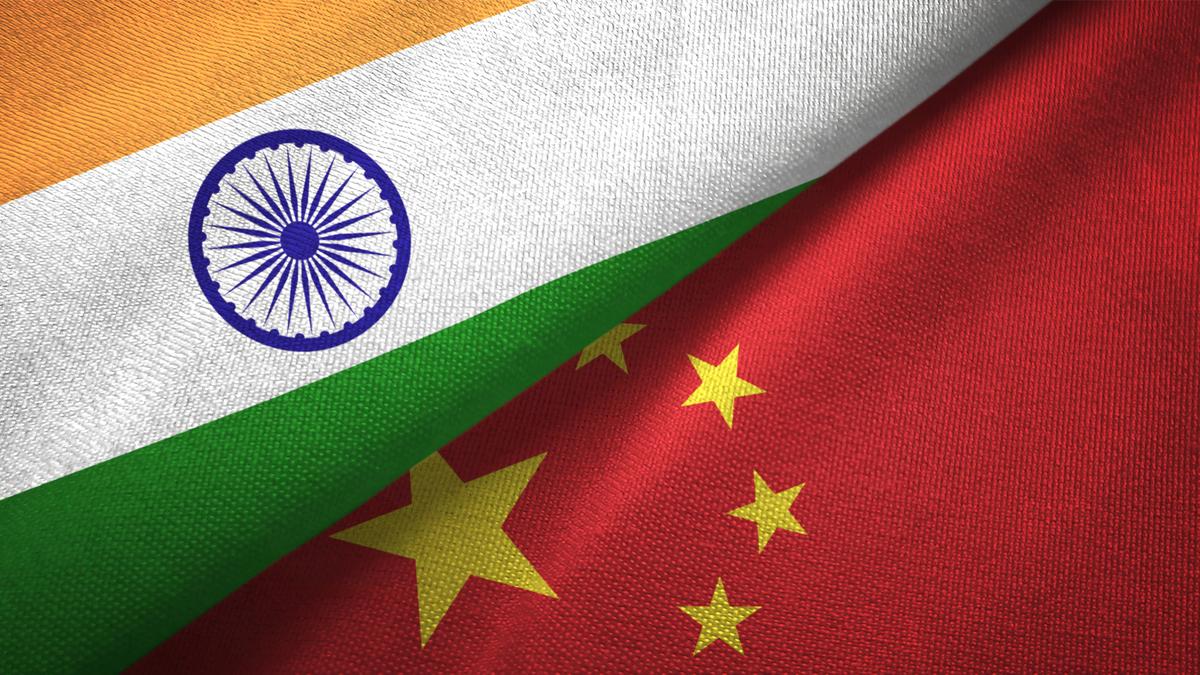
National Security Advisor Ajit Doval and Chinese Foreign Minister Wang Yi held the 25th round of Special Representatives talks on the boundary question in Beijing.
Chinese strategic scholar Hu Shisheng noted that while structural differences persist between India and China, the current diplomatic priority is institutionalising stability along the Line of Actual Control.
The high-level bilateral dialogue took place ahead of Chinese President Xi Jinping's planned visit to India for the upcoming BRICS Summit, marking his first visit in seven years.
The discussions aimed to stocktake bilateral relations and maintain peace along the border, which Chinese officials described as being generally stable at the moment.
This issue is highly relevant for GS-2 International Relations, specifically regarding border management, bilateral mechanisms, and diplomatic engagement with neighbouring major powers.
Prelims Facts
The Special Representatives (SR) mechanism between India and China for border resolution was established in 2003.
National Security Advisor Ajit Doval represents India as the Special Representative in boundary talks with China.
The 25th round of Special Representative talks took place in Beijing ahead of the BRICS Summit hosted in India.
Mains Framework
The 25th round of Special Representative talks in Beijing marks an essential effort to institutionalise stability along the Line of Actual Control (LAC) while addressing core structural differences.
Dimensions
Diplomatic Dimension
Sustaining high-level dialogue mechanisms between Special Representatives to manage border friction points peacefully.
Strategic Dimension
Stocktaking bilateral relations ahead of multilateral forums like the BRICS Summit to avoid escalation.
Security Dimension
Decoupling border stabilization efforts from long-term unresolved structural territorial claims.
Way forward
Focus on step-by-step confidence-building measures (CBMs), political willingness to respect disengagement protocols, and maintaining institutionalized communication channels.
Key terms
Special Representative TalksLine of Actual ControlInstitutionalising StabilityBoundary QuestionStrategic Confidence Building
Acts & articles
1993 Border Peace and Tranquility Agreement1996 Agreement on Confidence Building Measures along the LAC2005 Agreement on Political Parameters and Guiding Principles
02
INTERNATIONAL RELATIONS
Geopolitics of West Asia and Escalating US-Iran Tensions
Iranian President Warns US Against Coercion During Talks With Pakistan Army Chief
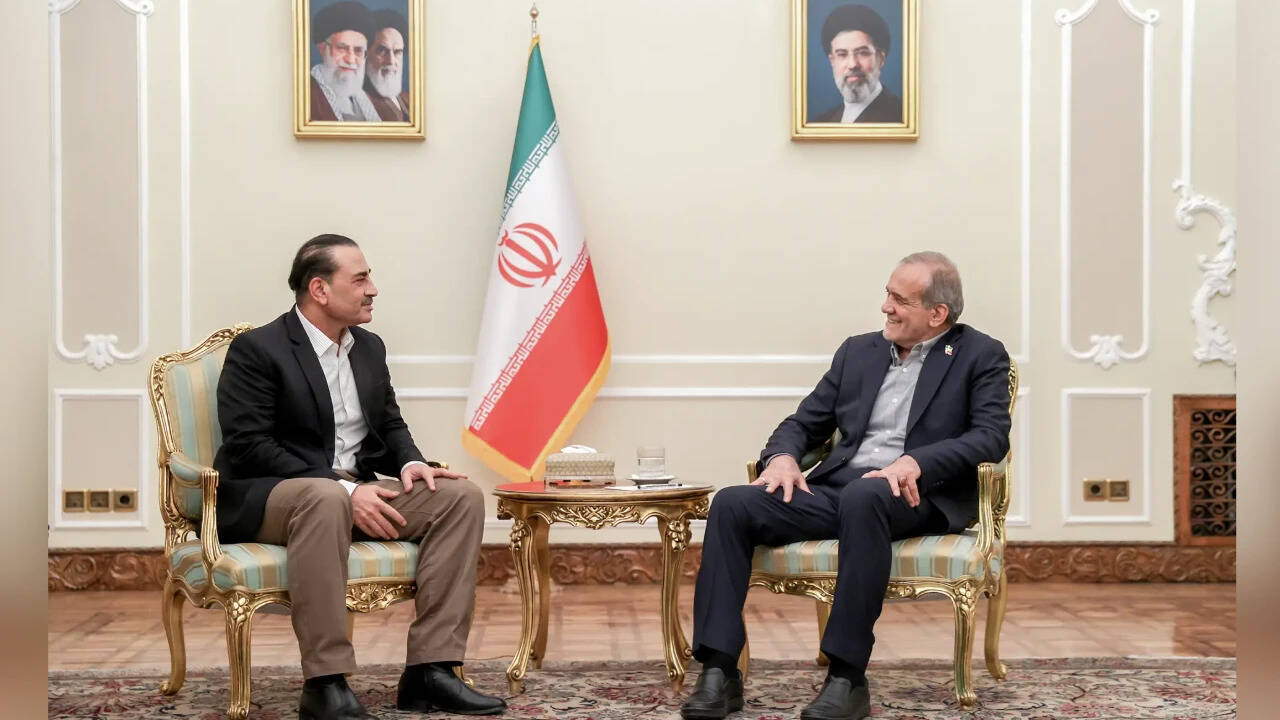
Iranian President Masoud Pezeshkian met Pakistan Army chief Asim Munir in Tehran, warning that United States coercion and bullying would severely complicate diplomatic implementation processes.
The bilateral meeting occurred in Tehran amid heightened regional tensions and escalating diplomatic friction between the United States and Iran over expanded economic sanctions.
President Pezeshkian emphasized that Washington must correct its tone and adhere to commitments, while seeking to advance goals outlined in a 14-point Memorandum of Understanding with Pakistan.
The discussion highlights Pakistan's balancing role and regional diplomacy amidst intensifying US-Iran friction and economic pressure targeting Iranian trade channels.
Relevant for GS-2 International Relations, covering West Asian geopolitics, regional security dynamics, multi-alignment, and the impact of unilateral sanctions on global stability.
Prelims Facts
Iranian President Masoud Pezeshkian held high-level talks with Pakistan Army Chief Asim Munir in Tehran.
The US Treasury Department issued sanctions on 60 Iranian individuals, vessels, and economic entities.
Unilateral US sanctions leverage the dominance of the US dollar to impose secondary financial restrictions globally.
Mains Framework
Expanding US economic sanctions on Iran and Tehran's counter-diplomacy emphasize the volatility of West Asian power dynamics and the weaponization of dollar-dominated financial systems.
Dimensions
Economic Dimension
Threats to exclude non-compliant trading nations from global dollar-based transactional networks.
Diplomatic Dimension
Iranian outreach to neighbouring nations like Pakistan to build regional diplomatic buffers against coercion.
Geopolitical Dimension
Disruption of international trade corridors, oil supply chains, and economic stability across the Middle East.
Way forward
Promote multilateral consensus under United Nations frameworks and encourage alternative trade settlement mechanisms to mitigate unilateral economic shocks.
Dust and Vibration From Stone Quarries Threaten Assam Semiconductor Assembly Plant
Environmental activists petitioned the Assam government warning that nearby dust-producing stone quarries and crushers risk paralyzing the ₹27,000 crore Tata Semiconductor Assembly and Test facility in Morigaon.
The semiconductor plant is located at Jagiroad in Morigaon district, approximately 55 kilometres east of Guwahati, where over 60% of construction work is already completed.
India Semiconductor Mission guidelines require ISO Class 1 to 5 vibration-damped cleanrooms to insulate chip fabrication from microscopic dust contamination and demand millions of gallons of ultraclean water.
Green activists warned that unmitigated quarrying within a 5-kilometre radius causes severe air pollution and flash floods, directly threatening high-precision semiconductor manufacturing infrastructure.
Directly connects to GS-3 Infrastructure, Science and Technology, and Environment, emphasizing industrial zoning, high-tech manufacturing requirements, and ecological impact assessments.
Prelims Facts
The Tata Semiconductor Assembly and Test (TSAT) facility is being set up at Jagiroad in Assam's Morigaon district.
Cleanroom environments for semiconductor manufacturing are classified from ISO Class 1 to ISO Class 5 to prevent airborne micro-particle contamination.
Morigaon's semiconductor project is implemented under the national umbrella of the India Semiconductor Mission (ISM).
Mains Framework
The conflict between nearby quarrying activity and Assam's semiconductor plant illustrates the critical need to align environmental management with precision high-tech infrastructure goals.
Dimensions
Technological Dimension
Strict requirement of ISO Class 1-5 cleanrooms free from air particulates and ambient ground vibrations.
Environmental Dimension
Air pollution and flash flood risks created by unmonitored stone quarrying within buffer zones.
Governance Dimension
Implementation of strict environmental buffer corridors to protect flagship industrial projects under the India Semiconductor Mission.
Way forward
Enforce rigorous buffer zones around high-precision industrial hubs and mandate closed-loop environmental mitigation plans for surrounding mining leases.
Key terms
ISO Cleanroom StandardsIndia Semiconductor MissionVibration-Damped InfrastructureMicroscopic Dust ContaminationEnvironmental Impact Assessment
Acts & articles
Environment Protection Act, 1986Air (Prevention and Control of Pollution) Act, 1981Mines and Minerals (Development and Regulation) Act, 1957
04
INTERNATIONAL RELATIONS
US Foreign Policy Shift in Middle East: Syria Removed from Terrorism List
United States Removes Syria From State Sponsor of Terrorism List
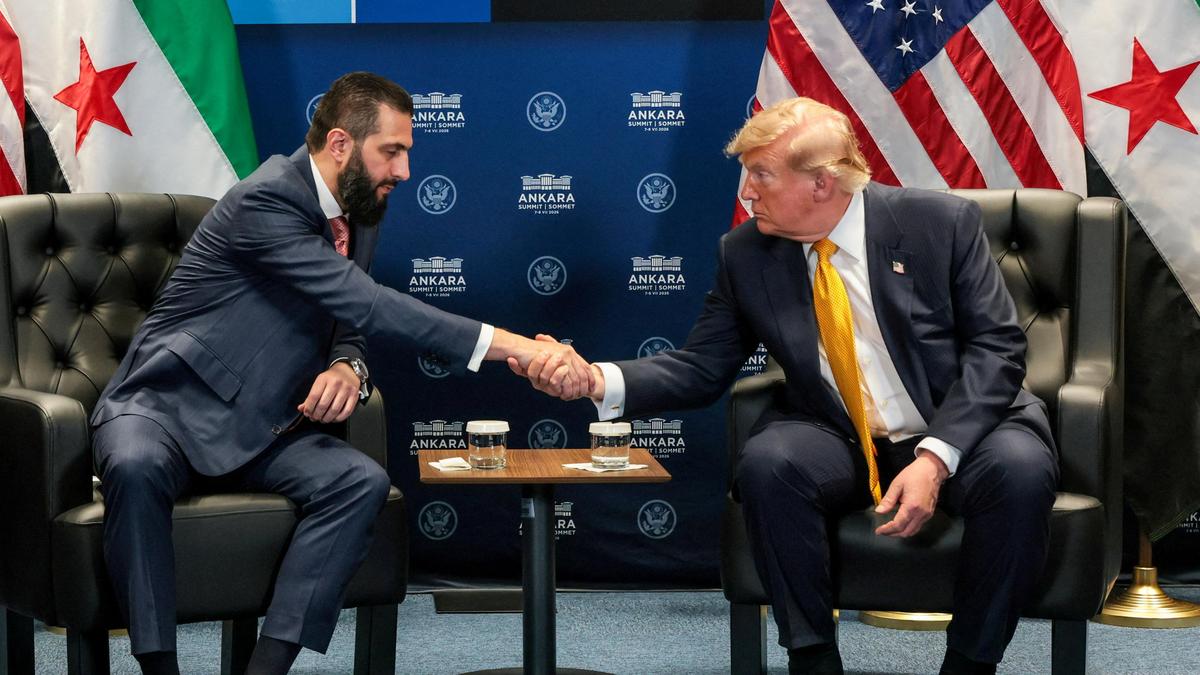
The United States State Department officially rescinded Syria's decades-old designation as a state sponsor of terrorism and revoked the global terrorist designation for Hay'at Tahrir al-Sham.
US Treasury Secretary Scott Bessent announced corresponding sanctions relief to foster international investment and promote long-term political and economic stability in post-civil war Syria.
The policy shift follows the overthrow of long-time ruler Bashar al-Assad in December 2024 by rebels led by Ahmed al-Sharaa, who assumed the presidency during national reconstruction.
Rescinding the terror designation lifts severe trade and financial sanctions, allowing international financial institutions to engage in Syria's economic recovery after 13 years of war.
Relevant for GS-2 International Relations, highlighting global counter-terrorism designations, geopolitical realignments, post-conflict rehabilitation, and foreign sanctions policy.
Prelims Facts
Syria was officially removed from the US State Sponsor of Terrorism list after being designated for several decades.
The US Department of State revoked the global terrorist designation for Hay'at Tahrir al-Sham (HTS), formerly known as al-Nusra Front.
Ahmed al-Sharaa assumed the presidency of Syria following the overthrow of Bashar al-Assad in December 2024.
Mains Framework
The US decision to de-list Syria from state sponsors of terrorism marks a significant paradigm shift intended to unlock global capital for Syria's post-war reconstruction.
Dimensions
Economic Dimension
Unlocking foreign direct investment and humanitarian economic assistance by removing primary and secondary trade barriers.
Political Dimension
Formal foreign recognition and legitimization of the transition administration in Damascus.
Security Dimension
De-escalation of counter-terrorism sanctions to integrate former rebel factions into administrative governance.
Way forward
Ensure targeted international aid transparently reaches infrastructure reconstruction while safeguarding human rights standards during governance normalization.
Key terms
State Sponsor of TerrorismSanctions ReliefPost-Conflict ReconstructionHay'at Tahrir al-ShamGeopolitical Transition
Acts & articles
UN Security Council Resolution 2254US Export Administration ActUS Foreign Assistance Act
05
INTERNATIONAL SECURITY
Global Peacekeeping Security Challenges: UNMISS Patrol Attack in South Sudan
Armed Group Ambushes UNMISS Patrol in South Sudan Killing Two Peacekeepers
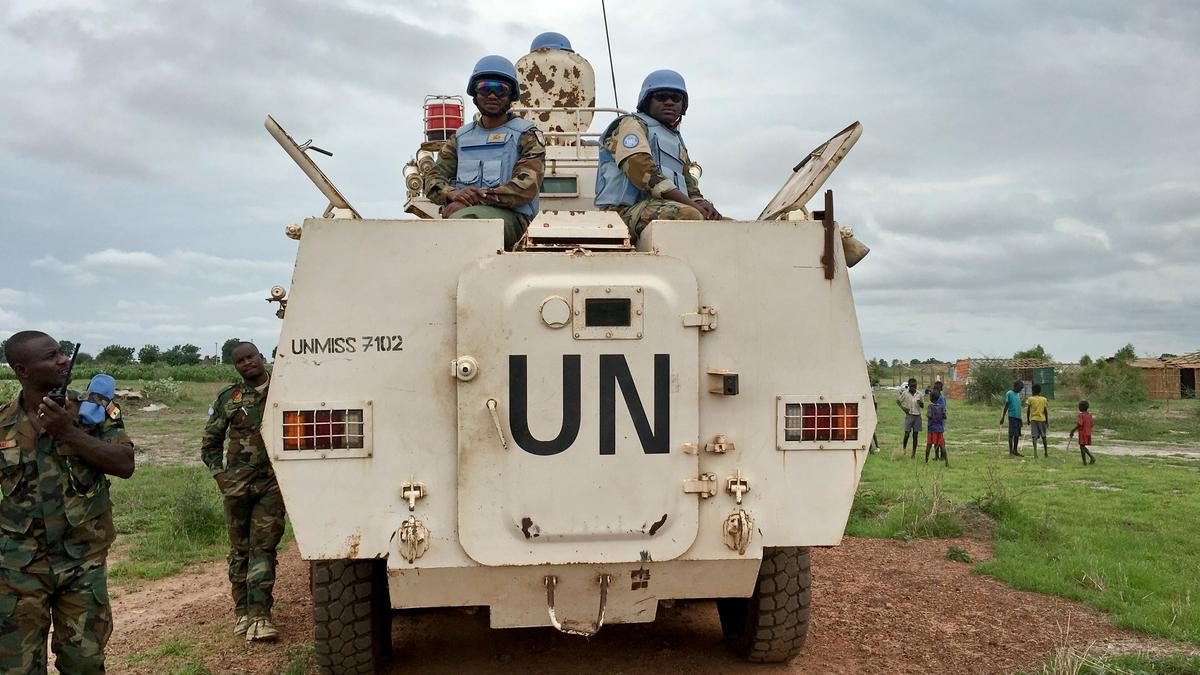
Armed assailants ambushed a United Nations Mission in South Sudan patrol travelling near Pajut in Jonglei state, killing two UN peacekeepers and injuring seven others.
UN spokesperson Stéphane Dujarric confirmed that the two deceased peacekeepers and three of the injured personnel were from the Ethiopian peacekeeping contingent serving under UNMISS.
The attack also injured two South Sudanese police officers and two civilian staff members, prompting UNMISS to deploy a Quick Reaction Force to secure the remote location.
While local conflict remains widespread in South Sudan, direct targeted attacks against blue helmet peacekeepers protecting civilian populations remain relatively rare.
Relevant for GS-2 International Relations and UN Bodies, focusing on global peacekeeping operational security, mandate enforcement, and peacebuilding in fragile African nations.
Prelims Facts
UNMISS refers to the United Nations Mission in South Sudan, established to protect civilians and support peace consolidation.
Two Ethiopian peacekeepers serving under UNMISS were killed in an armed ambush in Jonglei state's Pajut area.
Quick Reaction Forces (QRF) are specialized military units deployed by UN peacekeeping missions for emergency tactical response.
Mains Framework
The deadly attack on an UNMISS patrol in South Sudan highlights the growing asymmetric security threats encountered by UN peacekeepers operating in under-governed territories.
Dimensions
Security Dimension
Risks posed by non-state armed groups to peacekeepers performing civilian protection duties.
Operational Dimension
Requirement for enhanced intelligence, aerial surveillance, and rapid response units in remote mission sectors.
Institutional Dimension
Mandate enforcement struggles faced by multi-national UN deployments amidst local civil conflict.
Way forward
Implement robust operational rules of engagement, improve troop medical evacuation response times, and strengthen peacebuilding mechanisms with host governments.
Key terms
UNMISSPeacekeeping MandateQuick Reaction ForceStatus of Forces AgreementFragile State Governance
Acts & articles
Chapter VII of the UN Charter (Action with Respect to Peace)UN Security Council Resolution 1996 (Establishing UNMISS)UN Declaration on Peacekeeping Operations
06
INTERNATIONAL RELATIONS
Governance and Open-Border Trade Challenges in South Asia: Nepal's Political Heat
Nepal Prime Minister Balen Shah Faces Political Pressure Over Border Customs Rules
Nepal Prime Minister Balendra 'Balen' Shah is encountering intense public protests and parliamentary scrutiny 150 days after taking office following his party's major electoral victory.
Protests erupted at Maitighar Mandala in Kathmandu and border towns after strict enforcement of customs rules on cross-border goods from India disrupted local access to essentials.
Shah's Rastriya Swatantra Party won 182 out of 275 House seats, but opposition lawmakers criticized his absence from parliament, prompting a formal speaker directive to appear.
The border customs crackdown hit citizens accustomed to purchasing low-cost groceries, medicines, and household goods across the open India-Nepal international border.
Crucial for GS-2 International Relations and Governance, covering India-Nepal open border management, cross-border informal economies, and political stability in South Asian neighbours.
Prelims Facts
Balendra 'Balen' Shah assumed office as the Prime Minister of Nepal leading the Rastriya Swatantra Party (RSP).
Maitighar Mandala in Kathmandu serves as a prominent public site for civic demonstrations and political protests in Nepal.
The Rastriya Swatantra Party secured 182 out of 275 seats in the House of Representatives of Nepal.
Mains Framework
Political tension in Nepal driven by strict border customs enforcement illustrates the delicate socio-economic balance required in managing open international borders.
Dimensions
Socio-Economic Dimension
Public reliance of border communities on cross-border markets for daily household necessities and medicines.
Political Dimension
Mounting domestic parliamentary and street pressure on new reformist leadership amidst economic regulation.
Bilateral Dimension
Management of open border protocols without disrupting traditional socio-economic ties with India.
Way forward
Establish smooth digital customs clearance at border posts and coordinate local bilateral administrative mechanisms to avoid public distress.
Key terms
Open Border RegimeRastriya Swatantra PartyCustoms Regulation FrictionCross-Border LivelihoodsNeighbourhood First Policy
Acts & articles
1950 India-Nepal Treaty of Peace and FriendshipIndia-Nepal Revised Treaty of TradeArticle 51 of Indian Constitution (International Peace & Security)
07
SOCIAL ISSUES & GOVERNANCE
International Student Mobility and Visa Regulations: US ICE Memo on CPT Authorization
US ICE Issues Compliance Warning to Universities Over CPT Work Authorization
The US Student and Exchange Visitor Program issued a guidance memo warning Designated School Officials against misusing Curricular Practical Training as an unauthorized work permit.
US universities began pausing CPT programs following federal warnings that off-campus work authorizations must strictly form an integral part of established academic degree curricula.
Thousands of Indian international students holding F-1 visas enrolled in CPT-linked internship programs face severe academic and employment uncertainty due to immediate program pauses.
Unlike Optional Practical Training approved by USCIS post-graduation, CPT is authorized directly by university officials, creating strict liability for academic institution administrators under federal immigration law.
Important for GS-2 International Relations and Social Issues, examining Indian diaspora interests, international student mobility, global education migration, and foreign visa regulations.
Prelims Facts
Curricular Practical Training (CPT) allows F-1 visa international students in the US to undertake off-campus work directly tied to their academic degree.
Unlike Optional Practical Training (OPT) which requires USCIS approval, CPT is authorized internally by a university's Designated School Official (DSO).
The Student and Exchange Visitor Program (SEVP) operates as a dedicated division within US Immigration and Customs Enforcement (ICE).
Mains Framework
Stricter US ICE compliance directives on university CPT authorizations reveal growing regulatory scrutiny over work-study programs affecting international students.
Dimensions
Regulatory Dimension
Crackdown by host nations on perceived backdoor work permits misaligned with academic curricula.
Diaspora Dimension
Heightened academic and career vulnerability faced by Indian students dependent on off-campus experiential work.
Institutional Dimension
University administrative liabilities and legal obligations in certifying academic degree integration.
Way forward
Enhance diplomatic guidance mechanisms by Indian consulates abroad and encourage foreign universities to align CPT frameworks strictly with immigration standards.
Key terms
Curricular Practical TrainingDesignated School OfficialF-1 Visa GovernanceStudent and Exchange Visitor ProgramWork Authorization Compliance
Acts & articles
US Immigration and Nationality Act (INA)Article 19 of Indian Constitution (Protection of Certain Rights)Emigration Act, 1983
08
ENVIRONMENT & ECOLOGY
Ecotheory and Pollinator Conservation: Late-Summer Nectar Scarcity in Honeybees
Study Reveals Late-Summer Nectar Gap Threatening Honeybee Energetic Efficiency
University of Sussex researchers published findings in Functional Ecology revealing that honeybees experience significant energy deficits and increased foraging effort during late summer.
Field observations conducted across urban green spaces in Brighton and Edinburgh showed that honeybees gain substantially less nectar energy in August compared to spring abundance.
Researchers attributed the seasonal nectar gap to post-spring floral depletion, mowing of roadside verges, and heightened inter-species competition among urban pollinators.
The study highlights that allowing late-blooming weeds like thistles, ragwort, and knapweed to flower provides essential nutritional support for bee colonies expanding before winter.
Directly applicable to GS-3 Environment and Biodiversity, addressing pollinator decline, urban biodiversity management, ecosystem services, and ecologically informed urban landscaping practices.
Prelims Facts
A study published in Functional Ecology by University of Sussex researchers identified a distinct late-summer 'nectar gap' in August.
Late-season flowering plants such as thistles, ragwort, and knapweed provide essential nectar sources for honeybees prior to wintering.
Honeybees expend significantly higher metabolic energy per unit of nectar collected during late summer due to floral scarcity and competition.
Mains Framework
Scientific identification of late-summer nectar gaps underscores the necessity of managing urban green spaces to protect essential pollinator energetics.
Dimensions
Ecological Dimension
High metabolic energy expenditure by honeybees due to late-season floral depletion and inter-species competition.
Agricultural Dimension
Loss of pollination efficiency impacting biodiversity, wild flora propagation, and crop production.
Management Dimension
Unintended consequences of premature mowing of urban verges and roadside weed suppression.
Way forward
Adopt eco-friendly landscape management by preserving native late-blooming wild plants and integrating pollinator-friendly corridors in urban urban planning.
AI Models Trained on Retinal Images Enable Non-Invasive Autism and ADHD Screening
High school researcher Edward Kang developed RetinaMind, an artificial intelligence framework utilizing retinal image datasets to screen for neurodevelopmental conditions including autism and ADHD.
The project, conducted in New Jersey, secured a $175,000 national science prize for demonstrating how non-invasive ocular biomarkers can shorten diagnostic timelines for neurodevelopmental disorders.
Kang integrated in silico machine learning algorithms and in vitro biological models to identify subtle structural retinal patterns linked directly to central nervous system pathologies.
Standard clinical diagnosis of autism and ADHD currently requires lengthly clinical evaluations, whereas AI-assisted ocular screening offers rapid, scalable early intervention potential.
Highly relevant for GS-3 Science and Technology, covering AI applications in diagnostic medicine, non-invasive digital biomarkers, and technological solutions for early healthcare detection.
Prelims Facts
RetinaMind is an AI framework developed using retinal image datasets to detect non-invasive structural biomarkers for autism and ADHD.
Biological research links micro-structural retinal neural layer variations directly to central nervous system neurodevelopmental conditions.
Retinal imaging provides a potential non-invasive digital screening alternative to conventional lengthly psychiatric assessments.
Mains Framework
Utilizing AI algorithms to detect neurodevelopmental disorders via retinal biomarkers demonstrates the transformative power of non-invasive digital diagnostic tools in healthcare.
Dimensions
Technological Dimension
Multi-model machine learning algorithms trained on public retinal imaging datasets for high-accuracy pattern recognition.
Healthcare Dimension
Significant reduction in diagnostic latency for conditions like autism and ADHD, enabling early developmental intervention.
Ethical Dimension
Ensuring data privacy, algorithm bias prevention, and validation of AI models across diverse demographic groups.
Way forward
Integrate validated non-invasive AI diagnostic tools into primary healthcare screening networks while establishing robust clinical data regulation standards.
Key terms
RetinaMind FrameworkOcular BiomarkersIn Silico AI ModelsIn Vitro Retinal ScreeningNeurodevelopmental Diagnostics
Acts & articles
Digital Personal Data Protection Act, 2023National Health Policy, 2017Medical Devices Rules, 2017
10
ENVIRONMENT & HUMAN RIGHTS
Environmental Governance and Rights of Indigenous Peoples: African Parks Probe
Prince Harry Resigns From African Parks Board Following Human Rights Abuse Probe
Prince Harry resigned from the board of directors of African Parks after an independent investigation substantiated severe human rights abuses committed by eco-guards against indigenous people.
The investigation centered on allegations involving armed wildlife rangers operating in Odzala-Kokoua National Park located in the Republic of Congo.
African Parks oversees management contracts for roughly 20 national parks and protected nature areas across 12 African nations, aiming to safeguard biodiversity.
The scandal highlights ongoing global debate regarding 'fortress conservation' models versus human rights-compliant, community-led conservation frameworks protecting indigenous populations.
Relevant for GS-3 Environment and GS-2 Governance, highlighting rights of indigenous communities, ethical eco-tourism, human rights accountability in wildlife conservation management.
Prelims Facts
African Parks is a non-governmental organization that manages approximately 20 protected national parks across 12 African countries.
Odzala-Kokoua National Park is a major protected rainforest area situated in the Republic of Congo.
Fortress conservation refers to a traditional eco-protection model that excludes indigenous local populations from ancestral protected lands.
Mains Framework
Human rights abuse probes involving wildlife ranger teams highlight ethical flaws in exclusionary 'fortress conservation' practices across protected habitats.
Dimensions
Human Rights Dimension
Physical abuses and systemic disenfranchisement suffered by indigenous populations residing near protected rainforests.
Governance Dimension
Accountability gaps in international private-public conservation management contracts across developing nations.
Ecological Dimension
Failure of top-down wildlife protection mechanisms when alienated from local indigenous community stewardship.
Way forward
Transition toward rights-based, community-led conservation models that empower local indigenous communities as legal co-guardians of biodiversity.
Key terms
Fortress ConservationIndigenous Land RightsProtected Area GovernanceEco-guard AccountabilityOdzala-Kokoua National Park
Acts & articles
UN Declaration on the Rights of Indigenous Peoples (UNDRIP)Scheduled Tribes and Other Traditional Forest Dwellers Act, 2006Article 21 of Indian Constitution (Right to Life and Dignity)
Practice MCQs — Test Your Understanding
5 questions · UPSC Prelims pattern · Tap an option to check your answer
SCIENCE & TECHNOLOGYIndustrial Growth vs Environmental Protection: Assam Semiconductor Plant
Dust and Vibration From Stone Quarries Threaten Assam Semiconductor Assembly Plant
Q1With reference to semiconductor manufacturing cleanrooms and environmental requirements in India, consider the following statements:
1. Semiconductor fabrication units require ISO Class 1 to 5 cleanroom standards to prevent microscopic dust contamination.
2. The Tata Semiconductor Assembly and Test (TSAT) facility is located in Morigaon district, Assam.
Which of the statements given above is/are correct?
Answer: Option C
Both statements are correct. Semiconductor plants require ISO Class 1 to 5 cleanrooms with vibration damping to avoid dust contamination. The ₹27,000 crore TSAT facility is located at Jagiroad in Morigaon district, Assam under the India Semiconductor Mission.
INTERNATIONAL RELATIONSUS Foreign Policy Shift in Middle East: Syria Removed from Terrorism List
United States Removes Syria From State Sponsor of Terrorism List
Q2Which of the following actions was recently undertaken by the United States regarding Syria's international counter-terrorism status?
Answer: Option B
The US State Department officially removed Syria from its state sponsor of terrorism list and revoked the global terrorist designation for Hay'at Tahrir al-Sham (HTS) following political changes in Damascus, enabling financial relief and international investment.
SOCIAL ISSUESInternational Student Mobility and Visa Regulations: US ICE Memo on CPT Authorization
US ICE Issues Compliance Warning to Universities Over CPT Work Authorization
Q3In the context of international student visas in the United States, how does Curricular Practical Training (CPT) differ from Optional Practical Training (OPT)?
Answer: Option B
CPT is authorized internally by a university's Designated School Official (DSO) as an integral part of the curriculum, whereas OPT is approved directly post-graduation by United States Citizenship and Immigration Services (USCIS).
ENVIRONMENT & ECOLOGYEcotheory and Pollinator Conservation: Late-Summer Nectar Scarcity in Honeybees
Study Reveals Late-Summer Nectar Gap Threatening Honeybee Energetic Efficiency
Q4According to ecological studies on pollinator foraging efficiency during late summer, which of the following measures helps mitigate the seasonal 'nectar gap' for honeybee colonies?
Answer: Option B
Research published in Functional Ecology demonstrates that allowing late-blooming wild weeds such as thistles, ragwort, and knapweed to flower in late summer provides critical nectar resources during the seasonal food scarcity gap.
ENVIRONMENT & GOVERNANCEEnvironmental Governance and Rights of Indigenous Peoples: African Parks Probe
Prince Harry Resigns From African Parks Board Following Human Rights Abuse Probe
Q5In the context of international biodiversity management, what does the term 'Fortress Conservation' refer to?
Answer: Option C
Fortress conservation refers to a traditional environmental management approach that creates strictly guarded protected areas by forcibly removing or excluding local indigenous communities, often leading to human rights conflicts.