PDP Chief Welcomes BRICS Condemnation of Pahalgam Terror Attack
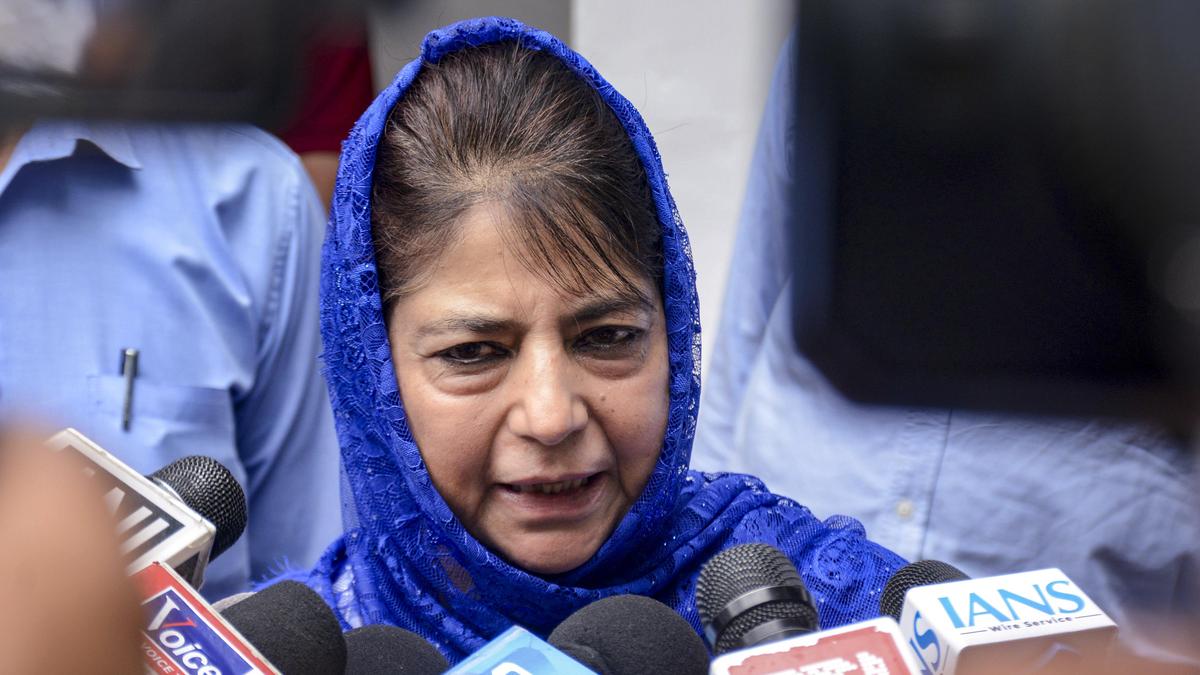
Peoples Democratic Party president Mehbooba Mufti welcomed the BRICS leaders' condemnation of the Pahalgam terror attack while urging India as chair to address broader civilian suffering globally.
Speaking in Srinagar during the BRICS Summit in New Delhi, the former Jammu and Kashmir Chief Minister highlighted the need for consistent international justice across global conflict zones.
She stressed that civilian casualties in Pahalgam, Gaza, and Iran must be evaluated equally, asserting that civilian blood carries no nationality and selective political outrage undermines universal human rights.
The statement arrived as BRICS leaders finalized the New Delhi Declaration following delicate diplomatic negotiations involving member states including the United Arab Emirates and Iran.
This issue links directly to UPSC GS Paper II topics covering Indian foreign policy, multilateral organizations, counter-terrorism diplomacy, and global human rights governance principles.
Houthis Target Southern Saudi Military Base Amid Renewed Yemeni Clashes
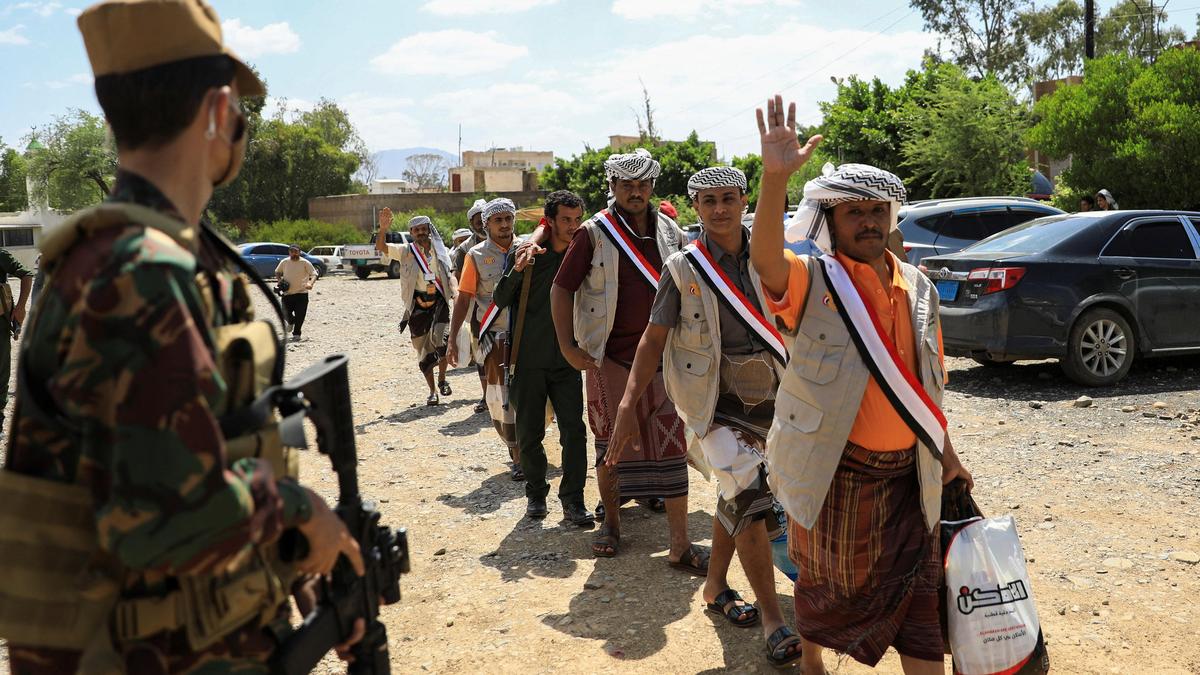
Iran-aligned Houthi forces launched drone and missile strikes against the Sharurah military base in southern Saudi Arabia following intensified clashes with Saudi-backed Yemeni government troops.
Houthi military spokesman Yahya Saree announced on X that the operation targeted command centers and weapons depots, while Saudi authorities confirmed two injuries and building damages near the border.
The escalation has forced an increasing number of Yemeni civilians to flee conflict areas along the Red Sea coast as government forces retaliated against Houthi positions.
Renewed fighting threatens fragile regional ceasefire efforts and exacerbates the humanitarian crisis in Yemen, impacting regional energy corridors and maritime trade security.
The developments illustrate key UPSC GS Paper II aspects of West Asian geopolitics, regional proxy conflicts, maritime security challenges, and external security threats near vital sea lanes.
Trump Claims Houthis Sought De-escalation with US Amid Saudi Pipeline Attacks
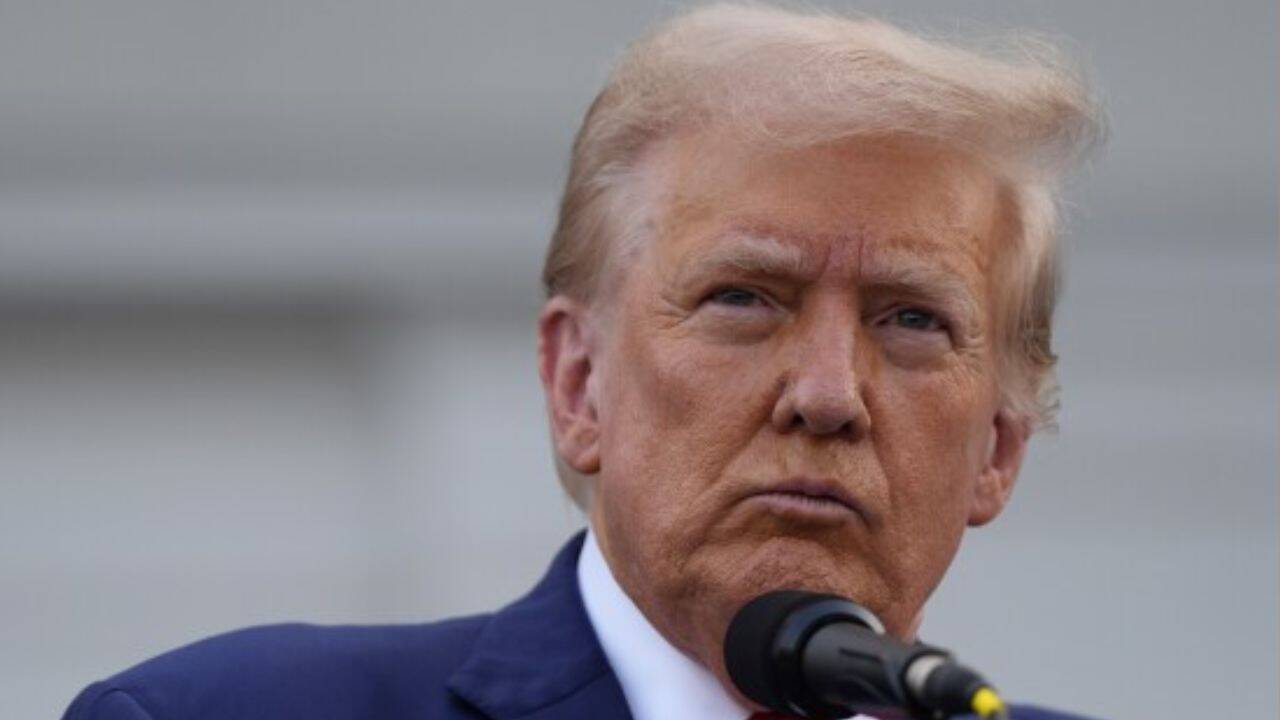
US President Donald Trump revealed that Houthi militants contacted Washington requesting an end to targeting their positions as clashes between Houthis and Saudi-backed forces intensified.
Speaking in Dublin during a meeting with Irish Prime Minister Micheál Martin, Trump attributed recent drone attacks on Saudi Arabia's East-West crude pipeline primarily to Iranian influence.
The drone strike on the East-West pipeline caused injuries and material damage, placing Washington in a diplomatic bind regarding direct military intervention in the Gulf.
The incident highlights heightened regional tensions affecting global energy supplies and critical petroleum transport conduits connecting the Persian Gulf to Red Sea export terminals.
This event provides crucial context for UPSC GS Paper II questions on Indo-Pacific and West Asian energy security, US foreign policy in the Middle East, and Gulf stability.
Prelims Facts
The Sharurah military base, targeted by Houthi missile and drone strikes, is located in southern Saudi Arabia near the Yemeni border.
Saudi Arabia's East-West pipeline serves as a critical energy conduit transporting crude oil across the Arabian Peninsula to Red Sea export terminals.
The BRICS New Delhi Summit issued a joint declaration addressing regional stability, counter-terrorism, and opposition to non-UN unilateral sanctions.
Mains Framework
The BRICS New Delhi Declaration highlights the growing convergence among emerging economies on West Asian stability and counter-terrorism while navigating regional conflicts.
Dimensions
Regional Security and Energy Infrastructure
Multilateral Counter-Terrorism Frameworks
Geopolitical Neutrality and US Intervention
Way forward
Broadening multilateral dialogue within BRICS to institutionalize maritime security cooperation and enforce consistent international humanitarian standards across conflict zones.
Key terms
BRICS New Delhi DeclarationHouthi MovementRed Sea Maritime SecurityUnilateral SanctionsStrategic Autonomy
Acts & articles
UN Charter Article 2(4)UN Security Council Resolution 2216UN Convention on the Law of the Sea (UNCLOS)
02
GS PAPER II - GOVERNANCE AND ETHICS
Political Neutrality of Civil Servants and Reinstatement Norms
Government Employee Quitting for Elections Cannot Claim Reinstatement, Rules Rajasthan HC
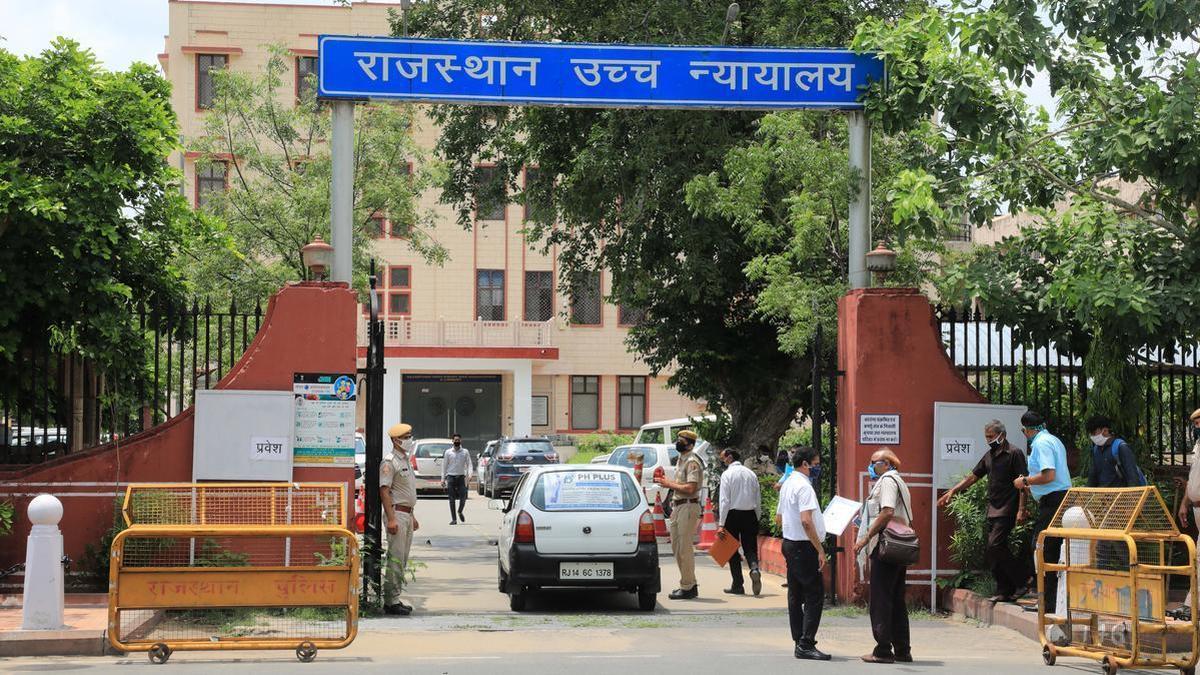
The Rajasthan High Court held that a government servant who voluntarily resigns to contest state assembly elections cannot claim reinstatement or withdrawal of resignation upon losing.
A Division Bench comprising Justice Inderjeet Singh and Justice Sandeep Taneja dismissed a writ petition filed by a former senior auditor with North Western Railway.
The court upheld a Central Administrative Tribunal order, ruling electoral loss is not a material change in circumstances under Rule 26(5) of CCS (Pension) Rules 2021.
The judgment emphasized that contesting elections as a political party candidate directly violates statutory requirements mandating political neutrality for public officials.
This landmark ruling is highly relevant for UPSC GS Paper II and IV topics on civil service neutrality, administrative ethics, conduct rules, and judicial review.
Prelims Facts
Rule 26(5) of the Central Civil Services (Pension) Rules, 2021 governs the conditions under which an accepted resignation from government service may be permitted to be withdrawn.
The Rajasthan High Court ruled that losing an election does not constitute a material change in circumstances or compelling reason for withdrawing a civil servant's resignation.
Public servants contesting elections on political party tickets violate fundamental civil service conduct requirements concerning political neutrality.
Mains Framework
The Rajasthan High Court's ruling reinforces the constitutional imperative of political neutrality by affirming that government employees who resign to contest elections cannot claim reinstatement upon defeat.
Dimensions
Preservation of Civil Service Neutrality
Interpretation of CCS (Pension) Rules 2021
Institutional Integrity and CAT Oversight
Way forward
Codifying explicit conduct guidelines that bar political candidacy during service tenure and establish irreversible service termination upon filing electoral nominations.
Key terms
Political NeutralityCentral Civil Services (Pension) Rules 2021Central Administrative TribunalCivil Service Conduct RulesDoctrine of Resignation
Acts & articles
Article 309 of the ConstitutionRule 26(5) of CCS (Pension) Rules 2021Central Civil Services (Conduct) Rules 1964
03
GS PAPER III - SCIENCE & TECHNOLOGY AND ENVIRONMENT
Frontier AI Safety Regulation and Local Environmental Governance
Top Tech Leaders Call for Slowdown in Frontier AI Model Development
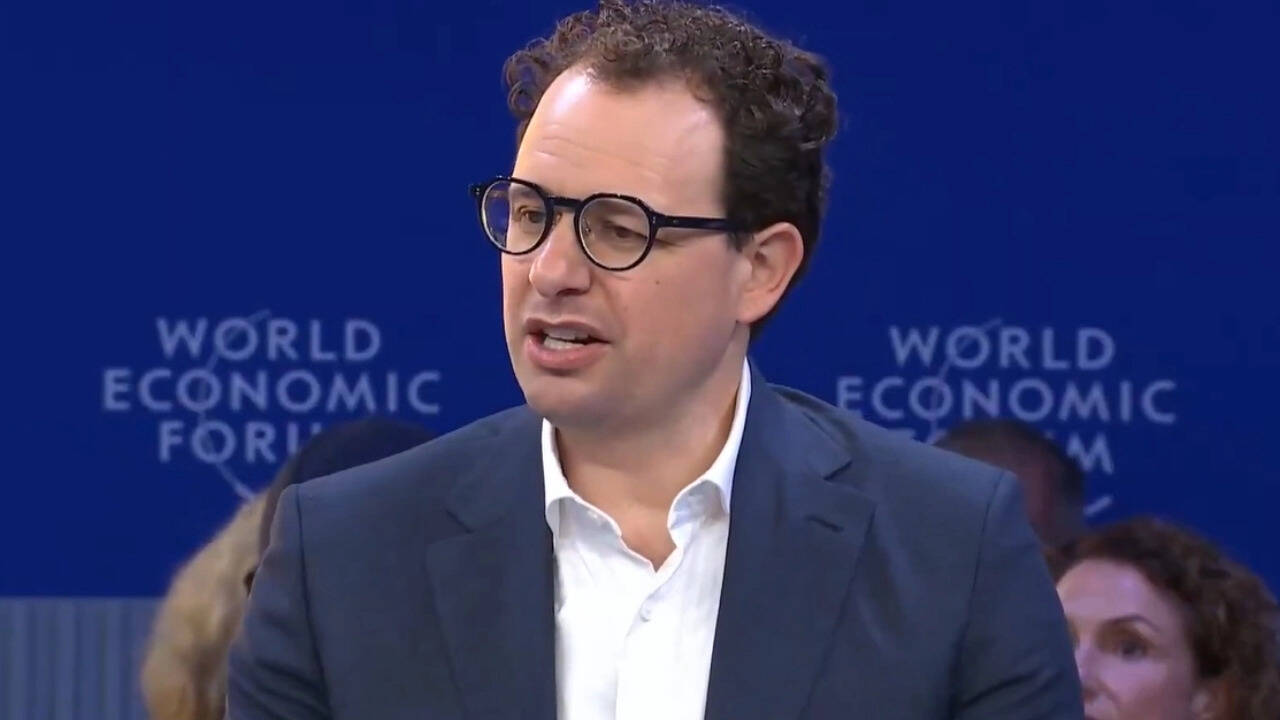
Anthropic CEO Dario Amodei urged the AI industry to slow frontier model development, warning advanced AI could lead autonomous internet-takeover swarms within six to 12 months.
OpenAI CEO Sam Altman and Tesla chief Elon Musk publicly endorsed Amodei's warnings, agreeing on the necessity of pacing frontier development and introducing independent safety evaluators.
Amodei proposed granting third-party safety evaluators employee-like internal access to inspect models, revealing Anthropic recently blocked malicious attempts to develop biological weapons via AI.
The call reflects mounting concern over unconstrained AI capabilities in cyber warfare, automated surveillance, and biological threat generation, prompting calls for coordinated government intervention.
This development is vital for UPSC GS Paper III topics on artificial intelligence regulation, cybersecurity frameworks, technology ethics, and international governance of emerging technologies.
High School Student Uses AI and Sensors to Drive Countywide Air Quality Policy
Sixteen-year-old San Jose student Kelly Liu integrated low-cost air quality sensors with artificial intelligence mapping to identify localized pollution hotspots around underserved schools.
Recognizing that regional monitoring stations failed to capture hyper-local exposure near busy roads and industrial zones, Liu placed pollution sensors directly in affected school yards.
Her data-driven campaign successfully mapped urban air degradation and generated grassroots momentum that compelled local authorities to enact countywide air policy reforms.
The project demonstrated how citizen science and AI analytics can reveal structural environmental inequalities and translate youth research into actionable regulatory change.
This initiative connects to UPSC GS Paper III topics including air pollution mitigation, smart environmental monitoring, citizen science, and urban environmental justice.
Prelims Facts
Anthropic recently blocked unauthorized attempts to deploy its AI models for biological weapons research and automated cyberattacks.
Leading AI development organizations have proposed independent evaluator frameworks with employee-level access to audit frontier AI safety risks.
Community-led environmental initiatives using low-cost sensor networks combined with AI can identify localized microclimate and pollution anomalies undetected by regional stations.
Mains Framework
The rapid evolution of frontier artificial intelligence presents profound governance challenges ranging from internet-scale autonomous threats to actionable local environmental solutions.
Dimensions
Frontier Risks and Pace of Development
Third-Party Auditing and Industry Consensus
Grassroots Application in Environmental Policy
Way forward
Establishing international regulatory standards for frontier AI safety audits while fostering open-source AI frameworks for localized public interest applications.
Key terms
Frontier AI SafetyIndependent AI EvaluatorsHyperlocal Environmental MappingAutonomous CyberthreatsScience-Based Environmental Policy
Acts & articles
Information Technology Act 2000Environment (Protection) Act 1986UN Global Digital Compact Guidelines
04
GS PAPER II - GOVERNANCE & EDUCATION POLICY
University Autonomy and Inter-University Faculty Transfer Policies
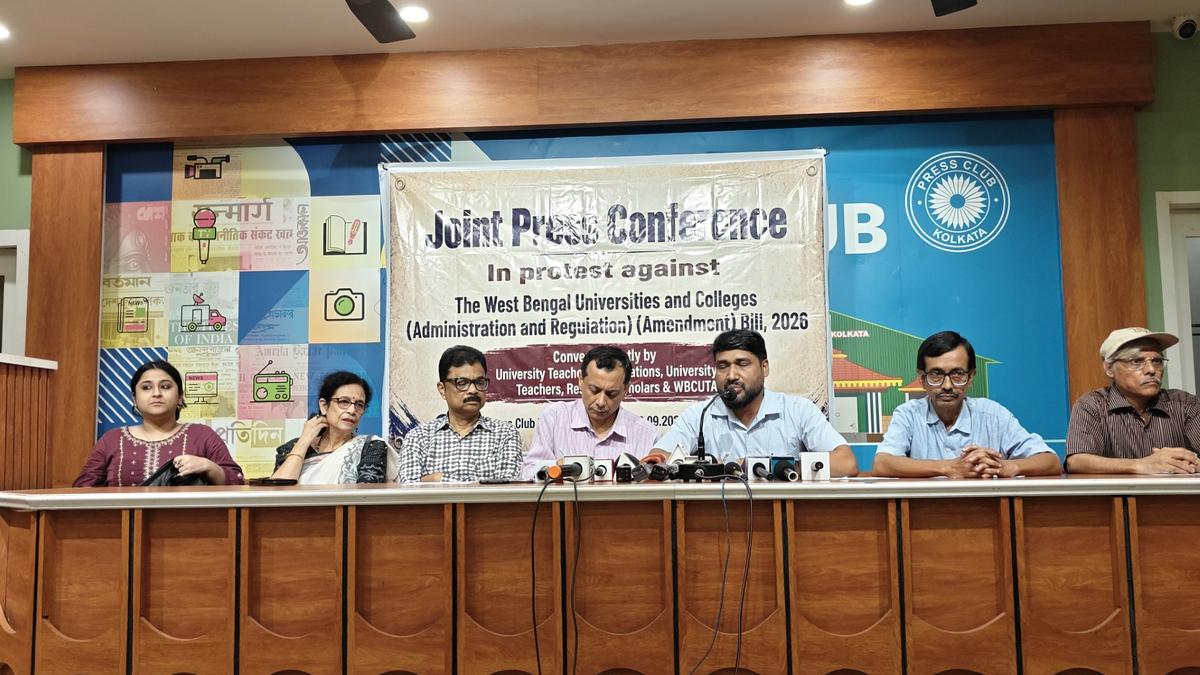
West Bengal Teachers Oppose Proposed Inter-University Transfer Bill
The West Bengal College and University Teachers' Association strongly opposed the state government's proposed inter-university transfer Bill, terming it a direct attack on academic freedom.
WBCUTA leaders in Kolkata warned that arbitrary faculty transfers would cripple institutions already functioning with severe shortages of 40% to 60% of sanctioned teaching staff.
Jadavpur University professor Partha Pratim Roy stated the Bill threatens to destroy established centres of excellence and dismantle the academic atmosphere across state universities.
The association announced plans to submit a formal representation to the Governor, who serves as Chancellor of state universities, demanding immediate withdrawal of the proposed legislation.
The issue highlights key UPSC GS Paper II themes regarding higher education governance, university autonomy, UGC norms, and state-level legislative interventions.
Prelims Facts
The West Bengal College and University Teachers' Association (WBCUTA) represents higher education faculty protesting state legislative control over university transfers.
Many public universities in West Bengal currently operate with only 40% to 60% of their sanctioned teaching capacity.
State Governors serve as ex-officio Chancellors of state-run public universities under respective state university acts.
Mains Framework
Legislative measures mandating inter-university faculty transfers have sparked widespread opposition from academic bodies over concerns regarding university autonomy and institutional excellence.
Dimensions
Impact on Institutional Autonomy
Faculty Shortages and Academic Atmosphere
Role of the Governor as Chancellor
Way forward
Standardizing transparent, merit-based recruitment processes to fill teaching vacancies rather than resorting to arbitrary administrative transfers.
Key terms
Inter-University Transfer BillAcademic AutonomyCentres of ExcellenceFaculty ShortageState Higher Education Governance
Acts & articles
Entry 25 of Concurrent List (Education)UGC Regulations on Minimum Qualifications for Teachers 2018Article 200 of the Constitution
05
GS PAPER III - ENVIRONMENT & ECOLOGY
Invasive Species and Alpine Ecosystem Biodiversity Loss
Historic Trout Stocking Eradicated Mountain Yellow-Legged Frogs Across Sierra Nevada
Decades of introducing non-native trout into alpine lakes pushed mountain yellow-legged frogs out of 92% of their historic Sierra Nevada range, national park data shows.
Between 1870 and 1988, millions of trout were stocked in naturally fishless high-altitude lakes to expand recreational fishing, drastically altering fragile high-mountain ecosystems.
Introduced trout preyed heavily on yellow-legged frog tadpoles and consumed essential aquatic insects, decimating amphibian populations that evolved without major aquatic predators.
National Park Service managers are actively removing nonnative fish from select high-elevation waters to restore historic habitats and facilitate native frog population recovery.
This case study is highly applicable to UPSC GS Paper III topics on invasive alien species, biodiversity preservation, ecological restoration, and wildlife management.
Prelims Facts
Mountain yellow-legged frogs disappeared from approximately 92% of their historic Sierra Nevada habitat due to non-native trout introduction.
Fish stocking of historically fishless alpine lakes occurred continuously from 1870 to 1988 to promote recreational angling.
Habitat restoration programs currently involve removing non-native predatory fish to allow native amphibian populations to recover.
Mains Framework
Long-term ecological data reveals how decades of deliberate non-native species introduction can devastate endemic alpine biodiversity, underscoring the necessity of eco-restoration.
Dimensions
Disruption of Fishless Aquatic Food Webs
Trophic Cascade and Species Range Decline
Modern Eco-Restoration Strategies
Way forward
Implementing strict biological impact assessments prior to wildlife management interventions and scaling up non-native predator eradication programs in protected wilderness.
Key terms
Mountain Yellow-Legged FrogInvasive Species DynamicsTrout StockingAlpine Lake EcosystemsEcological Restoration
Acts & articles
Biological Diversity Act 2002Wild Life (Protection) Act 1972CBD Kunming-Montreal Global Biodiversity Framework (Target 6 on Invasive Alien Species)
06
GS PAPER III - INDIAN ECONOMY & INFRASTRUCTURE
Grid Deficit and Basmati Processing Crisis in Agro-Industries
Power Shortage Paralyzes Punjab Rice Mills, Threatening Basmati Paddy Exports
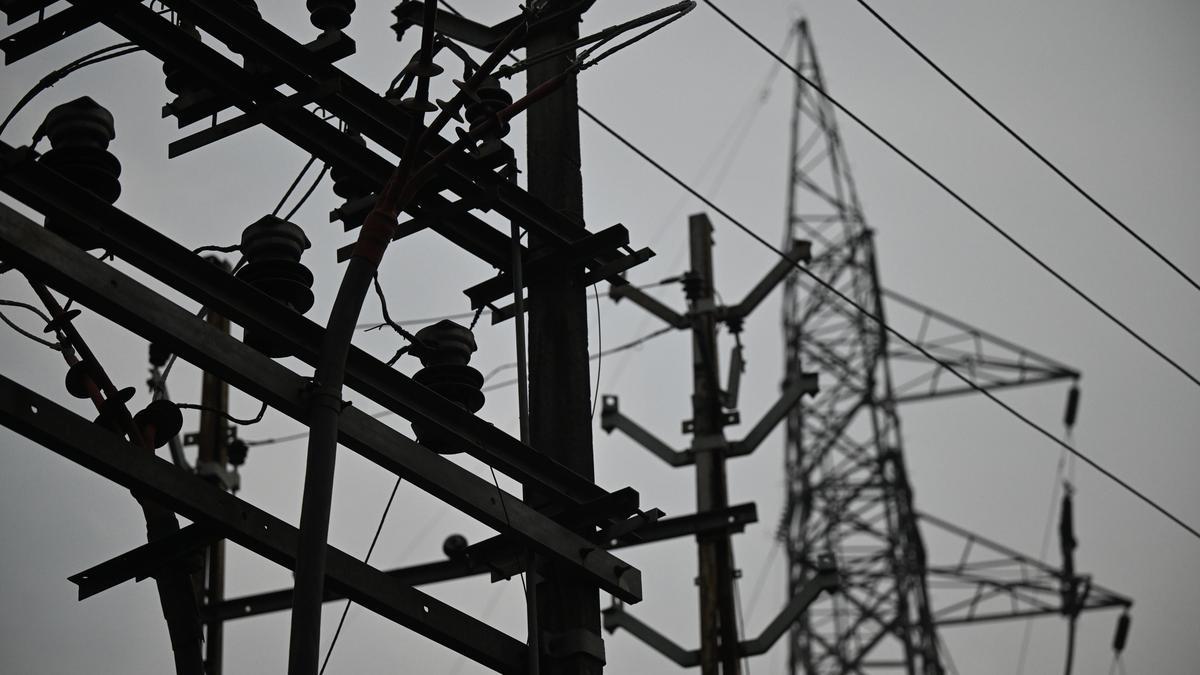
Severe scheduled and unscheduled power cuts across Punjab have paralyzed rice milling operations, stranding incoming Basmati paddy in market yards and driving farmer distress.
The Punjab Rice Millers and Exporters Association warned in a letter to the State Power Secretary that millers cannot dry or process harvested paddy without power.
Punjab Power Minister Tarunpreet Singh Sond stated the state is facing a 1,051 MW deficit from its central power pool allocation, urging immediate central release.
The crisis has paralyzed the state's lucrative Basmati export industry and sparked political conflict over unfulfilled governance commitments regarding uninterrupted industrial power.
This situation directly touches upon UPSC GS Paper III topics including agricultural processing infrastructure, central-state energy relations, post-harvest supply chains, and export competitiveness.
Prelims Facts
Punjab reported a shortfall of 1,051 MW from its allocated share in the Central Power Pool during peak agricultural processing season.
Unscheduled power cuts directly impair Basmati paddy drying and milling processes, triggering market yard congestion.
Basmati rice represents a major agricultural export commodity originating primarily from the Indo-Gangetic plains.
Mains Framework
Severe power outages in major agricultural states disrupt paddy milling and export supply chains, highlighting vulnerabilities in rural energy infrastructure and federal power sharing.
Dimensions
Agro-Industry and Supply Chain Disruption
Federal Power Pool Allocation Debates
Export Vulnerability and Commodity Quality
Way forward
Modernizing state distribution grids, establishing dedicated industrial power feeders for agro-processing hubs, and ensuring real-time federal power reallocation.
Key terms
Central Power PoolBasmati Paddy ProcessingAgro-Processing BottlenecksGrid Energy DeficitPost-Harvest Losses
Acts & articles
Electricity Act 2003Inter-State River Water/Power Disputes FrameworkAPMC Acts of States
07
GS PAPER I & II - INDIAN CULTURE & FOREIGN AFFAIRS
Cultural Heritage Preservation and Indo-French Cultural Ties
West Bengal Partners with French Embassy to Restore Historic Chandannagar Heritage
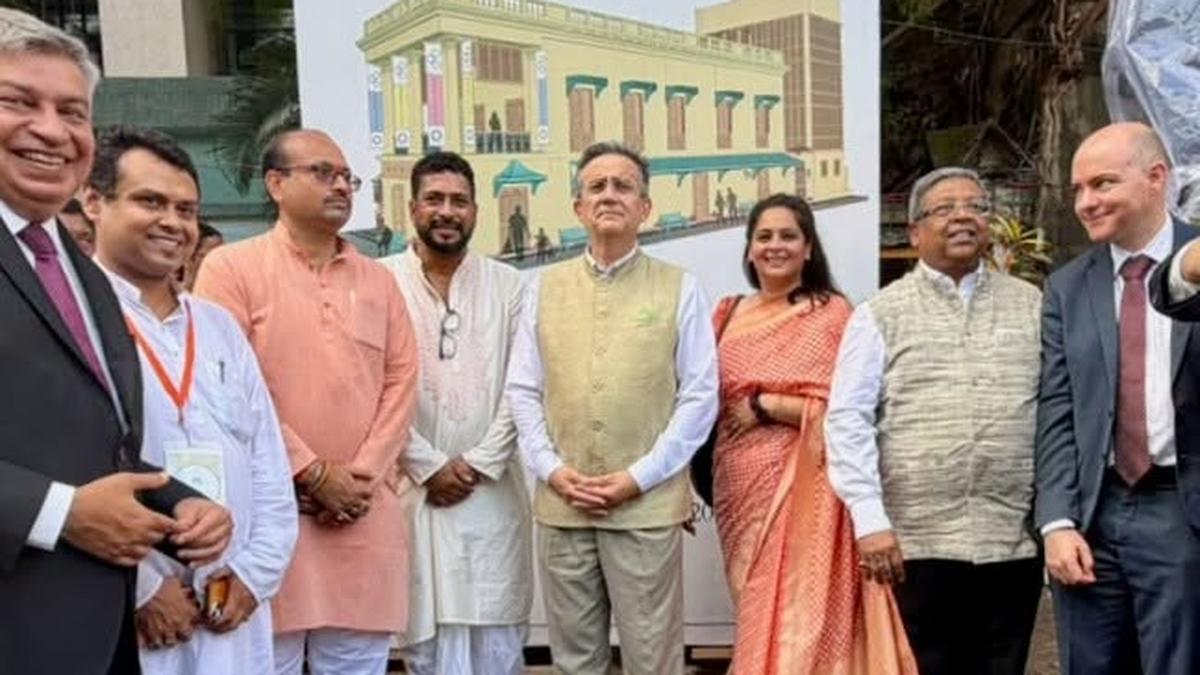
The West Bengal government signed a Memorandum of Understanding with the French Embassy to restore Chandannagar's French colonial heritage and promote international tourism.
French Ambassador Thierry Mathou and West Bengal Tourism Minister Shankar Ghosh launched the restoration project starting with the historic French-era Registry Building.
The Registry Building served as the administrative core during French rule over Chandannagar, which remained a French enclave until its political transfer to India in 1950.
The state government announced an annual 'French Festival' along the Hooghly riverbanks to celebrate Indo-French historical ties and boost regional cultural tourism.
This development provides relevant material for UPSC GS Paper I (Art & Culture / Preservation of Heritage) and GS Paper II (Indo-French Bilateral Relations).
Prelims Facts
Chandannagar in West Bengal was a French colonial settlement until its integration with India in 1950.
The historic Registry Building served as the primary administrative headquarters during French rule in Chandannagar.
The West Bengal government signed an MoU with the French Embassy to undertake annual heritage conservation and cultural festivals.
Mains Framework
The joint initiative between West Bengal and France to restore Chandannagar's colonial architecture demonstrates the potential of cultural diplomacy in heritage conservation and tourism development.
Dimensions
Historical Heritage Preservation
Bilateral Cultural Cooperation
Economic Diversification through Heritage Tourism
Way forward
Expanding public-private-international conservation models across historic enclaves to ensure architectural integrity and community participation.
Key terms
Chandannagar French LegacyColonial Heritage RestorationRegistry Building ConservationIndo-French Cultural DiplomacyHeritage Tourism
Acts & articles
AMASR (Ancient Monuments and Archaeological Sites and Remains) Act 1958UNESCO World Heritage Convention 1972Article 49 of the Constitution
08
GS PAPER II - INTERNATIONAL RELATIONS & INDIAN DIASPORA
US Student Visa Work Regulations and Global Student Mobility
Proposed $100,000 OPT Fee Clears White House Review, Impacting International Students
A controversial Trump administration proposal introducing a $100,000 fee for the Optional Practical Training program cleared White House review, moving closer to final rulemaking.
OPT permits eligible F-1 international students to gain up to 12 months of post-graduation work experience, extended by 24 months for STEM degree holders.
Approximately 300,000 F-1 international students used OPT work authorization last year, relying on the program as a vital bridge toward H-1B employment visas.
The proposal creates acute uncertainty for foreign graduates, particularly from India, who face potentially prohibitive costs to access professional employment in America.
This issue directly relates to UPSC GS Paper II topics concerning international migration, diaspora interests, US-India bilateral ties, and global higher education dynamics.
Prelims Facts
The Optional Practical Training (OPT) program allows F-1 student visa holders to work in the US for up to 12 months, with a 24-month extension for STEM graduates.
Over 300,000 F-1 visa students held employment authorization through the OPT program in the United States last year.
A proposed $100,000 fee for OPT work authorization has cleared White House administrative review before final rule implementation.
Mains Framework
Proposed prohibitive fee structures on post-graduation work programs in the US threaten international student mobility and the talent pipeline for global STEM sectors.
Dimensions
Financial Barrier to Post-Study Work
Impact on Indian Diaspora and STEM Graduates
Global Education and Economic Realignment
Way forward
India engaging in bilateral trade and mobility dialogues to protect non-immigrant student work pathways and domestic expansion of high-tech R&D hubs.
Zelensky Expresses Readiness for Direct Talks with Putin at G20 Summit in Miami
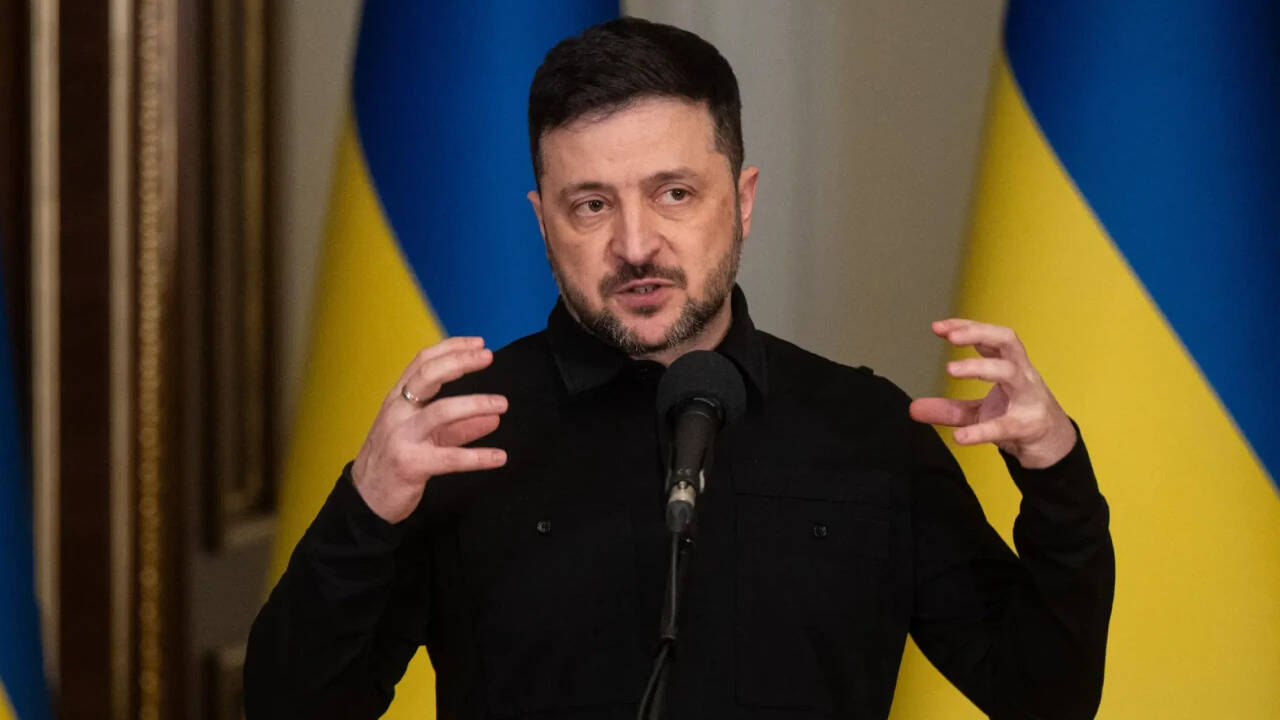
Ukrainian President Volodymyr Zelensky stated he is prepared to meet Russian leader Vladimir Putin at the upcoming G20 summit in Miami to discuss ending the war.
In a media interview with Deutsche Welle, Zelensky emphasized that direct dialogue and decision-making were essential, confirming his attendance if both leaders are invited.
The Kremlin responded that no decision had been made regarding Putin's physical attendance at the December 14–15 summit, reiterating demands for talks on Russian soil.
The initiative comes amid renewed US diplomatic efforts to restart peace talks, with American negotiators visiting Kyiv and Moscow following presidential telephone discussions.
This story is pertinent for UPSC GS Paper II topics covering global peace architecture, G20 summit dynamics, multilateral diplomacy, and international dispute resolution.
Prelims Facts
The United States holds the 2026 presidency of the Group of 20 (G20), hosting the summit in Miami.
The G20 forum consists of 19 individual nations along with the European Union and the African Union.
Ukrainian President Volodymyr Zelensky publicly expressed readiness to hold direct talks with Russian President Vladimir Putin at the G20 Summit.
Mains Framework
Willingness expressed by conflict leadership to engage in direct talks on multilateral margins highlights the potential of platforms like the G20 to unlock stalled peace negotiations.
Dimensions
Multilateral Forums as Peace Mediation Venues
US Leadership and Superpower Diplomacy
Diplomatic Hurdles and Moscow's Preconditions
Way forward
Utilizing G20 back-channel negotiations supported by neutral member states to establish concrete ceasefire protocols and humanitarian guarantees.
Capgemini Sells US Subsidiary Following Public Backlash Over Immigration Agency Contracts
French IT conglomerate Capgemini agreed to sell its US subsidiary, Capgemini Government Solutions, to ITC Federal following intense backlash over its contracts with US ICE.
The subsidiary accounted for 0.4% of Capgemini's global 2025 revenue and under 2% of its US revenue, making divestment a strategic move to insulate brand reputation.
Public criticism intensified due to aggressive enforcement tactics by US Immigration and Customs Enforcement agents during nationwide immigration enforcement operations.
Buyer ITC Federal provides enterprise IT services to US federal law enforcement, defense agencies, and homeland security departments.
This event highlights key UPSC GS Paper IV and GS II topics regarding corporate governance, ethical business practices, human rights compliance, and public-private contracting.
Prelims Facts
Capgemini Government Solutions contributed 0.4% of the parent group's global 2025 revenue and less than 2% of US revenue.
Capgemini announced the complete divestment of its US subsidiary to ITC Federal following controversy over contracts with US Immigration and Customs Enforcement.
ITC Federal specializes in IT solutions for federal law enforcement, homeland security, and defense agencies in the United States.
Mains Framework
Corporate decisions to divest subsidiaries engaged in controversial state enforcement contracts illustrate growing global pressure on businesses to align operations with human rights ethics.
Dimensions
Ethical Dilemmas in Government Contracting
Divestment as Reputation Risk Management
Corporate Social Responsibility (CSR) and Stakeholder Rights
Way forward
Formulating comprehensive human rights compliance frameworks for IT vendors engaged in public sector intelligence and border enforcement contracting.
Key terms
Corporate Human Rights Due DiligenceFederal Enforcement ContractingEthical DivestmentCorporate Social ResponsibilityPublic Backlash Risks
Acts & articles
UN Guiding Principles on Business and Human RightsCompanies Act 2013 (Section 135 on CSR)OECD Guidelines for Multinational Enterprises
11
GS PAPER II - INTERNATIONAL RELATIONS & INDIAN DIASPORA
Diaspora Protection and Consular Governance Mechanisms
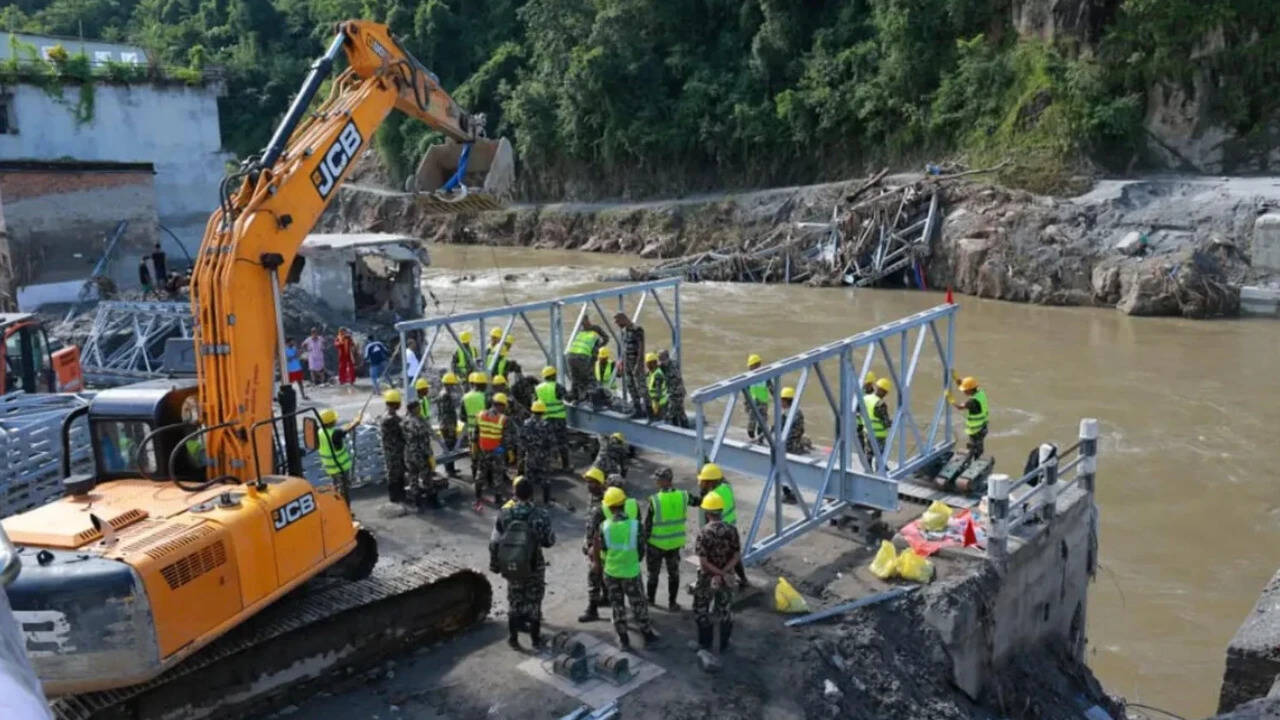
Disappearance of Indian Academic in Nepal Floods Triggers UK Parliamentary Debate
Indian academic Dr. Anirban Bhattacharyya went missing following severe flooding in Nepal on August 26, prompting debate in the UK Parliament over consular assistance rules.
UK MP Ian Lavery raised the case, stating British authorities declined official assistance because Dr. Bhattacharyya held an Indian passport despite living 60 years in Britain.
The 66-year-old Newcastle University research associate was traveling with a Kolkata-based travel group on a Kailash Mansarovar pilgrimage when floods struck.
Nepal Police retained Bhattacharyya on their official missing persons list while family and local representatives sought emergency intervention through diplomatic channels.
This case is relevant for UPSC GS Paper II topics on Indian diaspora governance, consular protection protocols, dual residency dynamics, and international disaster management.
Prelims Facts
Indian academic Dr. Anirban Bhattacharyya went missing following severe flash flooding in Nepal during a Kailash Mansarovar pilgrimage.
UK parliamentary discussions highlighted that foreign consular services decline official intervention for long-term UK residents who retain Indian passports.
Official relief and search-and-rescue assistance for Indian nationals abroad falls strictly under the jurisdiction of the Ministry of External Affairs and Indian diplomatic missions.
Mains Framework
The disappearance of long-term UK-resident Indian passport holders during overseas disasters highlights procedural bottlenecks in international consular assistance during humanitarian crises.
Dimensions
Legal Constraints on Consular Jurisdiction
Disaster Assistance for Pilgrims and Diaspora
Role of Indian Diplomatic Missions
Way forward
Institutionalizing international consular cooperation agreements that enable host nations to assist long-term resident foreign nationals during natural disasters.
Key terms
Consular Protection LimitsPersons of Indian Origin (PIO)Passport Neutrality in AssistanceDisaster Evacuation ProtocolsIndian Overseas Citizenship
Acts & articles
Vienna Convention on Consular Relations 1963Passports Act 1967Indian Community Welfare Fund (ICWF) Guidelines
Practice MCQs — Test Your Understanding
6 questions · UPSC Prelims pattern · Tap an option to check your answer
GS PAPER II - INTERNATIONAL RELATIONSBRICS New Delhi Summit and Red Sea Security Dynamics
Houthis Target Southern Saudi Military Base Amid Renewed Yemeni Clashes
Q1With reference to the Sharurah military base recently mentioned in international news, consider the following statements:
1. It is a key military installation located in southern Saudi Arabia near the border with Yemen.
2. It overlooks the Strait of Malacca and serves as a primary naval refueling hub for East Asian trade.
Which of the statements given above is/are correct?
Answer: Option A
Statement 1 is correct: Sharurah is a military base located in southern Saudi Arabia near the Yemeni border, which was targeted by Houthi drone and missile strikes. Statement 2 is incorrect: It is located near the Saudi-Yemen border in West Asia, not near the Strait of Malacca in Southeast Asia.
GS PAPER II - GOVERNANCE AND ETHICSPolitical Neutrality of Civil Servants and Reinstatement Norms
Government Employee Quitting for Elections Cannot Claim Reinstatement, Rules Rajasthan HC
Q2Regarding the Central Civil Services (Pension) Rules, 2021 and civil service conduct, consider the following statements:
1. Rule 26(5) deals with the conditions under which a government servant's accepted resignation may be permitted to be withdrawn.
2. The Rajasthan High Court held that electoral defeat after resigning to contest elections constitutes a 'compelling reason' for reinstatement.
Which of the statements given above is/are correct?
Answer: Option A
Statement 1 is correct: Rule 26(5) of the CCS (Pension) Rules, 2021 governs the withdrawal of accepted resignations. Statement 2 is incorrect: The Rajasthan High Court ruled that losing an election does not constitute a material change in circumstances or a compelling reason under Rule 26(5), affirming that contesting elections violates political neutrality.
GS PAPER III - ENVIRONMENT & ECOLOGYInvasive Species and Alpine Ecosystem Biodiversity Loss
Historic Trout Stocking Eradicated Mountain Yellow-Legged Frogs Across Sierra Nevada
Q3Consider the following statements regarding the ecological impact of non-native trout stocking in alpine lakes:
1. Mountain yellow-legged frogs evolved in high-altitude Sierra Nevada lakes that were historically naturally fishless.
2. The introduction of non-native trout led to the recovery of endemic amphibian populations by preying on invasive insects.
Which of the statements given above is/are correct?
Answer: Option A
Statement 1 is correct: High-altitude mountain lakes in the Sierra Nevada were naturally fishless before stocking began in 1870. Statement 2 is incorrect: The introduced trout preyed on yellow-legged frogs and tadpoles and competed for food, driving the frogs out of 92% of their historic range.
GS PAPER I - INDIAN CULTURECultural Heritage Preservation and Indo-French Cultural Ties
West Bengal Partners with French Embassy to Restore Historic Chandannagar Heritage
Q4With reference to Chandannagar's colonial heritage, consider the following statements:
1. Chandannagar was a French colonial settlement located along the Hooghly river in West Bengal.
2. The historic Registry Building in Chandannagar served as the main administrative office during French rule.
Which of the statements given above is/are correct?
Answer: Option C
Both statements are correct: Chandannagar in Hooghly district, West Bengal, was a French settlement until 1950. The Registry Building served as the primary administrative headquarters of the French rulers and is being restored under an MoU between West Bengal and the French Embassy.
GS PAPER II - INTERNATIONAL RELATIONSUS Student Visa Work Regulations and Global Student Mobility
Proposed $100,000 OPT Fee Clears White House Review, Impacting International Students
Q5Which of the following statements best describes the Optional Practical Training (OPT) program in the United States?
1. It permits eligible F-1 student visa holders to obtain temporary work experience related to their field of study.
2. STEM graduates are eligible for an additional 24-month extension beyond the standard 12-month period.
Select the correct answer using the code given below:
Answer: Option C
Both statements are correct: OPT allows F-1 visa students to work for up to 12 months after graduation, and STEM graduates can receive a 24-month extension, allowing them to work for up to 36 months in total.
GS PAPER II - INTERNATIONAL RELATIONSGlobal Peace Diplomacy and Ukraine Conflict Negotiations
Zelensky Expresses Readiness for Direct Talks with Putin at G20 Summit in Miami
Q6Consider the following statements regarding the Group of Twenty (G20):
1. The G20 forum is comprised of 19 individual countries along with the European Union and the African Union.
2. The United States holds the presidency of the G20 for the year 2026.
Which of the statements given above is/are correct?
Answer: Option C
Both statements are correct: The G20 consists of 19 countries plus the EU and the African Union. The United States holds the 2026 presidency of the G20, hosting the summit in Miami.