India Co-Sponsors UNGA Resolution Declaring November 27 Against Child Marriage
India co-sponsored a United Nations General Assembly resolution designating November 27 as the International Day for the Elimination of Child, Early and Forced Marriage to accelerate global efforts against child marriage.
The resolution was led by Sierra Leone and adopted by consensus by the 193-member UNGA in New York, with active co-sponsorship and diplomatic endorsement from India.
The date November 27 marks the launch of India’s Bal Vivah Mukt Bharat campaign, which aims to reduce child marriage prevalence by 10% by 2026 and eliminate it completely by 2030.
Early and forced marriage violates fundamental human rights, deprives young girls of education and economic opportunities, and perpetuates intergenerational poverty, gender inequality, and adverse maternal health outcomes globally.
Relevant for GS-II Social Justice and International Relations, illustrating multilateral consensus, Sustainable Development Goal 5 on gender equality, and national strategic frameworks targeting the eradication of child marriage.
Prelims Facts
The UNGA adopted a consensus resolution led by Sierra Leone declaring November 27 as the International Day for the Elimination of Child, Early and Forced Marriage.
November 27 marks the national launch date of India's 'Bal Vivah Mukt Bharat' (Child Marriage Free India) campaign.
India's national campaign aims to reduce child marriage prevalence by 10% by 2026 and achieve complete elimination by 2030.
Mains Framework
Child, early, and forced marriage remains a fundamental human rights violation that severely compromises health, education, and economic empowerment among young girls globally.
Dimensions
Socio-Economic Impacts
Deprives adolescent girls of schooling, exacerbates gender disparity, and perpetuates intergenerational cycles of poverty and malnutrition.
Health & Demographic Consequences
Increases risks of adolescent pregnancy, maternal mortality, infant morbidity, and severe reproductive health complications.
Multilateral & Legal Diplomacy
Aligning national campaigns like Bal Vivah Mukt Bharat with UNGA mandates strengthens global norm-building and enforcement mechanisms.
Way forward
Strengthen grassroots enforcement of prohibition laws, integrate conditional cash transfers with secondary education for girls, and leverage community-led monitoring systems.
Key terms
Child MarriageUNGA ResolutionBal Vivah Mukt BharatSustainable Development Goal 5Maternal Health
Acts & articles
Prohibition of Child Marriage Act, 2006Article 15 (Special provisions for women and children)Article 21A (Right to Free and Compulsory Education)UN Sustainable Development Goal 5.3
02
GS-II: GOVERNANCE & PUBLIC HEALTH
Public Health and Governance: Tackling Spurious Liquor and Hooch Tragedies
Nine Dead in Madhya Pradesh Hooch Tragedy Highlighting Regulatory Gaps
Nine people died and several others were hospitalized after consuming toxic spurious liquor across two villages in Banda tehsil of Madhya Pradesh's Sagar district, prompting local administrative screening.
District Collector Pratibha Pal confirmed the deaths in Sagar district, where affected individuals complained of severe headache and vomiting before being shifted to Bundelkhand Medical College and Hospital.
The tragedy resulted in nine fatalities, with four to five survivors undergoing urgent medical treatment, highlighting recurring public health hazards associated with illicit methanol-contaminated alcohol manufacturing.
Hooch tragedies frequently occur due to illegal distillation using industrial methyl alcohol, revealing persistent gaps in state excise enforcement, local police surveillance, and rural public health emergency response.
Essential for GS-II Governance and Ethics, highlighting constitutional duties under Article 47 of the Directive Principles, regulatory enforcement failures, and policy measures needed to curb illegal liquor trade.
Prelims Facts
Ingestion of spurious liquor containing toxic industrial chemicals like methanol frequently leads to metabolic acidosis, blindness, and rapid multi-organ failure.
Article 47 of the Constitution directs the State to endeavor to bring about prohibition of the consumption of intoxicating drinks except for medicinal purposes.
District administration and police conduct screening and emergency medical evacuations to specialized centers like Bundelkhand Medical College during hooch outbreaks.
Mains Framework
Recurring spurious liquor tragedies underscore systemic enforcement gaps in state excise administration and critical deficits in rural emergency health infrastructure.
Dimensions
Regulatory & Administrative Lapses
Illegal diversion of industrial alcohol and weak local intelligence networks permit unauthorized illicit distillation hubs to thrive.
Socio-Economic Vulnerability
Low-income rural populations often fall victim to cheap, unregulated illicit alcohol due to lack of awareness and economic distress.
Public Health Infrastructure
Immediate medical response requires rapid administration of antidotes like fomepizole or ethanol alongside hemodialysis facilities.
Way forward
Implement chemical denaturing tracking using chemical markers, streamline inter-state excise intelligence sharing, and strengthen grassroots primary healthcare response.
Key terms
Spurious LiquorMethanol ToxicityArticle 47Excise GovernanceBundelkhand Medical College
Acts & articles
Article 47 of the Constitution of IndiaState Excise Acts & Poison Act, 1919Section 304 of the Indian Penal Code / Bharatiya Nyaya Sanhita
03
GS-II: GOVERNANCE & HEALTH POLICY
Cardiovascular Healthcare and Clinical Data Registries in India
Vice-President Launches 'India Valve Registry' for Heart Disease Research
Vice-President C. P. Radhakrishnan launched the India Valve Registry, a clinician-led, multicentre research platform dedicated to tracking and analyzing longitudinal patient outcomes in valvular and structural heart diseases.
The registry was officially unveiled during the India Valves 2026 national conference in Chennai, organized to address the escalating burden of non-communicable cardiovascular diseases across the country.
Non-communicable diseases contribute significantly to India's morbidity burden, necessitating localized clinical evidence gathered from patient registries to optimize treatment protocols and structural heart interventions nationwide.
The initiative establishes a standardized national database to reduce reliance on Western clinical trial data, fostering indigenous cardiovascular research, evidence-based clinical practices, and targeted public health interventions.
Directly connects to GS-II Governance and Public Health, highlighting technological applications in medical research, policy responses to non-communicable diseases, and self-reliance in clinical evidence generation.
Prelims Facts
The Vice-President launched the 'India Valve Registry', a clinician-led multi-center patient registry for valvular and structural heart diseases.
The launch took place during the 'India Valves 2026' national conference held in Chennai.
Clinical registries generate longitudinal real-world evidence essential for understanding disease burden and refining treatment protocols tailored to Indian demographics.
Mains Framework
The escalating burden of non-communicable diseases (NCDs) in India demands indigenous epidemiological research and longitudinal patient data to guide clinical decision-making.
Dimensions
Indigenous Evidence Generation
Overcomes reliance on Western clinical trial data by capturing unique Indian genetic, demographic, and clinical realities.
Quality of Care & Standardization
Standardizes cardiac procedures across tertiary centers, tracking long-term durability and intervention outcomes.
Health Policy & Resource Allocation
Enables evidence-based allocation of health budgets, medical device pricing, and national cardiovasular health strategies.
Way forward
Integrate clinical registries with the Ayushman Bharat Digital Mission (ABDM) to create seamless electronic health record networks and improve epidemiological surveillance.
Key terms
India Valve RegistryNon-Communicable DiseasesValvular Heart DiseaseStructural Heart InterventionsICMR Burden Study
Acts & articles
Article 47 (Duty of State to improve public health)National Health Policy, 2017Ayushman Bharat Digital Mission (ABDM)
04
GS-III: SCIENCE & TECHNOLOGY
Advances in Condensed Matter Physics: The In-Plane Hall Effect
Scientists Demonstrate In-Plane Hall Effect Breaking 147-Year Physics Paradigm
Researchers demonstrated an in-plane Hall effect where an electric current subjected to an in-plane magnetic field generates a measurable transverse voltage, challenging a 147-year-old paradigm in condensed-matter physics.
Scientists at Carnegie Mellon University developed nanometer-sized devices to observe this phenomenon, publishing their breakthrough findings in the prestigious academic journal Nature Materials.
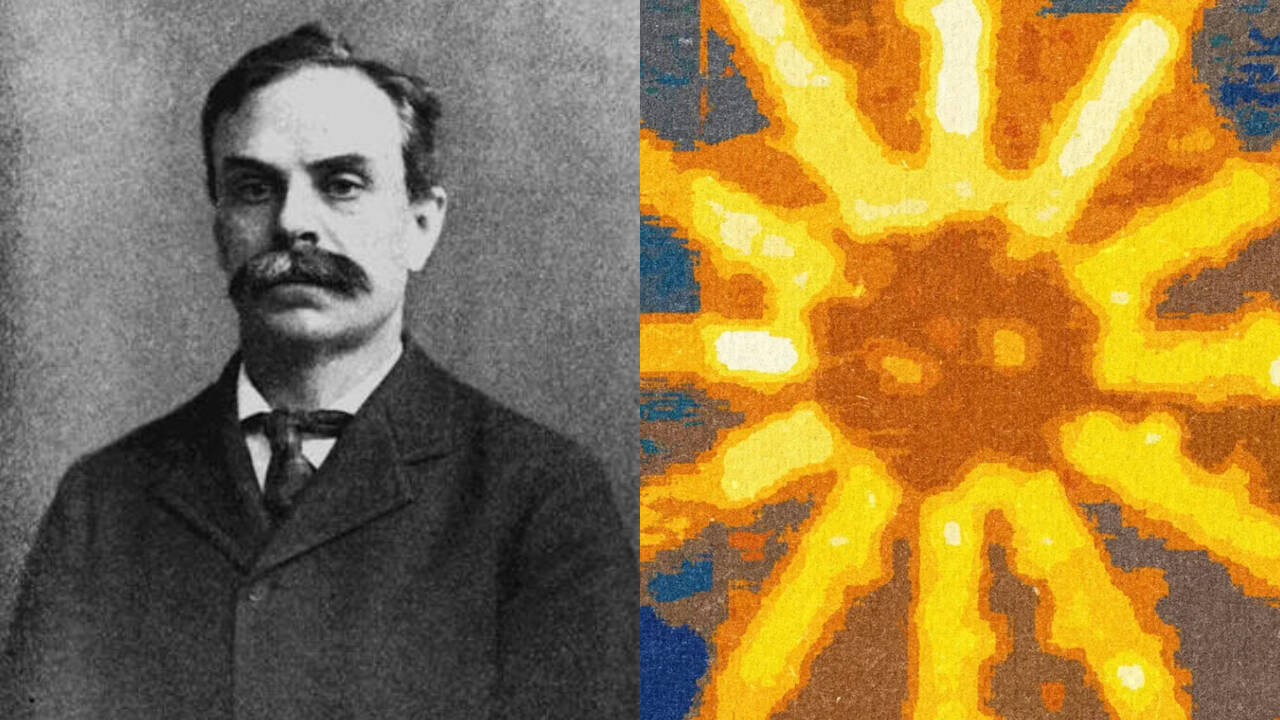
First discovered by Edwin Hall in 1879, the conventional Hall effect strictly required a perpendicular magnetic field, whereas the new discovery operates entirely within the material's two-dimensional plane.
Conventional Hall sensors require complex three-dimensional magnetic field configurations, whereas in-plane Hall devices enable compact, simplified multi-axis magnetic sensors and advanced spintronic memory architectures.
Highly relevant for GS-III Science and Technology, showcasing advancements in condensed matter physics, semiconductor material engineering, nanoscale sensor development, and next-generation electronic technologies.
Prelims Facts
Edwin Hall discovered the conventional Hall effect in 1879, which required a magnetic field perpendicular to the direction of electric current.
Scientists at Carnegie Mellon University demonstrated that the Hall effect can operate with a magnetic field lying within the plane of the material.
The discovery was published in the peer-reviewed journal Nature Materials after testing on nanometer-sized devices.
Mains Framework
The experimental validation of an in-plane Hall effect challenges a 147-year-old dogma in physics, opening new horizons for semiconductor device engineering.
Dimensions
Scientific Paradigm Shift
Demonstrates that magnetic field components parallel to current flow can deflect charge carriers under specific structural geometries.
Technological Applications
Simplifies multi-axis magnetic sensors, reducing component size in robotics, aerospace navigation, and industrial electronics.
Spintronic & Quantum Hardware
Facilitates non-volatile memory architectures and advanced quantum computing components without complex perpendicular magnetic setups.
Way forward
Promote indigenous nanotech R&D investments, establish semiconductor fabrication facilities capable of nano-scale material tailoring, and foster industry-academic research partnerships.
Key terms
In-Plane Hall EffectEdwin Hall (1879)Carnegie Mellon UniversityCondensed Matter PhysicsSpintronics
Acts & articles
National Quantum Mission (NQM)Anusandhan National Research Foundation (ANRF) Act, 2023
05
GS-III: ECOLOGY & ENVIRONMENT
Forest Carbon Sequestration and Atmospheric Pollution Dynamics
Aspen-FACE Experiment Reveals Ozone Offsets Forest Carbon Gains from CO2
An 11-year forest manipulation experiment demonstrated that elevated atmospheric carbon dioxide enhanced forest net primary productivity by 39%, but concurrent elevated tropospheric ozone erased a significant portion of these gains.
Led by researcher Alan F. Talhelm at the Aspen-FACE facility in Rhinelander, Wisconsin, the long-term study evaluated mixed forest plots of aspen, birch, and maple under open-air conditions.
Elevated carbon dioxide increased total ecosystem carbon storage by 11%, whereas elevated ozone reduced ecosystem carbon by 9% and cumulative net primary productivity by 10% over eleven years.
Tropospheric ozone acts as a powerful phytotoxin that damages plant cellular structures and photosynthetic apparatus, undermining the carbon sink capacity expected from elevated atmospheric carbon dioxide fertilization.
Crucial for GS-III Environment and Climate Change, providing empirical evidence on forest carbon sequestration dynamics, terrestrial ecosystem feedbacks, and multi-pollutant interactions under changing climate scenarios.
Prelims Facts
The Aspen-FACE experiment in Wisconsin exposed forest plots to elevated CO2 and tropospheric ozone (O3) over an 11-year duration.
Elevated atmospheric CO2 increased cumulative net primary productivity (NPP) in forest plots by 39%.
Elevated ground-level ozone reduced forest net primary productivity by 10% and overall ecosystem carbon by 9%, counteracting carbon fertilization.
Mains Framework
Long-term ecological experiments show that tropospheric ozone pollution acts as a powerful offset to the enhanced forest growth expected from atmospheric carbon dioxide fertilization.
Dimensions
Carbon Sink Capacity
Elevated CO2 boosts photosynthesis and NPP, but ozone toxicity damages foliage and reduces stomatal efficiency, dampening carbon absorption.
Forest Composition & Health
Mixed stands of aspen, birch, and maple exhibit differential sensitivity to atmospheric pollutants, altering competitive ecological dynamics.
Climate Mitigation Implications
Carbon sequestration models that ignore co-pollutants like ground-level ozone overestimate the mitigation potential of terrestrial forests.
Way forward
Integrate tropospheric ozone reduction targets into air quality policies, protect natural forest ecosystems from industrial emissions, and promote ozone-tolerant afforestation.
Gravity Survey Uncovers One Billion Tons of Water in Utah's Rock Glaciers
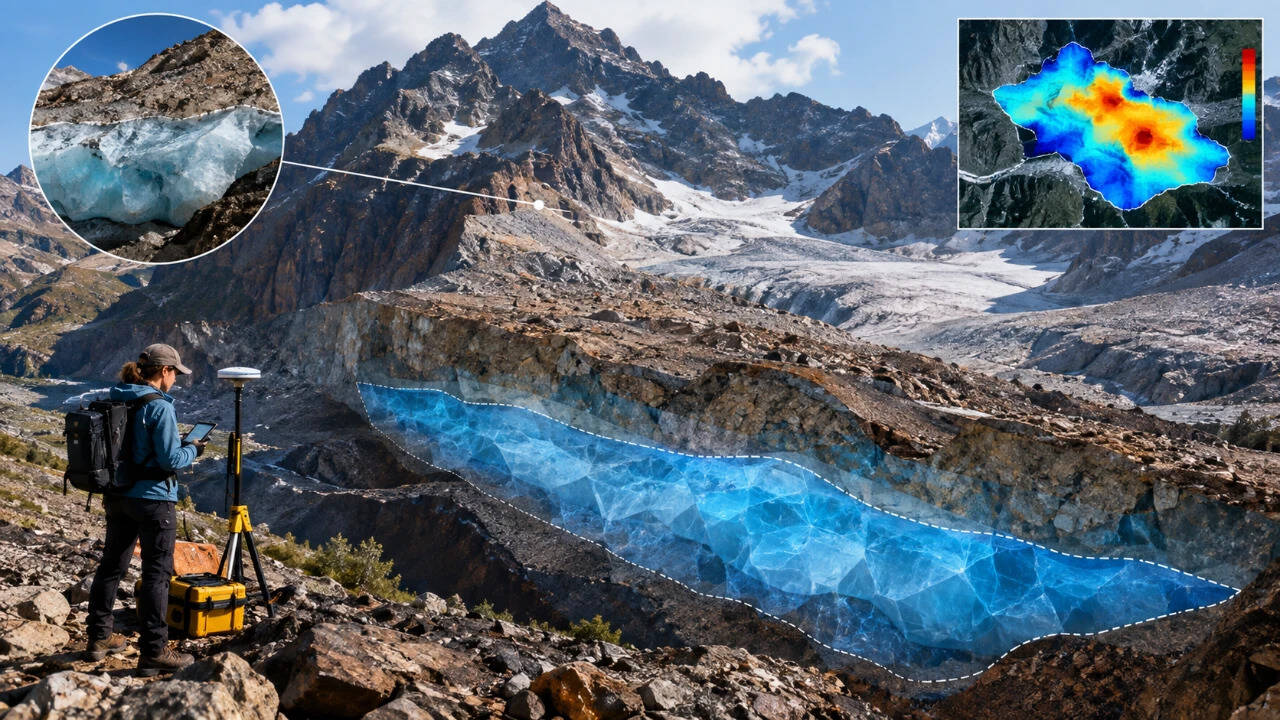
Scientists utilized subtle satellite and surface gravity measurements to discover nearly one billion tons of water equivalent stored inside ice-rich rock glaciers beneath Utah's debris-covered mountain slopes.
Led by Bronson Cvijanovich at the Timpanogos Rock Glacier beneath Mount Timpanogos in Utah, the study was published in the Journal of Geophysical Research: Earth Surface.
Gravity anomaly modeling revealed approximately 0.99 gigatonnes of subterranean ice preserved under thick rock debris, insulating it against ambient thermal degradation far longer than exposed surface glaciers.
Rock glaciers serve as critical drought-resilient hydrological buffers in arid alpine environments, releasing steady meltwater during warming periods when conventional surface glaciers have completely melted away.
Fits GS-I Physical Geography and Water Resources, offering insights into cryosphere dynamics, non-traditional freshwater reservoirs, and climate adaptation strategies for arid mountain hydrological systems.
Prelims Facts
Rock glaciers are high-altitude formations where ice bodies are buried beneath thick layers of rock debris and fallen boulders.
A gravimetric study of the Timpanogos Rock Glacier in Utah uncovered nearly 0.99 gigatonnes (1 billion tons) of water equivalent locked in subterranean ice.
The debris cover insulates sub-surface ice from atmospheric warming, allowing rock glaciers to persist long after conventional glaciers melt.
Mains Framework
Subterranean rock glaciers represent vital, heat-shielded reservoirs in mountain hydrological systems, offering essential water security in drought-prone alpine regions.
Dimensions
Hydrological Buffering
Rock glaciers melt at slower rates than exposed ice sheets, releasing steady baseflow meltwater during dry seasons and heatwaves.
Cryospheric Resilience
Debris mantles act as natural thermal insulators against rising ambient temperatures driven by global climate change.
Expand cryospheric research to map rock glaciers in the Indian Himalayas, integrate rock glacier hydrology into river basin management, and monitor alpine water stocks.
Key terms
Rock GlaciersCryosphereTimpanogos Rock GlacierSub-surface Water StorageGravimetric Survey
Acts & articles
National Mission for Sustaining the Himalayan Ecosystem (NMSHE)National Water Mission under NAPCC
07
GS-III: ENVIRONMENT & BIODIVERSITY
Biodiversity Conservation and Invasive Species Eradication Strategies
Rat Eradication Leads to Seabird Recovery on Lundy Island
A two-decade conservation project successfully eradicated invasive brown rats from Lundy Island, leading to a dramatic recovery in breeding puffin populations and total nesting seabird numbers.
Managed by the Lundy Field Society and The Landmark Trust on Lundy Island off the Devon coast in southwest England, the project restored native cliff and burrow habitats.
Breeding puffin pairs surged from a low of 13 in 2000 to 1,335 individuals, while total nesting seabirds across the island rebounded to over 40,000 birds.
Introduced ship rats heavily preyed upon eggs and chicks of burrow-nesting seabirds, proving that targeted eradication of invasive alien species can successfully reverse island ecological collapse.
Aligns with GS-III Environment and Biodiversity, illustrating ecosystem restoration methodology, control of invasive alien species, and species recovery frameworks under the Convention on Biological Diversity.
Prelims Facts
Invasive brown rats (Rattus norvegicus) introduced by ships severely damaged seabird populations on Lundy Island by preying on eggs and chicks.
A dedicated rat-eradication project launched on Lundy Island in 2002 led to a population increase of puffins from 13 in 2000 to 1,335 individuals.
Over 40,000 seabirds, including puffins, guillemots, and Manx shearwaters, now nest on Lundy Island following eradication success.
Mains Framework
Island ecosystem restoration demonstrates that removing invasive alien species is one of the most effective interventions for halting biodiversity loss and recovering vulnerable wildlife.
Dimensions
Ecosystem Threats
Invasive predators like rats devastate ground-nesting and burrow-nesting birds that evolved without natural defenses.
Restoration Dynamics
Systematic, complete eradication of invasive rodents allows native flora and fauna to recover spontaneously over two decades.
Global Conservation Strategy
Offers a proven operational blueprint for ecological restoration on isolated islands and oceanic sanctuaries worldwide.
Way forward
Implement strict biosecurity protocols on island ecosystems, deploy invasive alien species management frameworks across coastal wildlife sanctuaries, and engage local communities.
Key terms
Invasive Species EradicationLundy IslandPuffin RecoveryRattus norvegicusIsland Restoration
Acts & articles
Kunming-Montreal Global Biodiversity Framework (Target 6 on IAS)Biological Diversity Act, 2002Wildlife Protection Act, 1972
08
GS-II: INTERNATIONAL RELATIONS
Global Geopolitics, US Foreign Policy, and Migration Management
United States Outlines Post-Iran War Middle East Strategy Reset
US President Donald Trump initiated high-level strategic planning for a major Middle East policy reset aimed at containing Iranian influence while expanding diplomatic normalization agreements across the region.
Senior White House officials met in Washington to draft the post-conflict framework intended to guide American diplomatic and security strategy during the remaining two years of Trump’s presidential term.
The administration convened two major advisory strategy meetings in recent weeks to outline post-war security architectures and expand upon the foundational Abraham Accords framework.
Following heightened military escalation involving Iran, Washington seeks to forge a new regional equilibrium by pairing containment of hostile non-state proxies with broader Arab-Israeli economic and defense integration.
Direct relevance to GS-II International Relations, highlighting evolving geopolitics in West Asia, major power strategies, security dynamics, and potential implications for India’s regional energy and diaspora interests.
US Directs Immigration Judges to Restrict Visa Continuances and Expedite Deportations
US immigration authorities instructed federal judges to strictly limit continuances for undocumented immigrants awaiting visa or Green Card approvals, accelerating deportation proceedings across federal immigration courts.
Judge Keith Hunsucker led mandatory virtual training sessions for hundreds of immigration judges across the United States under directives from the Board of Immigration Appeals.
The policy targets hundreds of thousands of pending deportation cases, restricting legal delays and threatening sanctions against defense attorneys accepting excessive case volumes to enforce strict departure timelines.
Legal continuances historically provided procedural fairness for immigrants navigating concurrent administrative relief, but the new administrative mandates prioritize rapid case adjudications and enforcement over judicial discretion.
Important for GS-II International Relations and Indian Diaspora, illustrating tightening US immigration enforcement, due process concerns, procedural administrative reforms, and impacts on foreign nationals abroad.
Prelims Facts
US strategic planning involves post-conflict normalization in the Middle East paired with containment of Iranian influence.
'Continuances' in US immigration courts are legal mechanisms historically used to grant temporary delays for individuals awaiting Green Cards or legal counsel.
Recent directives to US immigration judges mandate reducing continuances to expedite deportation adjudications.
Mains Framework
Shifting US foreign policy strategies in West Asia and tightening domestic judicial rules on immigration reflect broader realignments in American geopolitical and domestic priorities.
Dimensions
Geopolitical Realignment
A post-Iran war regional reset seeks to integrate Arab-Israeli defense and economic partnerships while containing regional proxy networks.
Procedural Due Process
Restricting immigration court continuances reduces administrative backlogs but raises concerns over legal representation and human rights.
Impact on Indian Diaspora
Stricter deportation timelines and reduced legal flexibility heighten compliance risks for non-immigrant visa holders and Green Card applicants.
Way forward
India must maintain multi-aligned diplomacy in West Asia to protect energy security while strengthening consular assistance networks for non-resident Indians abroad.
Key terms
Middle East ResetIran War StrategyImmigration ContinuancesBoard of Immigration AppealsDeportation Directives
Acts & articles
US Immigration and Nationality Act (INA)Universal Declaration of Human Rights (Article 14 on Asylum)Article 19(1)(e) & consular protections under International Law
09
GS-III: DISASTER MANAGEMENT & CLIMATOLOGY
Hydro-Meteorological Disasters and Tropical Storm Dynamics
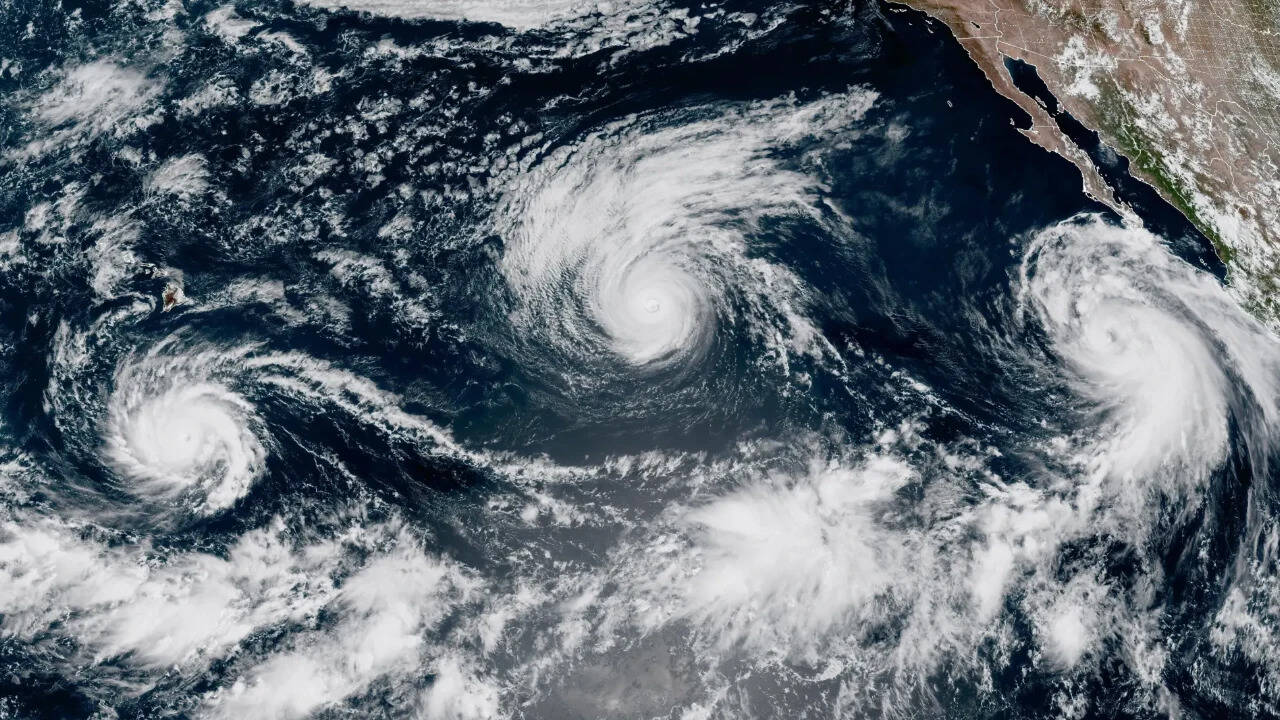
Hurricane Lowell maintained Category 4 intensity with sustained winds of 150 mph as it tracked northward through the Pacific Ocean, posing severe weather threats to Hawaii.
The National Hurricane Center issued advisories for Hawaii's western islands, including Kauai and Niihau, as the storm's center approached within 150 to 190 miles.
Featuring maximum sustained winds of 150 mph, Hurricane Lowell fluctuated between Category 4 and Category 5 strength while maintaining dangerous hurricane-force winds over a broad radius.
Ocean warming and favorable atmospheric conditions enable Pacific hurricanes to maintain extreme intensity further north, disrupting seasonal climate patterns and threatening remote island infrastructure with storm surges.
Relevant for GS-I Physical Geography and GS-III Disaster Management, illustrating tropical cyclone mechanics, Saffir-Simpson intensity scale parameters, and disaster preparedness in vulnerable coastal ecosystems.
Tropical Cyclone Saudel Triggers Fatal Mudslide in Southeastern China
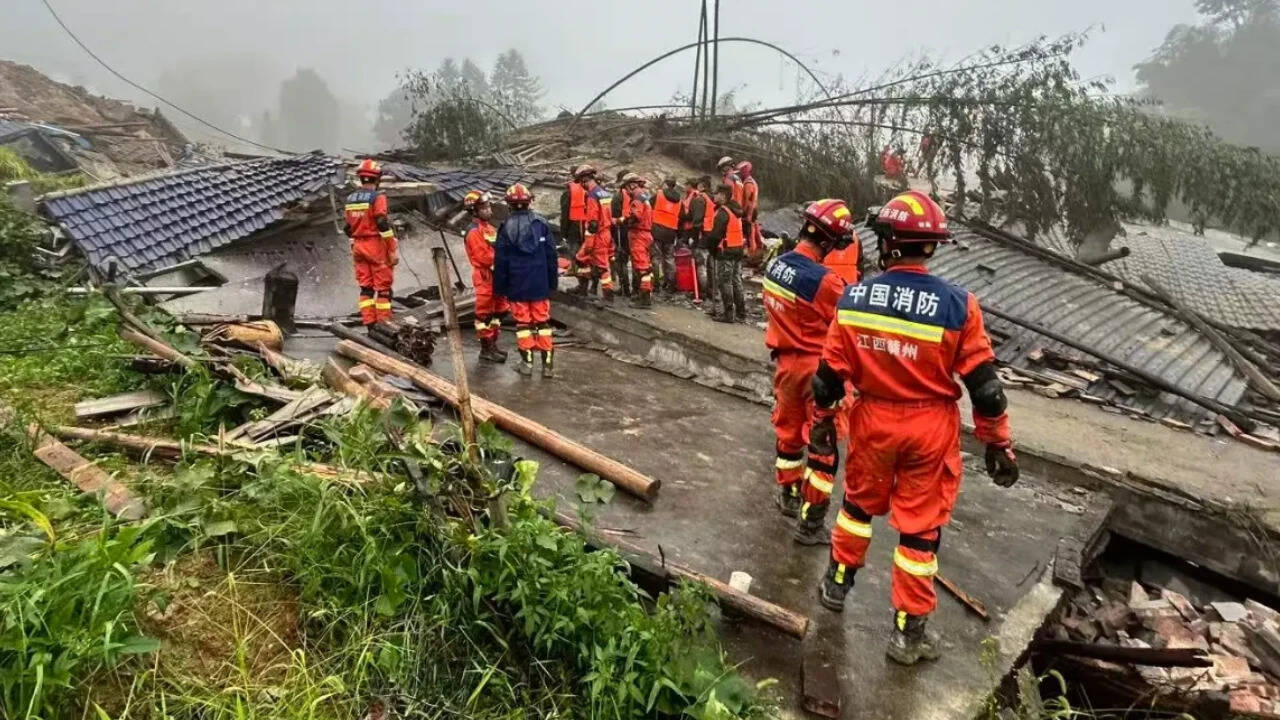
Torrential rainfall driven by Tropical Cyclone Saudel triggered a devastating mudslide in southeastern China, causing multiple fatalities and leaving ten individuals unaccounted for amidst ongoing rescue operations.
The landslide hit a mountain village in Suichuan County, Jiangxi province, following multiple coastal landfalls by Cyclone Saudel across Zhejiang and Fujian provinces.
Authorities confirmed two fatalities, two live rescues, ten missing villagers, and the collapse of over 100 homes alongside a major dike breach in Putian city.
Successive landfalls by weakened tropical systems often deposit extreme localized rainfall on saturated mountain terrain, triggering catastrophic secondary geohazards such as mudslides, flash floods, and embankment failures.
Directly applicable to GS-III Disaster Management and Physical Geography, highlighting cascading natural hazards, tropical storm impacts on inland terrain, and emergency response protocols in slope-instability zones.
Prelims Facts
Category 4 hurricanes on the Saffir-Simpson scale feature sustained wind speeds between 130 and 156 mph.
Tropical Cyclone Saudel made multiple landfalls across Zhejiang and Fujian before causing torrential rainfall and fatal mudslides inland in Jiangxi province.
Secondary disaster risks from tropical storms include flash flooding, dike breaches, and saturated slope failures in mountain terrain.
Mains Framework
Increasing frequency and intensity of tropical storms underscore the need for integrated early warning systems and resilient infrastructure in coastal and mountain regions.
Dimensions
Climatological Intensity
Warmer sea surface temperatures fuel rapid intensification of severe tropical cyclones like Hurricane Lowell.
Cascading Geohazards
Heavy rainfall associated with landfalling cyclones like Saudel destabilizes slopes, triggering deadly mudslides and structural collapse.
6 questions · UPSC Prelims pattern · Tap an option to check your answer
GS-II: SOCIAL JUSTICE & INTERNATIONAL RELATIONSGlobal Initiatives Against Child Marriage
India Co-Sponsors UNGA Resolution Declaring November 27 Against Child Marriage
Q1With reference to international and national initiatives regarding child marriage, consider the following statements:
1. The United Nations General Assembly adopted a resolution proclaiming November 27 as the International Day for the Elimination of Child, Early and Forced Marriage.
2. The date November 27 commemorates the national launch of India's 'Bal Vivah Mukt Bharat' campaign.
Which of the statements given above is/are correct?
Answer: Option C
Both statements are correct. The 193-member UNGA adopted by consensus a resolution led by Sierra Leone and co-sponsored by India declaring November 27 as the International Day for the Elimination of Child, Early and Forced Marriage. November 27 marks the launch of India's Bal Vivah Mukt Bharat campaign.
GS-III: SCIENCE & TECHNOLOGYAdvances in Condensed Matter Physics: The In-Plane Hall Effect
Scientists Demonstrate In-Plane Hall Effect Breaking 147-Year Physics Paradigm
Q2How does the newly demonstrated 'in-plane Hall effect' differ from the conventional Hall effect discovered in 1879?
Answer: Option B
In 1879, Edwin Hall discovered the Hall effect requiring a magnetic field applied perpendicular to the material. Scientists at Carnegie Mellon University demonstrated an in-plane Hall effect where a magnetic field lying within the plane of the material produces a measurable Hall response.
GS-III: ECOLOGY & ENVIRONMENTForest Carbon Sequestration and Atmospheric Pollution Dynamics
Aspen-FACE Experiment Reveals Ozone Offsets Forest Carbon Gains from CO2
Q3Based on long-term ecological experiments like Aspen-FACE, what is the combined impact of elevated CO2 and tropospheric ozone (O3) on forest ecosystems?
Answer: Option B
The 11-year Aspen-FACE study showed that while elevated CO2 increased net primary productivity by 39%, elevated ozone reduced productivity by 10% and ecosystem carbon by 9%, proving that tropospheric ozone offsets carbon sink gains.
GS-I: PHYSICAL GEOGRAPHYCryosphere Hydrology and Sub-surface Water Storage Mechanisms
Gravity Survey Uncovers One Billion Tons of Water in Utah's Rock Glaciers
Q4Which of the following best describes 'rock glaciers' and their significance in alpine hydrology?
Answer: Option B
Rock glaciers are subterranean bodies of ice buried beneath thick layers of rock and debris. A gravity study in Utah revealed nearly 1 billion tons of subterranean water equivalent locked inside rock glaciers, which act as drought-resilient hydrological buffers.
GS-III: ENVIRONMENT & BIODIVERSITYBiodiversity Conservation and Invasive Species Eradication Strategies
Rat Eradication Leads to Seabird Recovery on Lundy Island
Q5What was the ecological outcome of the invasive rat eradication project conducted on Lundy Island?
Answer: Option B
Following the rat-eradication project started in 2002 on Lundy Island, breeding puffins surged from 13 in 2000 to 1,335 individuals, and total nesting seabirds surpassed 40,000 as predation was successfully eliminated.
GS-III: DISASTER MANAGEMENT & CLIMATOLOGYHydro-Meteorological Disasters and Tropical Storm Dynamics
Tropical Cyclone Saudel Triggers Fatal Mudslide in Southeastern China
Q6Consider the following statements regarding tropical cyclone landfalls and associated geohazards:
1. Prolonged localized rainfall from landfalling tropical storms can saturate mountain soils and trigger secondary mudslides.
2. Tropical cyclones increase in wind intensity continuously as they travel further inland over landmasses.
Which of the statements given above is/are correct?
Answer: Option A
Statement 1 is correct: As seen during Cyclone Saudel in Jiangxi, heavy rainfall saturates mountain soils and triggers deadly mudslides. Statement 2 is incorrect because tropical cyclones rapidly lose energy and wind intensity after moving inland due to friction and loss of ocean heat sources.