Daily Current Affairs — 20 August 2026

Thu · 6 topics · 8 stories · 6 Prelims MCQs

01
GS PAPER II - INDIAN CONSTITUTION & GOVERNANCE

Civil Society Demands for Statehood and Sixth Schedule Status in Ladakh
Story 1The Hindu ↗

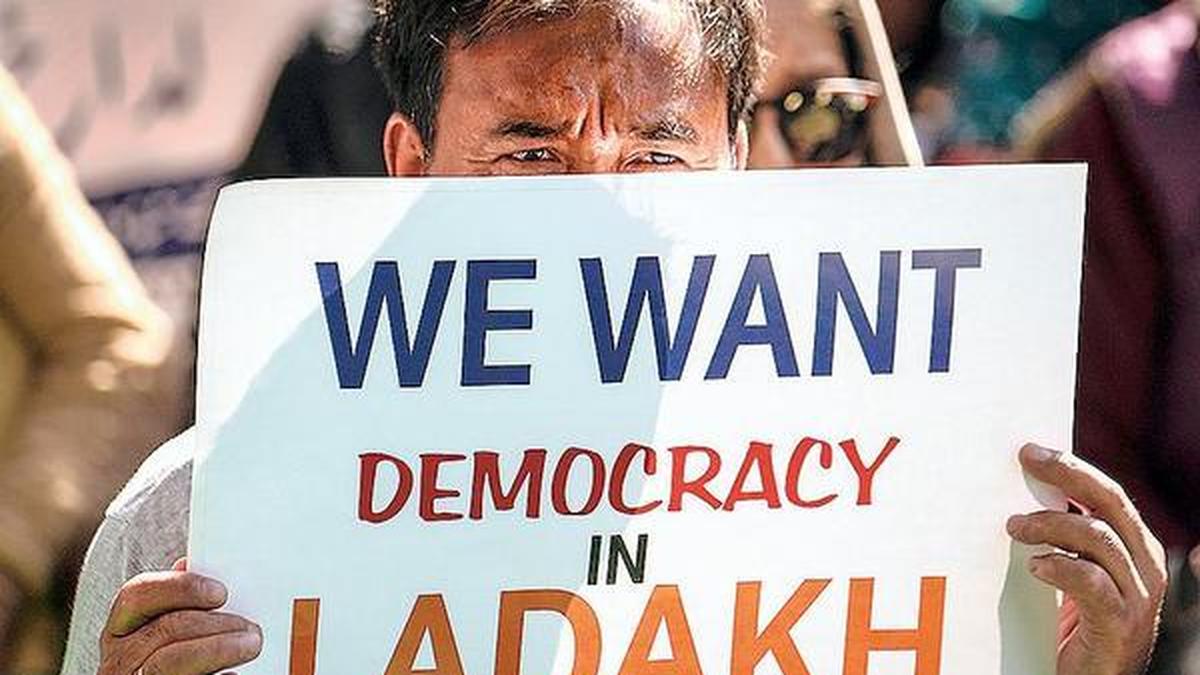
Ladakh Civil Society Demands Legislative Assembly and Sixth Schedule Inclusion

  • Civil society groups in Ladakh submitted a list of non-negotiable points to Home Ministry officials demanding the creation of an elected Legislative Assembly and Sixth Schedule status.
  • The Leh Apex Body and Kargil Democratic Alliance held an informal meeting in Leh with Ministry of Home Affairs officials and Ladakh Chief Secretary Ashish Kundra ahead of formal talks.
  • Key demands mandate a Chief Minister-led Council of Ministers whose aid and advice must guide the Lieutenant Governor to mitigate ongoing administrative conflicts in the region.
  • The political advocacy comes as regional bodies observe September as 'Martyrs' Month' to honor individuals who died during prolonged agitations for democratic rights and statehood.
  • The development highlights constitutional challenges under Article 239 regarding federal governance, local self-determination, and ecological protection in sensitive Himalayan border territories.

Prelims Facts

The Sixth Schedule of the Indian Constitution provides for autonomous district councils to administer tribal areas in northeastern states.
Article 239A governs the creation of local Legislatures or Council of Ministers for certain Union Territories.
The Leh Apex Body (LAB) and Kargil Democratic Alliance (KDA) represent the primary civil society coalitions negotiating governance terms for Ladakh.

Mains Framework

Contextualizing Ladakh's transition post-2019 and civil society demands for democratic representation, constitutional guarantees, and land protection.

Dimensions

Constitutional and Administrative Structure

Need for a Legislative Assembly and elected Council of Ministers to prevent governance friction between local populations and bureaucratic executive heads.

Cultural and Ecological Safeguards

Role of Sixth Schedule inclusion in preserving fragile Himalayan ecosystems, indigenous identity, and land ownership rights.

Strategic and Geopolitical Balance

Ensuring internal political stability in a sensitive frontier border region through inclusive democratic participation.

Way forward

Establishing a structured legislative roadmap, institutionalizing periodic dialogue with regional bodies, and balancing national security imperatives with local democratic aspirations.
Key terms
Sixth ScheduleArticle 239AUnion TerritoryTribal Advisory CouncilDemocratic DecentralizationFederalism
Acts & articles
Article 239ASixth ScheduleArticle 371Jammu and Kashmir Reorganisation Act 2019
02
GS PAPER II - INTERNATIONAL RELATIONS

Geopolitical Strain and Unilateral Economic Sanctions in West Asia Conflict

Story 1The Hindu ↗

United States Threatens Broad Secondary Sanctions Amid West Asia Conflict

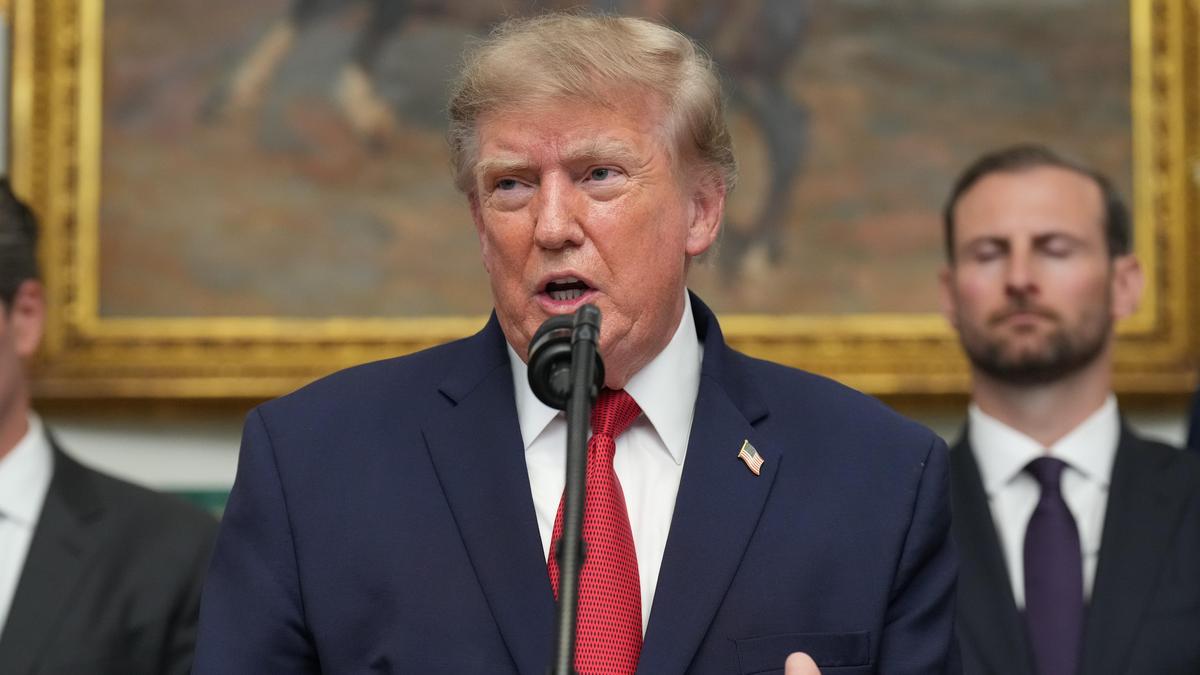
  • US President Donald Trump announced an economic pressure campaign threatening severe financial penalties on any nation maintaining business or trade ties with Iran.
  • The coercive measures target global financial institutions, business entities, airports, and government bodies offering commercial or logistical lifelines to the West Asian nation.
  • The economic operation coincides with the West Asian conflict entering its sixth month while US national debt simultaneously crossed a record high of $40 trillion.
  • International trade routes remain severely disrupted with shipping activity through the vital Strait of Hormuz restricted, compounding global energy supply anxieties.
  • The developments illustrate growing geopolitical complexities surrounding secondary sanctions, multilateral trade norms, and India's strategic autonomy in balancing energy security with foreign alliances.

Prelims Facts

Unilateral secondary sanctions involve economic penalties imposed by one country on foreign entities doing business with a targeted nation.
The Strait of Hormuz is a vital maritime transit choke point connecting the Persian Gulf with the Gulf of Oman and Arabian Sea.
The United States national debt surpassed the milestone of $40 trillion amidst escalating defense expenditures and international engagements.

Mains Framework

Analysis of intensifying economic warfare, global trade disruptions, and sovereign debt burdens during prolonged regional conflicts in West Asia.

Dimensions

Global Trade and Maritime Safety

Choked maritime transit routes through the Strait of Hormuz causing severe volatility in global crude energy trade.

Extraterritoriality of Sanctions

Impairment of sovereign trade options for third countries facing coercive financial and economic isolation threats.

Macroeconomic Strains

Expanding national debt levels in major economies creating global fiscal instability and inflationary pressures.

Way forward

Diversifying international energy corridors, strengthening multilateral trade dispute mechanisms, and promoting diplomatic de-escalation in key maritime choke points.

Key terms
Secondary SanctionsStrait of HormuzEconomic WarfareStrategic AutonomyEnergy SecuritySovereign Debt
Acts & articles
UN Charter Article 41Foreign Trade (Development and Regulation) Act 1992
03
GS PAPER I - INDIAN ART & CULTURE

Heritage Conservation and AI-Driven Epigraphy Preservation in Tamil Nadu

Story 1The Hindu ↗

Tamil Nadu Enhances Archaeology Allocation and Integrates AI for Epigraphy

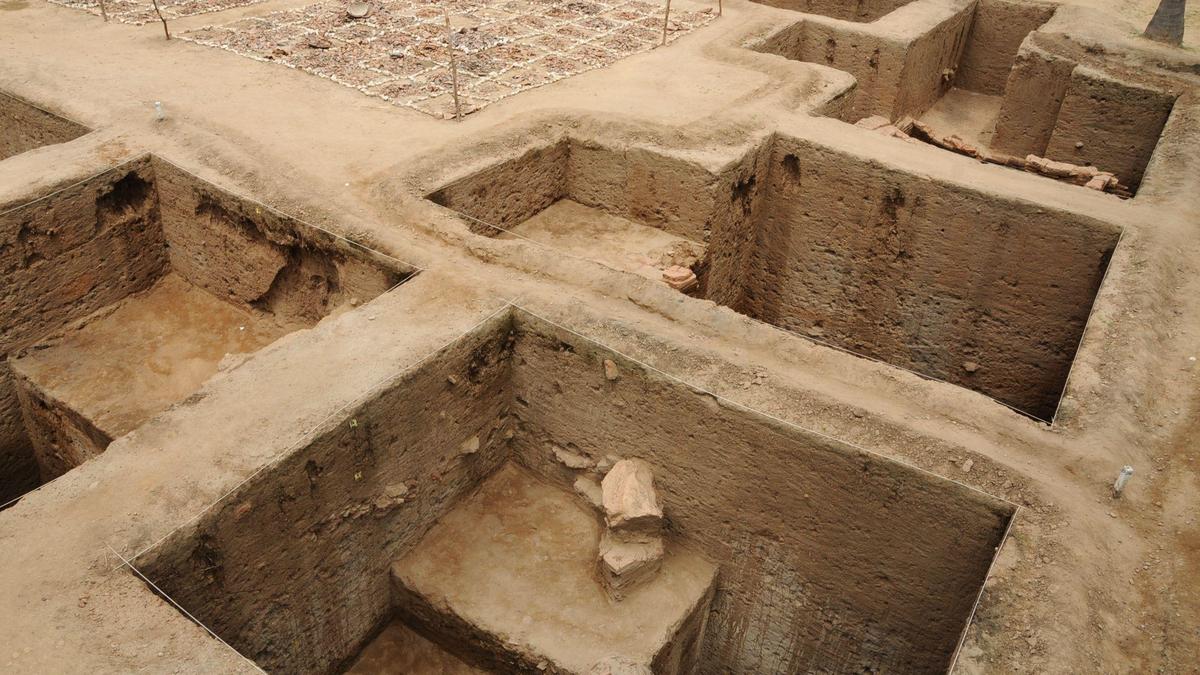
  • Tamil Nadu Minister for School Education and Tamil Development announced an enhanced annual budget allocation of ₹10 crore for archaeological field surveys and excavations.
  • The state government will establish a specialized modern archaeological laboratory costing ₹2 crore in Tamil Nadu to perform scientific analyses on unearthed artefacts.
  • A digital database driven by Artificial Intelligence will be created to assist the public and researchers in easily interpreting ancient Tamil inscriptions.
  • Phase one of the Tamil Heritage Conservation Mission will oversee the renovation and protection of 76 designated historical monuments over the next five years.
  • The policy decision highlights the integration of modern analytical science and artificial intelligence into cultural resource management and archaeological heritage conservation.

Prelims Facts

Keeladi is a prominent Sangam-era archaeological site located along the Vaigai River basin near Madurai in Tamil Nadu.
Epigraphy refers to the scientific study and interpretation of ancient inscriptions carved on stone, metal, or durable surfaces.
Artificial Intelligence models are increasingly applied in epigraphy to decipher, reconstruct, and digitize damaged historical scripts.

Mains Framework

Modernizing heritage management through enhanced financial allocations, modern analytical laboratories, and AI-driven preservation tools.

Dimensions

Financial and Infrastructural Support

Increasing survey allocations to enable underwater explorations and comprehensive site excavations.

Technological Integration

Utilizing artificial intelligence to digitize ancient epigraphic inscriptions and make historical records publicly accessible.

Institutional Conservation Frameworks

Structured restoration of protected monuments under targeted state heritage conservation missions.

Way forward

Institutionalizing interdisciplinary research between historians and tech experts, establishing state-of-the-art dating laboratories, and expanding public-heritage engagement.

Key terms
EpigraphyKeeladiUnderwater ExplorationAI in ArchaeologyArchaeological SurveyCultural Heritage Mission
Acts & articles
Ancient Monuments and Archaeological Sites and Remains Act 1958Article 49
04
GS PAPER III - ENVIRONMENT & ECOLOGY

Ecological Restoration through Passive Rewilding and Coastal Mangrove Stewardship

Story 1Times of India ↗

Six-Decade Rewilding Study Demonstrates Natural Regeneration of Native Woodlands

  • A 60-year scientific monitoring project revealed that halting agricultural activities on a four-hectare plot enabled passive rewilding to form a complex native woodland.
  • Researchers observed that natural scrub provided protective barriers against herbivores while wind and birds facilitated seed dispersal across the uncultivated field.
  • After five decades of undisturbed succession, the regenerated land successfully mirrored structural and biodiversity traits of ancient native woodlands.
  • The findings validate passive rewilding as an economical, low-intervention ecological restoration model for reversing land degradation globally.
  • The research provides empirical support for incorporating passive ecological succession into global biodiversity targets and national forest management strategies.
Story 2Times of India ↗

Youth-Led Mangrove Stewardship Initiative Promotes Coastal Ecosystem Conservation

  • A grassroots environmental initiative titled 'My Pet Mangrove' distributes mangrove propagules to individuals to build personal connections with coastal conservation.
  • The program, developed in Florida, received international recognition through the National Geographic Society's 2026 Slingshot Challenge Award.
  • Mangrove forests serve as critical buffer systems that shield shorelines from storm surges, sequester atmospheric carbon, and support marine nursery grounds.
  • The initiative addresses accelerated global mangrove loss by transforming abstract conservation concepts into direct, localized public participation.
  • The strategy demonstrates how youth-driven ecological outreach can complement official coastal zone management plans to preserve fragile intertidal ecosystems.

Prelims Facts

Passive rewilding relies on removing human disturbances and allowing natural ecological succession to restore degraded ecosystems.
Mangroves are coastal halophytes acting as crucial blue carbon sinks and natural barriers against storm surges.
Natural seed dispersal mechanisms like wind and frugivorous birds drive long-term structural recovery in passive woodland regeneration.

Mains Framework

Comparing passive rewilding strategies with active afforestation models for cost-effective ecosystem recovery and long-term biodiversity outcomes.

Dimensions

Cost Efficacy of Passive Rewilding

Minimal financial overhead compared to active tree planting, allowing natural vegetation to form ancient-like woodland structures.

Coastal Protection and Carbon Sequestration

Crucial role of mangrove ecosystems as blue carbon sinks and protection against severe coastal erosion.

Community-Led Environmental Stewardship

Engaging local populations and youth to foster direct personal connections with ecosystem protection.

Way forward

Integrating passive succession models into national biodiversity strategies, protecting natural ecological corridors, and scaling up community-led coastal restoration.

Key terms
Passive RewildingEcological SuccessionMangrovesBlue CarbonBiodiversity ConservationEcosystem Services
Acts & articles
Environment Protection Act 1986Coastal Regulation Zone (CRZ) Notifications
05
GS PAPER III - SCIENCE & TECHNOLOGY

Advances in Bioengineering for Early Cancer Diagnostics and Smart Biomaterials

Story 1Times of India ↗

Bioengineered Magnetic Bead Technique Enables Early Detection of Pancreatic Cancer

  • A novel bioengineering technique was developed to detect early-stage pancreatic cancer by capturing microscopic tumor-derived particles directly from patient blood samples.
  • Developed by researcher Audrey Zheng, the method utilizes specialized magnetic beads to isolate circulating tumor biomarkers from blood plasma.
  • Clinical trials demonstrated an 87% diagnostic accuracy rate in identifying pancreatic ductal adenocarcinoma and an 87.5% accuracy rate in ruling out non-cases.
  • The innovation earned recognition as a national finalist entry in the prestigious 2026 Regeneron Science Talent Search.
  • The advancement underscores the transformative role of nanobiotechnology in non-invasive early disease detection, offering promising applications for preventive public healthcare.
Story 2Google News ↗

Novel Smart Bone Material Combats Implant Infections and Captures Cellular RNA

  • Biomedical researchers developed a multifunctional smart bone material designed to concurrently combat post-surgical infections and capture regulatory cellular RNA.
  • The breakthrough tissue-engineering material target site bio-implants to eliminate bacterial pathogens while actively harvesting signaling molecules.
  • The material's dual action enhances localized bone tissue regeneration and offers new mechanisms for monitoring cellular gene expression during healing.
  • The research addresses key clinical failures in orthopedic surgery caused by chronic bacterial biofilms and poor bone tissue integration.
  • The technological advancement demonstrates growing convergence between material science, nanomedicine, and molecular diagnostics in modern healthcare.

Prelims Facts

Pancreatic ductal adenocarcinoma is a lethal malignancy characterized by late diagnosis due to non-specific early clinical symptoms.
Magnetic bead separation uses functionalized micro/nanoparticles to selectively isolate tumor biomarkers or extracellular vesicles from blood.
Smart biomaterials are engineered to respond dynamically to biological stimuli while performing infection-fighting or molecule-capturing actions.

Mains Framework

Shifting healthcare paradigms from late-stage symptomatic interventions toward non-invasive liquid biopsies and functional biomaterials.

Dimensions

High Precision Diagnostic Tools

Utilizing functionalized magnetic beads to isolate circulating biological markers from blood plasma with high diagnostic sensitivity.

Therapeutic Innovation in Biomaterials

Developing dual-function orthopedic biomaterials that eliminate bacterial infections while capturing cellular signaling RNA.

Translational Health Economics

Scaling non-invasive nanotech diagnostic tools to lower overall healthcare costs and improve patient survival rates.

Way forward

Streamlining clinical trial regulations, promoting domestic biomanufacturing under national technology missions, and enhancing public-private research partnerships.

Key terms
BioengineeringMagnetic BeadsPancreatic Ductal AdenocarcinomaLiquid BiopsySmart BiomaterialsRNA Capture
Acts & articles
National Biopharma MissionMedical Devices Rules 2017
06
GS PAPER II - GOVERNANCE & SOCIAL JUSTICE

Educational Governance and High-Stakes Examination Reforms in India

Story 1Google News ↗

National UGC-NET Retest Schedule Disrupts Higher Education Aspirants' Academic Timelines

  • Candidate disruptions worsened following the scheduling of UGC-NET re-examinations, causing significant delays in higher education admissions and research fellowship cycles.
  • Aspirants reported that examination rescheduling consumed over two months of study preparation time, interrupting career planning and academic research timelines across India.
  • The retest mandate resulted from administrative and technical vulnerabilities identified during the initial national examination delivery.
  • The disruption highlights broader systemic issues regarding candidate logistics, financial distress, and mental well-being during prolonged exam cycles.
  • The situation underscores the urgent necessity for comprehensive administrative reforms, robust testing protocols, and institutional accountability in conducting high-stakes competitive examinations.

Prelims Facts

The University Grants Commission (UGC) NET determines eligibility for Assistant Professorships and Junior Research Fellowships in Indian universities.
The National Testing Agency (NTA) is an autonomous agency under the Ministry of Education established to conduct entrance tests.
The Public Examinations (Prevention of Unfair Means) Act 2024 was enacted to deter malpractices and leaks in national competitive tests.

Mains Framework

Examining systemic vulnerabilities in national testing mechanisms and their cascading disruptions on higher education admission cycles.

Dimensions

Administrative and Institutional Delivery

Structural vulnerabilities leading to cancellations, re-tests, and operational delays in national assessments.

Socio-Economic Impact on Candidates

Financial strain, lost study preparation months, and career uncertainty faced by candidates during prolonged exam cycles.

Restoring Public Trust

Implementing strict anti-malpractice measures and transparent candidate grievance redressal channels.

Way forward

Standardizing digital testing infrastructure, enforcing statutory penalties under unfair means legislation, and establishing rigid academic calendar schedules.

Key terms
UGC-NETNational Testing AgencyHigher EducationExamination IntegrityPublic GrievanceAdministrative Efficiency
Acts & articles
Public Examinations (Prevention of Unfair Means) Act 2024University Grants Commission Act 1956

Practice MCQs — Test Your Understanding

6 questions · UPSC Prelims pattern · Tap an option to check your answer

GS PAPER II - INDIAN POLITYCivil Society Demands for Statehood and Sixth Schedule Status in Ladakh

Ladakh Civil Society Demands Legislative Assembly and Sixth Schedule Inclusion

Q1With reference to the Sixth Schedule of the Constitution of India, consider the following statements: 1. It provides for autonomous district and regional councils in specified tribal areas. 2. The Governor is empowered to organize and reorganize autonomous districts. 3. Currently, its provisions apply to the Union Territory of Ladakh. Which of the statements given above is/are correct?

GS PAPER II - INTERNATIONAL RELATIONSGeopolitical Strain and Unilateral Economic Sanctions in West Asia Conflict

United States Threatens Broad Secondary Sanctions Amid West Asia Conflict

Q2Which of the following bodies of water is connected to the Persian Gulf via the strategic maritime choke point known as the Strait of Hormuz?

GS PAPER I - ART AND CULTUREHeritage Conservation and AI-Driven Epigraphy Preservation in Tamil Nadu

Tamil Nadu Enhances Archaeology Allocation and Integrates AI for Epigraphy

Q3Consider the following statements regarding the Keeladi archaeological site: 1. It is an ancient Sangam-era settlement located along the Vaigai River basin in Tamil Nadu. 2. Inscriptions and brick structures unearthed at the site provide evidence of ancient urban habitation. Which of the statements given above is/are correct?

GS PAPER III - ENVIRONMENT & ECOLOGYEcological Restoration through Passive Rewilding and Coastal Mangrove Stewardship

Six-Decade Rewilding Study Demonstrates Natural Regeneration of Native Woodlands

Q4What is 'passive rewilding' in ecological conservation?

GS PAPER III - SCIENCE & TECHNOLOGYAdvances in Bioengineering for Early Cancer Diagnostics and Smart Biomaterials

Bioengineered Magnetic Bead Technique Enables Early Detection of Pancreatic Cancer

Q5In biomedical engineering, how are functionalized magnetic micro/nanoparticles primarily utilized in non-invasive cancer diagnostics?

GS PAPER II - GOVERNANCEEducational Governance and High-Stakes Examination Reforms in India

National UGC-NET Retest Schedule Disrupts Higher Education Aspirants' Academic Timelines

Q6Which statutory body in India conducts or oversees eligibility determination for Junior Research Fellowships and Assistant Professorships in Indian universities?