Glacial Collapse Triggers Devastating Flash Floods Along Nepal-Tibet Border
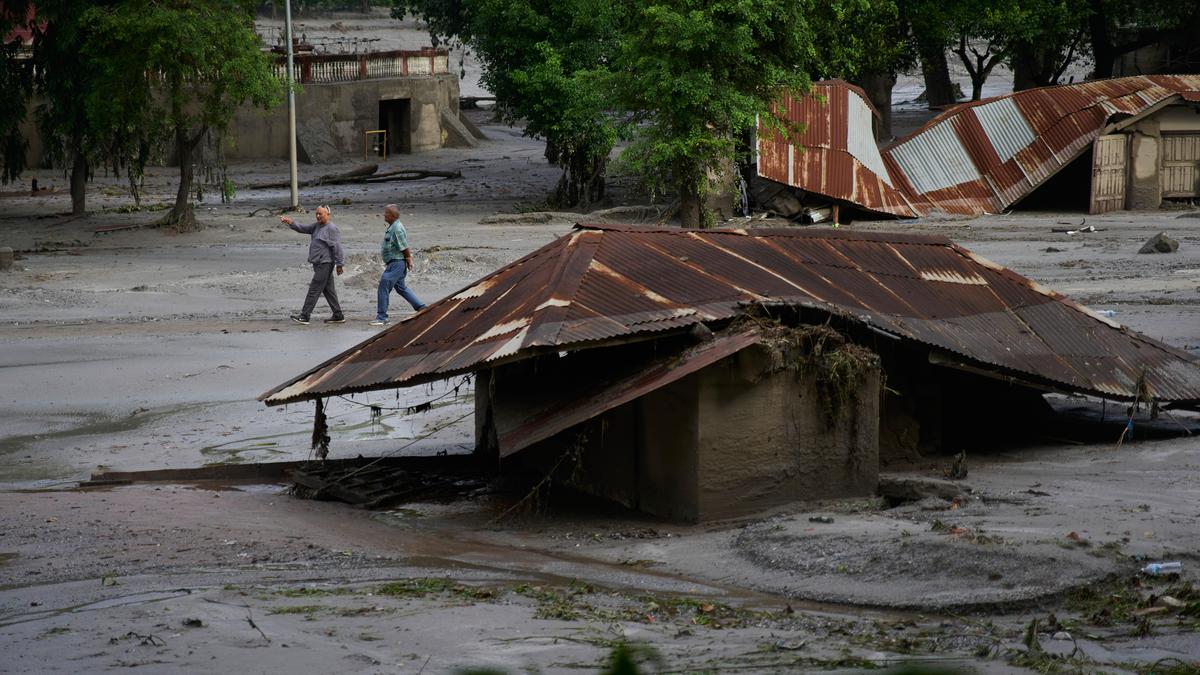
A catastrophic glacial collapse along the Nepal-Tibet border triggered severe downstream flash floods and debris flows across three Nepali districts.
The disaster left at least 270 people dead, over 288 Indian nationals missing, and destroyed critical physical infrastructure across affected regions.
The U.S. Geological Survey verified that initial seismic activity was caused by glacial collapse and flow, rather than a tectonic earthquake.
In response, India dispatched a second tranche of emergency humanitarian assistance and relief supplies using military transport aircraft to assist search efforts.
This event underscores UPSC GS-3 concepts regarding fragile Himalayan eco-zones, Glacial Lake Outburst Flood (GLOF) risks, and international disaster response.
Prelims Facts
Glacial collapse along the Nepal-Tibet border generated seismic activity and downstream debris flows impacting multiple districts.
India dispatched military transport aircraft carrying emergency relief supplies to flood-ravaged regions in Nepal.
The U.S. Geological Survey confirmed that initial seismic signals reported as an earthquake were triggered by a massive glacial collapse.
Mains Framework
The catastrophic flash floods triggered by glacial collapse on the Nepal-Tibet border highlight the severe disaster vulnerability of fragile Himalayan landscapes under changing climatic regimes.
Dimensions
Ecological Vulnerability
Glacial instability leading to secondary hazards like seismic signals, severe landslides, and downstream debris floods.
Transboundary Coordination
Challenges in cross-border disaster communication, tracking missing international pilgrims, and executing swift bilateral relief.
Disaster Preparedness
Urgent need for real-time early warning systems (EWS) and satellite surveillance across shared river basins.
Draft Electoral Rolls Reveal Arbitrary Deletion Reasons in Southern States Revision
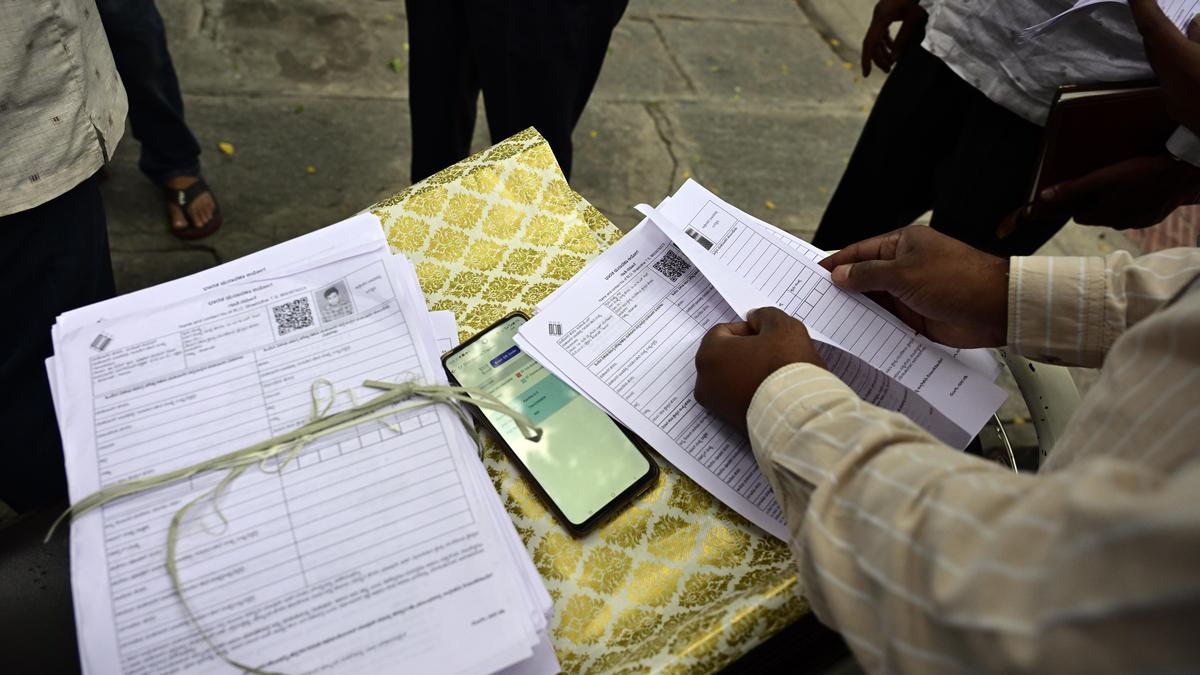
Analysis of Special Intensive Revision (SIR) draft rolls in Karnataka and Telangana revealed erratic and wide variations in voter deletion entries.
Both states experienced significant deletions, removing roughly 20 percent of electors from total rolls of 3.38 crore and 5.54 crore respectively.
Booth Level Officers (BLOs) logged deletions primarily under four categories: Shifted, Absent, Dead, and Duplicate, but applied them without consistent standards.
Electoral integrity experts highlighted that arbitrary application of deletion reasons creates significant risks of inadvertent voter disenfranchisement.
This coverage directly links to UPSC GS-2 topics on election administration, constitutional rights, and statutory powers of the Election Commission.
Prelims Facts
Draft electoral rolls in Karnataka and Telangana showed deletions affecting approximately one-fifth of the total registered voter population.
Deletion categories in Special Intensive Revision (SIR) exercises include 'Shifted', 'Absent', 'Dead', and 'Duplicate'.
Electoral roll preparation and revision are statutory duties performed under Section 21 of the Representation of the People Act, 1950.
Mains Framework
Discrepancies and arbitrary application of deletion criteria in draft electoral rolls undermine democratic franchise and highlight systemic flaws in voter list revision procedures.
Dimensions
Administrative Arbitrariness
Erratic categorization of reasons such as 'Shifted' or 'Absent' without standard field verification protocols.
Voter Disenfranchisement
Mass deletions disproportionately risk excluding vulnerable, migrant, and marginalized demographic groups from voting.
Procedural Integrity
Lack of transparent grievance redressal mechanisms prior to final electoral publication.
Way forward
Mandate standardized digital audit trails for Booth Level Officers (BLOs), ensure public display of deletion lists with clear statutory notice periods, and strengthen voter verification mechanisms.
Key terms
Special Intensive Revision (SIR)Electoral Roll IntegrityRepresentation of the People Act 1950Voter Disenfranchisement
Acts & articles
Article 324 (Superintendence of Elections)Representation of the People Act 1950 (Section 21)Conduct of Elections Rules 1961
03
INTERNAL SECURITY
Internal Security: Security Challenges and Tribal Friction in Ethnic-Violence Scarred Manipur
Four Naga Civilians Killed in Violent Ambush in Manipur Kangpokpi District
Unidentified gunmen ambushed a group of civilian travellers in Manipur, killing four Naga civilians and injuring another individual.
The attack took place between Makui Ashang and Thanamba Naga villages located inside the Kuki-majority Kangpokpi district.
Six civilians were traveling toward the Naga-majority Senapati district when armed assailants opened fire along the rural roadway.
The ambush occurs amid state government initiatives to restore peace, rebuild ethnic harmony, and resume essential public transport services.
The event illustrates key UPSC GS-3 internal security themes, including border state insurgency, ethnic dynamics, and public order maintenance.
Prelims Facts
An armed ambush occurred on a village road between Makui Ashang and Thanamba Naga villages in Kangpokpi district.
The victim civilians were travelling between Kuki-majority Kangpokpi and Naga-majority Senapati districts when attacked.
Peace initiatives in Manipur involve state government efforts alongside inter-state transport resumption like the Imphal-Guwahati bus route.
Mains Framework
Renewed insurgent ambushes targeting civilian commuters in Manipur threaten fragile peace initiatives and aggravate inter-community fault lines in the state.
Dimensions
Security Gap
Persistence of active armed insurgated elements capable of conducting targeted ambushes on intra-state transport corridors.
Inter-Tribal Dynamics
Risks of broadening conflict lines between Kuki, Meitei, and Naga communities across administrative boundaries.
Peace Building Obstacles
Disruption of civil normalization efforts, peace dialogues, and essential transport connectivity.
Way forward
Strengthen highway security patrols, enforce strict counter-insurgency operations against illegal armed groups, and foster inclusive tripartite peace talks involving all ethnic stakeholders.
Key terms
Ethnic ViolenceInter-Tribal AmbushPublic Order RestorationNortheast Security Architecture
Acts & articles
Article 355 (Duty of Union to Protect States)Armed Forces (Special Powers) Act 1958Code of Criminal Procedure Section 144
04
SCIENCE & TECHNOLOGY (HEALTH)
Health & Science: Medical Breakthroughs in Pancreatic Cancer Treatment and GLP-1 Therapeutics
GLP-1 Weight Management Therapeutics Drive Expansion of Integrated Healthcare Services
Rising adoption of GLP-1 therapeutics is expanding beyond prescription sales to build a comprehensive healthcare services ecosystem in India.
The ecosystem integrates medical practitioners, telehealth solutions, obesity clinics, diagnostic testing, nutritionists, and specialized fitness coaches.
GLP-1 drugs function by mimicking glucagon-like peptide-1 hormones, slowing gastric emptying, increasing satiety, and lowering blood glucose.
Medical monitoring is required to manage dose titration, prevent muscle loss, and establish long-term lifestyle maintenance protocols.
The development aligns with UPSC GS-3 health governance, lifestyle disease burdens, and evolving digital health delivery models.
Prelims Facts
Daraxonrasib (brand name Rasonque) is a newly approved oral drug that targets mutated proteins driving over 90% of pancreatic cancers.
GLP-1 (Glucagon-like peptide-1) receptor agonists mimic natural gastrointestinal hormones to regulate blood glucose and promote satiety.
CDSCO is India's national regulatory body responsible for approving new pharmaceutical formulations and molecular indications.
Mains Framework
Simultaneous advancements in oncology drugs and metabolic therapeutics represent a paradigm shift towards targeted medicine and integrated healthcare services.
Dimensions
Oncology Innovations
Targeted molecular therapy blocking driver mutation proteins, offering alternatives to standard chemotherapy.
Metabolic Healthcare Expansion
GLP-1 therapeutics fostering modern digital health ecosystems, telehealth, and multidisciplinary care models.
Affordability & Accessibility
Financial barriers posed by expensive novel treatments ($39,800/month) requiring public pricing strategies.
Way forward
Promote local bio-generic manufacturing under compulsory licensing provisions, expand public health coverage for specialized oncology, and establish standardized clinical guidelines for metabolic drugs.
Key terms
Daraxonrasib (Rasonque)Targeted Cancer TherapyGLP-1 Receptor AgonistsHealthcare Delivery Ecosystem
Acts & articles
Drugs and Cosmetics Act 1940National Health Policy 2017Patents Act 1970 (Section 84 - Compulsory Licensing)
05
SOCIAL JUSTICE & EMPOWERMENT
Welfare Schemes & Social Justice: Educational Assistance and Higher Education Support for Minority Women
Tamil Nadu Government Announces New Higher Education College for Religious Minority Women
Tamil Nadu announced the establishment of a ₹2.45 crore women’s college in Chennai through the Tamil Nadu Waqf Board for religious minorities.
The State government introduced a new scheme bearing full undergraduate tuition fees for Muslim female students admitted under government quotas.
An initial budget allocation of ₹20 crore was sanctioned to cover tuition assistance for higher education courses across public and private colleges.
The government also extended existing school education stipends beyond Class 8 and created a dedicated MBC Welfare Board with ₹3 crore funding.
This initiative directly aligns with UPSC GS-2 social justice topics, minority welfare policy, and state initiatives for women's empowerment.
Prelims Facts
Tamil Nadu announced the establishment of a dedicated women's college in Chennai funded at ₹2.45 crore through the State Waqf Board.
State higher education tuition fee support for Muslim female students applies to government, government-aided, and self-financing institutions under government quota.
A dedicated Most Backward Classes (MBC) Welfare Board was sanctioned with an allocation of ₹3 crore.
Mains Framework
State-sponsored financial support and dedicated infrastructure for religious minority female students address structural barriers in higher education access.
Dimensions
Educational Inclusion
Direct tuition fee coverage removing economic hurdles for female students transitioning from secondary to tertiary education.
Institutional Governance
Utilizing autonomous bodies like Waqf Boards to establish targeted higher education institutions.
Social Mobility
Fostering gender empowerment and labor force participation among vulnerable minority demographics.
Way forward
Ensure timely disbursement of educational stipends, expand scholarship coverage beyond undergraduate courses, and strengthen academic counseling networks.
Massachusetts Police Officer Resigns Following Unauthorized Use of Surveillance Databases
A Massachusetts police officer resigned prior to a termination hearing after an internal probe revealed misuse of surveillance databases.
The officer illegally accessed Flock Safety's automated license plate reader system and state police networks to track a former partner.
In response to the privacy violation, municipal authorities terminated their contract with Flock Safety and removed local surveillance hardware.
The incident highlighted risks associated with pervasive automated location tracking systems managed by commercial vendors for law enforcement.
This story connects to UPSC GS-2 and GS-4 topics regarding data privacy, law enforcement ethics, surveillance oversight, and administrative integrity.
Prelims Facts
Automated License Plate Reader (ALPR) systems utilize specialized cameras and software to continuously track and record vehicle movement data.
Stow Police Department in Massachusetts canceled its contract with Flock Safety following officer misuse of surveillance databases.
The Puttaswamy judgment established privacy as a fundamental right protected under Article 21 of the Constitution of India.
Mains Framework
The improper use of automated law enforcement surveillance technology underscores the critical vulnerability of personal privacy in the absence of stringent access controls.
Dimensions
Privacy Violations
Unauthorized access to license plate databases enabling personal tracking without judicial oversight or public cause.
Institutional Accountability
Administrative responses including vendor contract cancellations and mandatory system removals following breaches.
Regulatory Void
Absence of strict statutory audit mechanisms governing public-private surveillance partnerships.
Way forward
Implement mandatory cryptographic access logging, periodic independent data audits, strict legal liability for database misuse, and comprehensive privacy impact assessments before deploying surveillance tech.
Key terms
Automated License Plate Readers (ALPR)Mass Surveillance InfrastructureData MisuseRight to Privacy
Acts & articles
Article 21 (Right to Privacy)Digital Personal Data Protection Act 2023Information Technology Act 2000
07
GOVERNANCE & LAW ENFORCEMENT
Police Reforms: Accountability in Law Enforcement and Standard Operating Procedures for Force
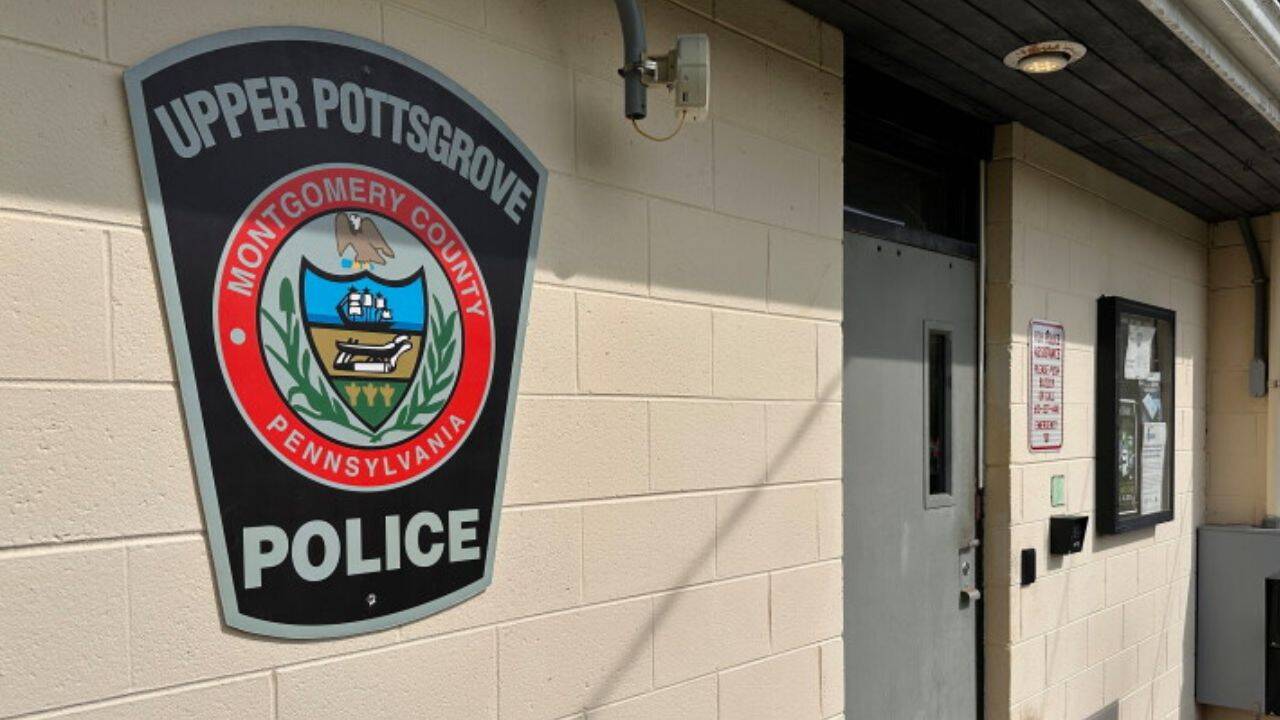
Pennsylvania Police Shoot Student Dead After Mistaken Identification During Burglary Call
A 22-year-old college student was fatally shot by Pennsylvania police after accidentally approaching the wrong home while waiting for friends.
Police responded to a midnight 911 burglary report, located the unarmed student at the rear of the residence, and opened fire.
The victim had mistakenly taken a wrong turn through wooded areas, believing he was entering his friend's residence.
The fatal shooting sparked intense scrutiny regarding police rules of engagement, threat verification procedures, and use-of-force protocols.
The event illustrates UPSC GS-2 concepts on administrative accountability, law enforcement ethics, human rights protections, and police procedure reforms.
Prelims Facts
Law enforcement standard operating procedures require verified threat assessment prior to applying lethal force in residential calls.
Misidentification errors during night-time emergency response highlight operational failures in tactical communication.
National Human Rights Commission (NHRC) guidelines in India govern police encounter deaths and mandatory judicial inquiries.
Mains Framework
Tragic misidentifications resulting in fatal police shootings emphasize the urgent necessity of reform in law enforcement response protocols and de-escalation training.
Dimensions
Procedural Lapses
Failure to establish suspect identity or verify situations before resorting to lethal force during burglary calls.
Institutional Training
Over-reliance on lethal weaponry rather than non-lethal de-escalation tactics in uncertain environments.
Accountability Mechanisms
Legal immunity structures and public trust deficits in post-incident investigations.
Way forward
Mandate body-worn camera compliance, adopt non-lethal de-escalation steps, and enforce independent civilian oversight boards for lethal force reviews.
Key terms
Use of Force SOPsPolice AccountabilityDe-escalation ProtocolsCriminal Justice Reform
Acts & articles
Prakash Singh Guidelines on Police Reforms (2006)Article 21 (Protection of Life)Bharatiya Nyaya Sanhita provisions on self-defence
08
EDUCATION & HUMAN RESOURCE DEVELOPMENT
Education: Immersive Technologies and Virtual Reality in Experiential Public School Curricula
North Carolina Approves Student-Designed Virtual Reality Unit for Statewide Learning Platform
North Carolina student Lennox French designed a virtual-reality classroom concept that received state approval for statewide deployment.
The project marks the first time a student has built an instructional VR unit for SparkNC's statewide education platform.
French initiated the concept within his school's technology lab, which encourages high schoolers to build real-world tech applications.
The module aims to expand interactive tech access to public school students state-wide, fostering digital skills development.
This development highlights UPSC GS-2 EdTech governance, innovative pedagogy, skill acquisition, and public school tech integration.
Prelims Facts
SparkNC is an educational initiative in North Carolina promoting emerging technology learning units across state public schools.
High school student Lennox French became the first student designer approved to deploy a virtual-reality learning module statewide.
India's National Education Policy 2020 emphasizes integration of immersive EdTech and vocational skill modules in secondary education.
Mains Framework
Integrating student-created Virtual Reality modules into statewide educational frameworks represents a shift toward participatory and experiential pedagogy.
Dimensions
Pedagogical Innovation
Transition from passive rote learning to active, immersive virtual classrooms and practical problem-solving.
Student Empowerment
Involving high school students directly as creators of instructional technology for state platforms.
Digital Divide & Access
Ensuring equitable deployment of high-tech VR infrastructure across underfunded rural and urban schools.
Way forward
Develop open-source EdTech repositories, train educators in immersive learning tools, and create public-private partnerships to subsidize hardware in public schools.
Historic 440-Acre Mt Cathalia Property Purchased for Inclusion in New York State Park Preserve
A 440-acre mountain property in Ellenville, NY, formerly developed as Mt Cathalia ski resort, was purchased for $3.3 million.
The Open Space Institute acquired the historic parcel to transfer it to state ownership for inclusion in Minnewaska State Park Preserve.
Mt Cathalia was the largest remaining undeveloped privately owned property adjoining the preserve, situated between North and South Gully areas.
The land acquisition successfully connects two previously separated sections of the park preserve near the Ellenville Ice Caves.
The article aligns with UPSC GS-3 topics on land conservation, ecological corridors, public park expansion, and open-space preservation.
Prelims Facts
Arashiyama Bamboo Grove in Kyoto, Japan, faced extensive vandalism with around 350 bamboo stalks damaged by tourist carvings.
Mt Cathalia encompasses 440 acres of undeveloped land acquired for $3.3 million to connect sections of Minnewaska State Park Preserve.
Section 2 of India's Forest (Conservation) Act regulates the diversion of protected natural ecosystems for commercial non-forest use.
Mains Framework
Balancing international tourism demand with natural ecosystem preservation requires innovative spatial management and private land incorporation into public reserves.
Dimensions
Vandalism & Overtourism
Irreversible damage to natural heritage sites like Kyoto's Arashiyama grove caused by unregulated foot traffic.
Habitat Consolidation
Strategic acquisition of private parcels to unify fragmented protected parklands and secure ecological corridors.
Visitor Access Redesign
Shifting physical pathways and establishing buffer zones to protect vulnerable flora from direct visitor access.
Way forward
Implement visitor carrying-capacity limits, enforce strict fines for environmental vandalism, and expand public land trusts to acquire critical ecological buffer zones.
Key terms
OvertourismEcological RestorationProtected Area ExpansionSustainable Tourism
Russian Military Officer Killed in St Petersburg Vehicle Blast Under Investigation
A Russian military lieutenant colonel was killed and his wife severely injured when a vehicle exploded in St Petersburg.
The blast occurred near a supermarket in the Shushary neighborhood, scattering wreckage across the immediate area.
Russia's Investigative Committee opened a criminal probe into the incident, initially labeling it an official vehicle fire investigation.
Independent media and local channels identified the deceased victim as an active-duty lieutenant colonel in the Russian armed forces.
The event illustrates key GS-3 security topics including targeted assassinations, grey-zone warfare, and urban security challenges.
Prelims Facts
Sinaloa state in Mexico is a focal point of intense violent conflict between competing factions of drug cartels.
Mexican security forces arrested a primary homicide suspect in Puebla state following an armed shootout during law enforcement intervention.
Targeted car bomb assassinations against military personnel reflect escalation tactics employed in grey-zone conflict environments.
Mains Framework
The escalation of targeted killings by criminal syndicates and sub-national armed actors highlights severe challenges to territorial state authority and public security.
Dimensions
Cartel Power & Impunity
Operating high-visibility targeted killings of media figures and digital creators in conflict zones.
Targeted Assassinations
Use of explosive devices and covert surveillance to target military and political officials.
Law Enforcement Operations
Inter-state police operations and tactical raids required to apprehend high-risk criminal suspects.
Way forward
Strengthen intelligence-led inter-agency task forces, enhance security protection for civil oversight figures, and dismantle criminal financial laundering networks.
UN Convention against Transnational Organized Crime (UNTOC)Article 51 of UN Charter (Self-Defence)Extradition and Mutual Legal Assistance Treaties
Practice MCQs — Test Your Understanding
6 questions · UPSC Prelims pattern · Tap an option to check your answer
DISASTER MANAGEMENT & ECOLOGYDisaster Management: Glacial Collapse and Transboundary Flash Floods in Nepal-Tibet Region
Glacial Collapse Triggers Devastating Flash Floods Along Nepal-Tibet Border
Q1With reference to Glacial Lake Outburst Floods (GLOFs) and glacial hazards, consider the following statements:
1. Glacial collapses can generate seismic signals that mimic tectonic earthquakes.
2. Debris flows resulting from glacial failures affect only the immediate high-altitude zone and do not travel downstream.
Which of the statements given above is/are correct?
Answer: Option A
Statement 1 is correct: the U.S. Geological Survey confirmed that seismic activity initially reported as an earthquake was instead a glacial collapse and debris flow. Statement 2 is incorrect because debris flows caused catastrophic impacts far downstream across three districts.
POLITY & GOVERNANCEGovernance: Arbitrary Deletions in Draft Electoral Rolls During Special Intensive Revision
Draft Electoral Rolls Reveal Arbitrary Deletion Reasons in Southern States Revision
Q2Consider the following reasons cited by Booth Level Officers (BLOs) during the Special Intensive Revision (SIR) of electoral rolls in India:
1. Shifted
2. Absent
3. Dead
4. Duplicate
Which of the above are official categories reported for voter deletions under electoral roll revisions?
Answer: Option D
According to the draft SIR electoral roll data analysis, the four broad reasons cited for voter deletions across constituencies are Shifted, Absent, Dead, and Duplicate.
SCIENCE & TECHNOLOGYHealth & Science: Medical Breakthroughs in Pancreatic Cancer Treatment and GLP-1 Therapeutics
FDA Approves Daraxonrasib for Targeted Treatment of Advanced Pancreatic Cancer
Q3Consider the following statements regarding the cancer drug Daraxonrasib (Rasonque):
1. It is an oral pill approved for treating advanced pancreatic cancer.
2. It works by blocking a mutated protein that fuels tumor growth in over 90% of pancreatic cancer cases.
Which of the statements given above is/are correct?
Answer: Option C
Both statements are correct. Daraxonrasib (brand name Rasonque) is a daily pill approved by the U.S. FDA that targets a mutated protein driving tumor growth in over 90 percent of pancreatic cancer cases.
CYBER ETHICS & GOVERNANCECyber Ethics & Privacy: Misuse of Automated License Plate Readers and Digital Surveillance Databases
Massachusetts Police Officer Resigns Following Unauthorized Use of Surveillance Databases
Q4Automated License Plate Reader (ALPR) systems deployed in public surveillance rely on which of the following technological capabilities?
1. High-speed optical cameras
2. Optical character recognition software
3. Location database tracking
Select the correct answer using the code given below:
Answer: Option D
ALPR systems integrate high-speed cameras, optical character recognition software, and centralized databases to automatically read and record vehicle license plate data and locations.
ENVIRONMENT & ECOLOGYEnvironment: Sustainable Heritage Tourism and Conservation of Threatened Natural Ecosystems
Kyoto Officials Relocate Famous Arashiyama Bamboo Grove Boundaries After Tourist Vandalism
Q5The famous Arashiyama Bamboo Grove, recently in news due to boundary restructuring to prevent tourist vandalism, is situated in which country?
Answer: Option B
Kyoto's Arashiyama Bamboo Grove is a famous natural heritage and eco-tourism trail located in Kyoto's Ukyo ward, Japan.
SOCIAL JUSTICEWelfare Schemes & Social Justice: Educational Assistance and Higher Education Support for Minority Women
Tamil Nadu Government Announces New Higher Education College for Religious Minority Women
Q6With reference to recent minority welfare initiatives in Tamil Nadu, consider the following statements:
1. A new women's college is being established through the Tamil Nadu Waqf Board for religious minority students.
2. The State government introduced a scheme to bear undergraduate tuition fees for eligible Muslim female students under government quota.
Which of the statements given above is/are correct?
Answer: Option C
Both statements are correct. Tamil Nadu announced a ₹2.45 crore women's college through the Waqf Board and a ₹20 crore scheme to bear undergraduate tuition fees for Muslim female students admitted under government quotas.